
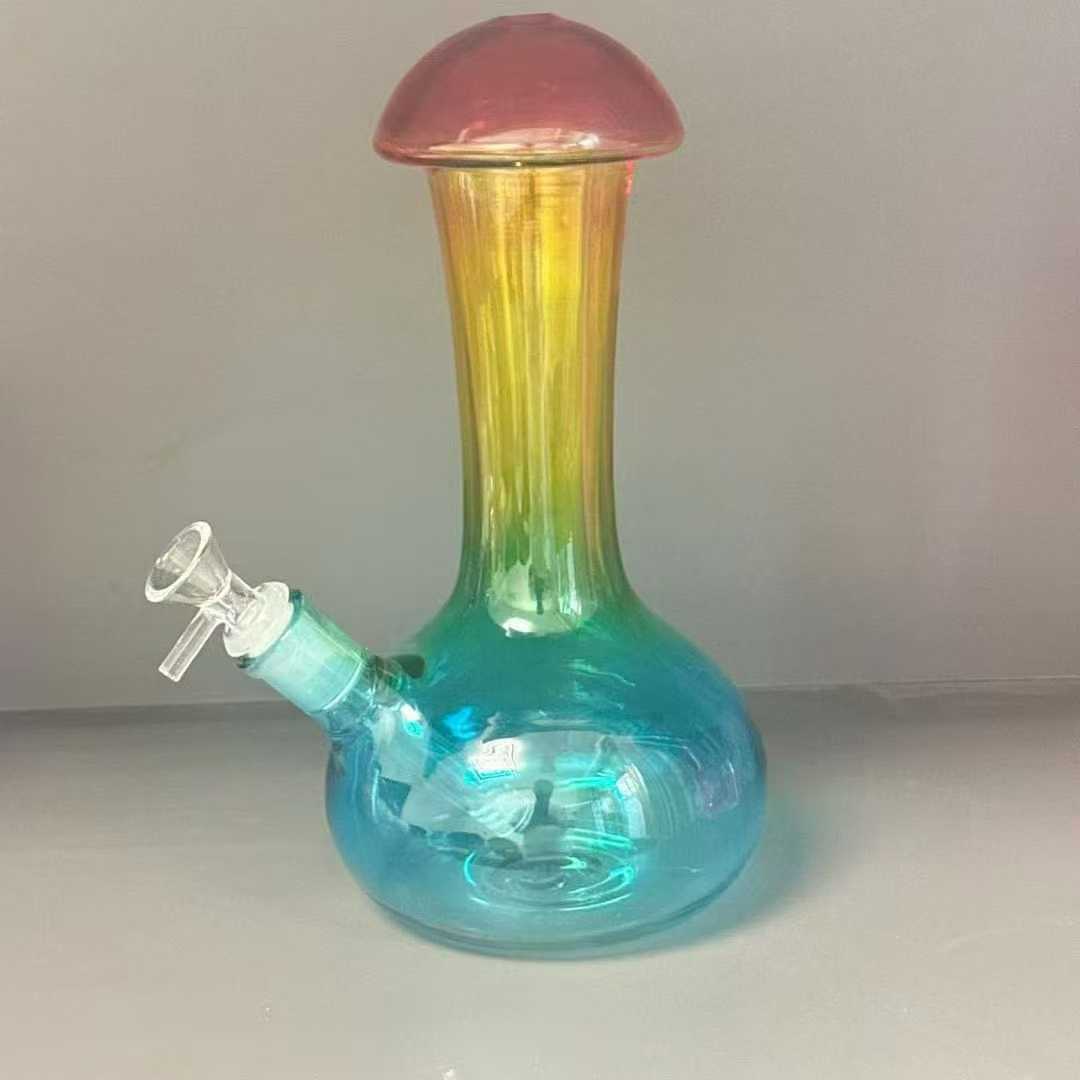
Every water pipe manufacturer loses a measurable share of customer satisfaction to one physics problem: water reaching the user’s mouth during a draw. The splash guard exists to solve that single problem. It is a small glass element—often no more than 30mm of curved or angled glass—positioned between the water chamber and the mouthpiece. Yet its presence or absence determines whether a customer describes the pipe as “smooth” or “sloppy” in the first five seconds of use. Water filtration here follows the basic water-pipe principle—smoke drawn through water before reaching the user—which is documented in standard references (water pipe design reference).
For wholesale buyers and product designers, understanding splash guard function and form is not academic. It affects which units generate returns, which designs photograph well for marketing, and which configurations justify premium pricing. This explainer covers the mechanics, the form variations, and the design decisions that determine whether a splash guard works or merely decorates.
Key Takeaways
- A splash guard blocks water droplets from reaching the mouthpiece without restricting airflow when designed at the correct angle and distance from the chamber wall.
- Three form types dominate production: curved lip, angled flat, and pinch-style—each suits different pipe geometries and price points.
- Splash guards add minimal per-unit cost but measurably reduce negative reviews citing “water in mouth” at retail level.
- Placement height must match the pipe’s water line: too low and it submerges; too high and droplets bypass it entirely.
- Elfglass integrates splash guards into standard water pipe production at no separate tooling cost, with MOQ 100 per design.
What a Splash Guard Actually Does
When a user draws air through a water pipe, negative pressure pulls water upward in turbulent bubbles. In a pipe without splash protection, aggressive draws or overfilled chambers send droplets past the percolation zone and into the mouthpiece path. The result is the most common negative feedback in water pipe retail: “water got in my mouth.”
A splash guard interrupts that droplet path. Positioned between the water chamber and the mouthpiece opening, it presents a physical barrier that droplets hit and fall back from, while air flows around or through it into the mouthpiece. The guard does not filter, cool, or diffuse—that is the percolator’s job. It performs one mechanical function: redirecting water droplets downward while allowing air to continue its path upward.
The design challenge is achieving droplet blocking without creating airflow restriction. A guard that is too large, too close to the chamber wall, or too steeply angled chokes the draw. Users perceive restriction as “hard to pull” and associate it with poor quality, even when the glass and percolation are excellent. The splash guard must be invisible in function—doing its job without the user noticing any change in draw resistance.
Three Form Types in Production
Production splash guards fall into three geometric families. Each suits different pipe sizes, chamber shapes, and price tiers.
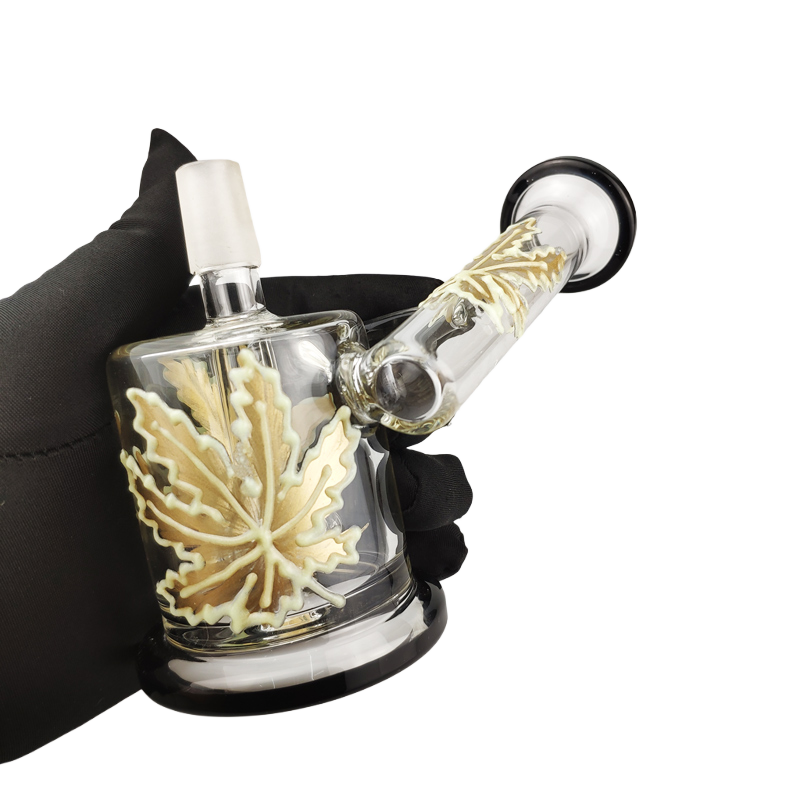
Curved lip: A crescent-shaped piece of glass curves downward from the chamber wall, creating a concave barrier. Droplets hit the convex outer surface and slide back down. Air flows around the open edges. This is the most common form in mid-range and premium water pipes because it blocks droplets from multiple angles while maintaining open airflow paths on both sides.
Angled flat: A flat disc or paddle set at 30–45 degrees across the chamber interior. Simpler to produce than a curved lip—requires less glassblowing skill and fewer seconds at the torch. Blocks droplets traveling in a straight upward line but leaves diagonal paths open. Suits entry-level and mid-range units where cost control matters more than complete droplet coverage.
Pinch-style: The tube wall itself is pinched inward during shaping, creating a narrowed waist that physically interrupts the droplet path. No separate glass element is added—the pipe’s own geometry serves as the guard. Lowest cost (no additional material or assembly step), but it permanently narrows the tube diameter at that point, which adds slight airflow restriction. Common in straight tube designs where the pinch doubles as an ice catcher.
Placement Geometry: Height and Angle
A splash guard in the wrong position performs worse than no guard at all. Too low, and it sits below the water line during a draw, creating turbulence that actually increases splashing. Too high, and droplets generated at the water surface never reach it—they arc sideways and hit the chamber wall above the guard, then trickle down past the mouthpiece path anyway.
The functional placement rule: the guard’s lowest edge should sit 15–25mm above the maximum water line. Maximum water line is the level the water reaches during an active draw (higher than the resting level because suction lifts the water column). For a pipe with a resting water line at 80mm from the base, the guard should start at approximately 100–105mm from the base.
Angle matters for the flat and curved types. A guard set perpendicular to the tube axis (90 degrees) blocks the most droplets but creates the most airflow resistance. Angling the guard 30–45 degrees from horizontal lets air flow along the tilted surface while droplets, which travel more vertically, still impact and fall back. The 30–45 degree range is the production standard at Elfglass for both curved lip and angled flat guards.
Stock the Glass Pipes Your Customers Actually Buy
Elfglass produces the full wholesale catalog, from hand pipes and sherlocks to dab rigs, percolator bongs, and accessories, in proven best-selling specs. Tell us your market and we will recommend a catalog mix with pricing.
MOQ from 100 pieces | BSCI / WRAP / ISO 9001 | NDA before every project
Airflow Impact and the Restriction Trade-Off
Every obstruction in the air path increases draw resistance. The design question is how much restriction a splash guard adds and whether the user perceives it.
A well-designed curved lip guard blocks roughly 60–70% of the chamber cross-section while leaving open channels on both sides. The air accelerates through the remaining open area, but because the total open area is still generous, the pressure drop is minimal—users do not notice it. The guard is doing its job invisibly.
A poorly designed guard—too large, too flat, too perpendicular—blocks 85%+ of the cross-section. Air squeezes through a narrow gap, creating audible turbulence and a noticeably harder draw. Users describe this as “the pipe is clogged” even when it is clean. The fix is not removing the guard but redesigning it: smaller surface area, more open perimeter, or a steeper angle that lets air slide along the surface.
Pinch-style guards add the least restriction of the three types because they narrow the tube gradually rather than inserting a flat barrier. The airflow acceleration through the pinch is distributed over a longer distance, so the pressure change feels gentle. This is why pinch-style is the default for straight tube designs where the pinch also serves as an ice retention feature.
Splash Guard vs Percolator: Different Jobs
Buyers sometimes conflate splash guards with percolators because both are internal glass elements. They perform fundamentally different functions and should not be treated as substitutes.
A percolator sits below the water line and breaks the air stream into small bubbles for diffusion—cooling, smoothing, and filtering particulates. Its job happens underwater. A splash guard sits above the water line and blocks droplets from reaching the mouth. Its job happens in the air space. A pipe can have excellent percolation but still splash if the air space lacks a guard. Conversely, a pipe with a splash guard but poor percolation will not splash but will deliver harsh, unfiltered smoke.
The production implication: splash guards and percolators are manufactured at different stages. Percolators are assembled into the base section during glassblowing. Splash guards are added during the tube-shaping stage, after the base is sealed. Factories running both features on the same unit need two separate skilled operations. When specifying a water pipe with both features, confirm that your factory handles both in-house rather than outsourcing one—outsourced sub-assemblies add alignment risk and QC gaps. Buyers can review the full range of percolator types and their trade-offs in our dedicated comparison guide.
Design Decisions for Wholesale Buyers
For wholesale buyers selecting water pipe inventory, the splash guard question is practical: which form type matches your price tier and customer expectations?
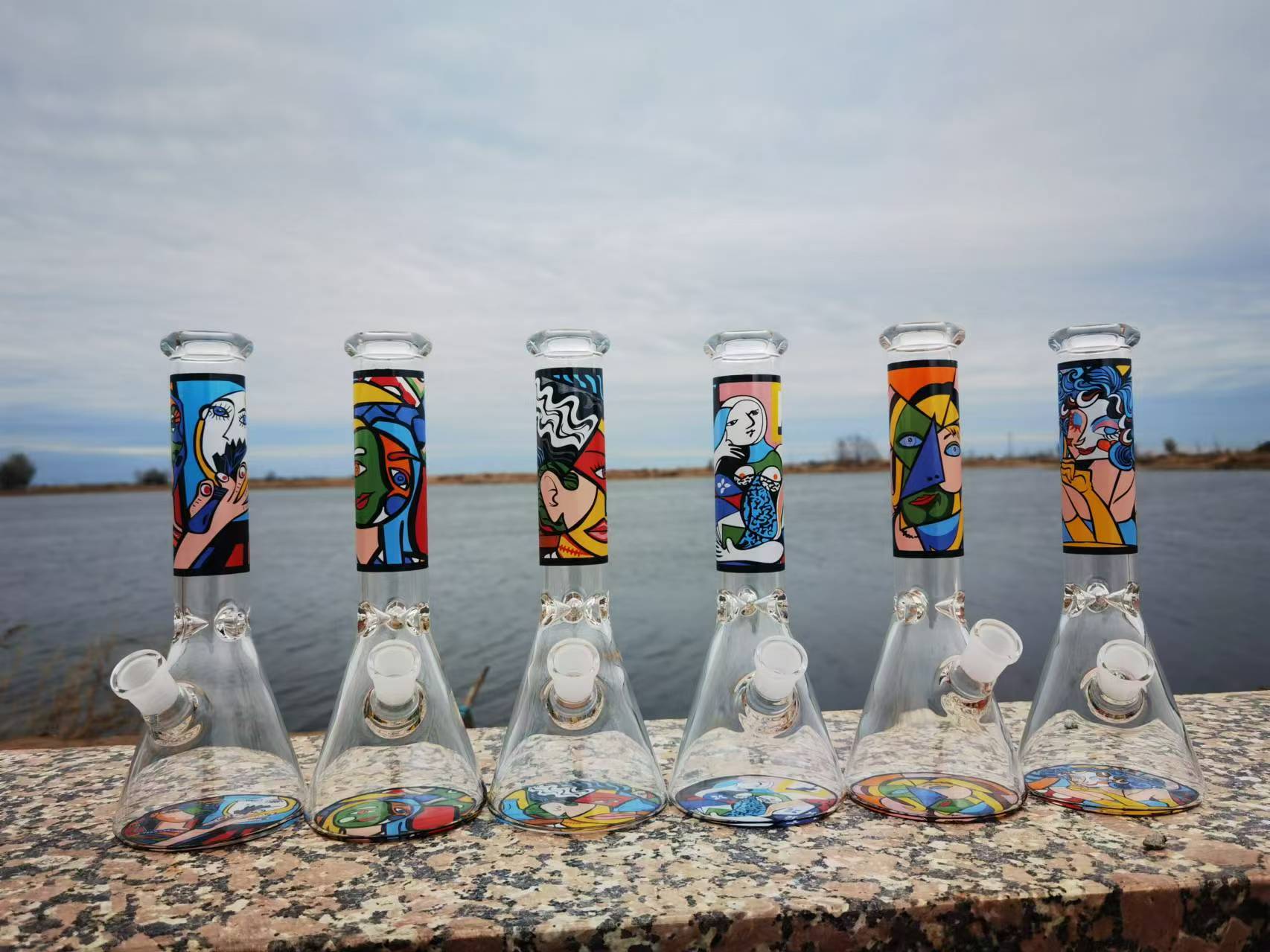
Entry-level units: Pinch-style or no dedicated guard (the tube’s natural narrowing provides partial protection). Lowest cost, adequate for casual users who draw gently.
Mid-range units: Angled flat guard. Good droplet blocking at moderate cost. Works in beakers and straight tubes alike. This is the volume choice for wholesale programs targeting smoke shops with broad customer bases.
Premium units: Curved lip guard. Best droplet coverage, most visually refined (the curve reads as intentional design rather than a welded-on flat disc). Justifies premium pricing because customers can see the craftsmanship in the curve.
One wholesale-specific consideration: splash guards are visible when the customer looks into the chamber. A clean, well-executed guard signals manufacturing quality. A sloppy weld joint, uneven angle, or visible crack at the guard’s attachment point signals the opposite. When approving samples, inspect the guard’s weld from multiple angles. The glass pipe types guide covers how splash guards appear across different product categories.
Manufacturing and QC Notes
From the factory floor perspective, splash guards add 15–30 seconds of torch time per unit depending on form type. Curved lips require the most skill—the glassblower must shape the curve while the tube is hot and maintain consistent thickness. Angled flats are faster to execute. Pinch-style guards add negligible time because they are formed during the standard tube-shaping operation.
QC checkpoints for splash guards during production: weld integrity (no cracks at the attachment point, verified by gentle pressure test), angle consistency across the batch (measured with a protractor gauge on sampled units), and height consistency relative to the water line mark. Units failing any checkpoint are pulled before packing.
Elfglass includes splash guard integration as a standard option on all water pipe designs at no separate tooling charge. Buyers specifying a custom design through the OEM process can request a particular guard type in the initial spec sheet, and the factory will confirm manufacturability within the 12-hour quote response window. Production runs at MOQ 100 per design with the same 7–12 day timeline as standard water pipe orders.
For brands building a product line that spans multiple glass pipe categories, specifying a consistent splash guard type across the range creates a recognizable design signature. Customers who buy one unit and appreciate the dry draw will look for the same guard style when purchasing their second pipe from your brand.
Conclusion
Splash guards are small glass elements with outsized impact on user experience. They solve the single most common complaint in water pipe retail—water reaching the mouth—at minimal production cost. The three form types (curved lip, angled flat, pinch-style) map cleanly to price tiers, and correct placement geometry determines whether the guard helps or harms the draw.
- Match guard type to price tier: pinch for entry, angled flat for mid-range, curved lip for premium.
- Place the guard’s lowest edge 15–25mm above maximum water line for functional droplet blocking.
- Inspect weld integrity and angle consistency on samples—sloppy guards signal poor manufacturing overall.
- Splash guards complement percolators rather than replacing them; both are needed for a complete user experience.
Comparing splash guard options for your next water pipe order? Send your spec requirements to Elfglass—guard type, placement, and compatibility confirmed within 12 hours.
Frequently Asked Questions
What is a splash guard on a water pipe?
A splash guard is a glass element positioned above the water line that blocks water droplets from reaching the mouthpiece during a draw. It does not filter or cool smoke—that is the percolator’s job.
What are the types of splash guards?
Three forms dominate production: curved lip (best coverage, premium tier), angled flat (good coverage, mid-range), and pinch-style (built into tube geometry, entry-level).
Where should a splash guard be placed?
The guard’s lowest edge should sit 15 to 25 millimeters above the maximum water line, angled 30 to 45 degrees from horizontal for optimal droplet blocking without airflow restriction.
Does a splash guard make it harder to draw?
A correctly designed guard is imperceptible during use. Poorly sized guards that block too much cross-section create noticeable restriction. The 30 to 45 degree angle standard minimizes this trade-off.
Can a splash guard be added to any water pipe design?
Yes. At Elfglass, splash guards integrate into any water pipe design at no separate tooling cost. Specify the guard type in your initial spec sheet and the factory confirms manufacturability within 12 hours.
About the Author
Ava Zeng is the founder of Elfglass, a Shenzhen-based borosilicate glass pipe manufacturer serving B2B brands worldwide. Every guide on this site is grounded in her production-floor experience— the annealing lines, QC checkpoints, and export orders behind each claim.
Before you commit to a supplier, read her founder’s story and trust promise, and the guide to vetting a reliable glass pipe manufacturer— the same red-flag checklist Elfglass applies to its own suppliers. Splash-guard design is one of several functional features documented in water pipe engineering, where internal geometry affects draw resistance and filtration.
Ready to Source Custom Glass Pipes?
Get a free quote within 24 hours. MOQ from 100 pieces. NDA-protected design consultation.
