
For a detailed comparison, see our guide on trade shows vs online sourcing for glass pipes.
You just signed the lease. The keys are in your hand. You walk through the front door of an empty retail space and immediately feel it — the weight of every empty shelf, every bare display case, every square foot of floor that needs to generate revenue before the next rent check clears. Opening a smoke shop is the easy part. Filling it with the right products, in the right quantities, at the right price points — that is where most new owners stumble.
The smoke shop first order is the single most consequential purchasing decision you will make in your first year. Too much capital locked in slow-moving SKUs and you are drowning in dead stock by month three. Too little variety on the shelves and walk-in customers leave because you do not carry what they came for. The balance between glass, accessories, consumables, and impulse items is not intuitive — it is learned through data, supplier relationships, and sometimes expensive mistakes.
This guide removes the guesswork. It walks you through every product category a new smoke shop needs, how to allocate your first inventory budget, what to expect from wholesale suppliers on MOQs and lead times, and how to build a restocking rhythm once the doors are open. Whether you are opening a head shop, a vape-and-glass combo store, or a boutique smoke lounge retail counter, the framework below applies.
Key Takeaways
- Allocate 25-30% of your first inventory budget to glass pipes and water pipes — they deliver the highest per-unit margin at 100-300% markup.
- Dab rigs and concentrate accessories are the fastest-growing category; reserve 10-15% of budget here even if your market is not fully educated yet.
- Parts and consumables (downstems, bowls, rolling papers) are the repeat-purchase engine — they bring customers back weekly and should never be understocked.
- Expect wholesale MOQs of 100 pieces per design from manufacturers like Elfglass, with 1-3 day sampling and 7-12 day production timelines.
- Plan your first order to cover 30 days, then use actual sales data to build a 60-day and 90-day restocking cadence.
Table of Contents

The Product Categories That Fill a Smoke Shop
A well-stocked smoke shop carries between six and eight distinct product categories. Each one serves a different customer need, a different price sensitivity, and a different margin profile. Your first order needs to hit every category — but not equally. The mistake new owners make is treating all categories the same, spreading budget evenly across the board, and ending up with too many lighters and not enough glass.
The table below shows a typical budget allocation for a new smoke shop’s first inventory order. These percentages are based on industry averages and reflect both margin potential and turnover speed. Adjust them based on your local market — a college town skews differently than a tourist district — but use this as your starting framework.
| Product Category | Budget Allocation | Typical Markup | Turnover Speed |
|---|---|---|---|
| Glass Water Pipes & Hand Pipes | 25-30% | 100-300% | Medium |
| Rolling Papers & Wraps | 15% | 80-150% | Fast |
| Lighters & Torches | 10% | 100-200% | Fast |
| Grinders | 10% | 100-200% | Medium |
| Hookah | 10% | 80-150% | Slow-Medium |
| Cigars | 15% | 40-80% | Medium |
| Parts & Accessories | 10% | 150-300% | Fast |
Notice that glass commands the largest single allocation despite medium turnover. That is because the per-unit dollar amount is higher and the margins justify the capital commitment. A water pipe you buy wholesale for $15 sells for $45-60 on your shelf. Rolling papers you buy for $0.50 sell for $1.50-2.50. The margin percentage on papers looks decent, but you need to move vastly more units to generate the same profit. Glass is where your profit per transaction lives.
Glass Pipes and Water Pipes: The Core Investment
Every smoke shop lives or dies by its glass selection. Walk into any successful head shop and the first thing you see is glass — rows of water pipes, shelves of hand pipes, display cases of artistic pieces. Customers judge your shop by the quality and variety of your glass before they look at anything else. This is not a category where you can afford to be thin.
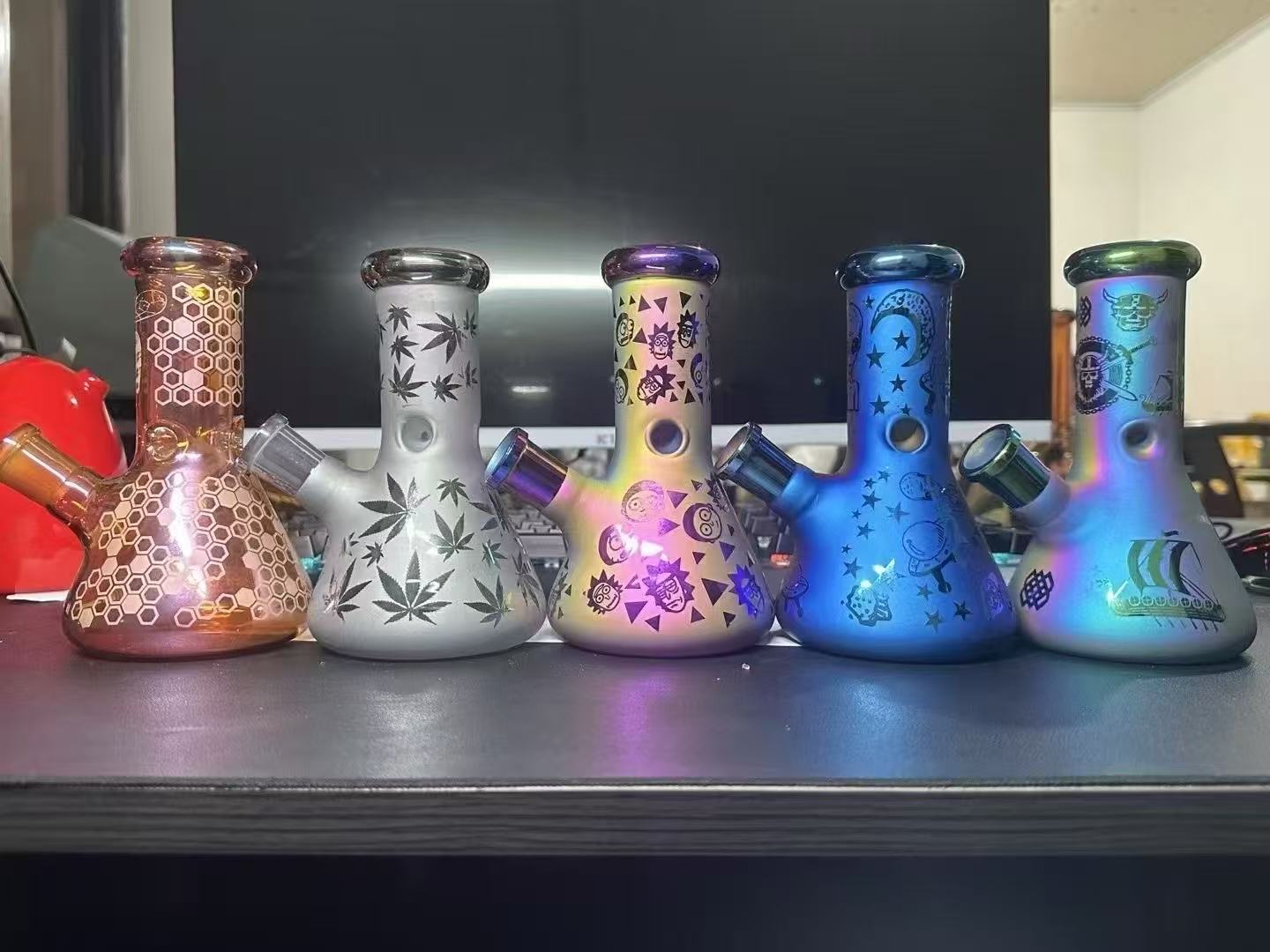
For your wholesale water pipes order, stock a range of price points. Entry-level beaker bongs in the $12-20 wholesale range give you a $35-60 retail option for budget-conscious buyers. Mid-range pieces with percolators or ice catchers at $25-45 wholesale fill the $70-130 retail bracket. Premium artistic pieces and complex multi-perc rigs at $50-100+ wholesale anchor your high end at $150-300+ retail. You need at least 15-20 water pipe SKUs to look credible.
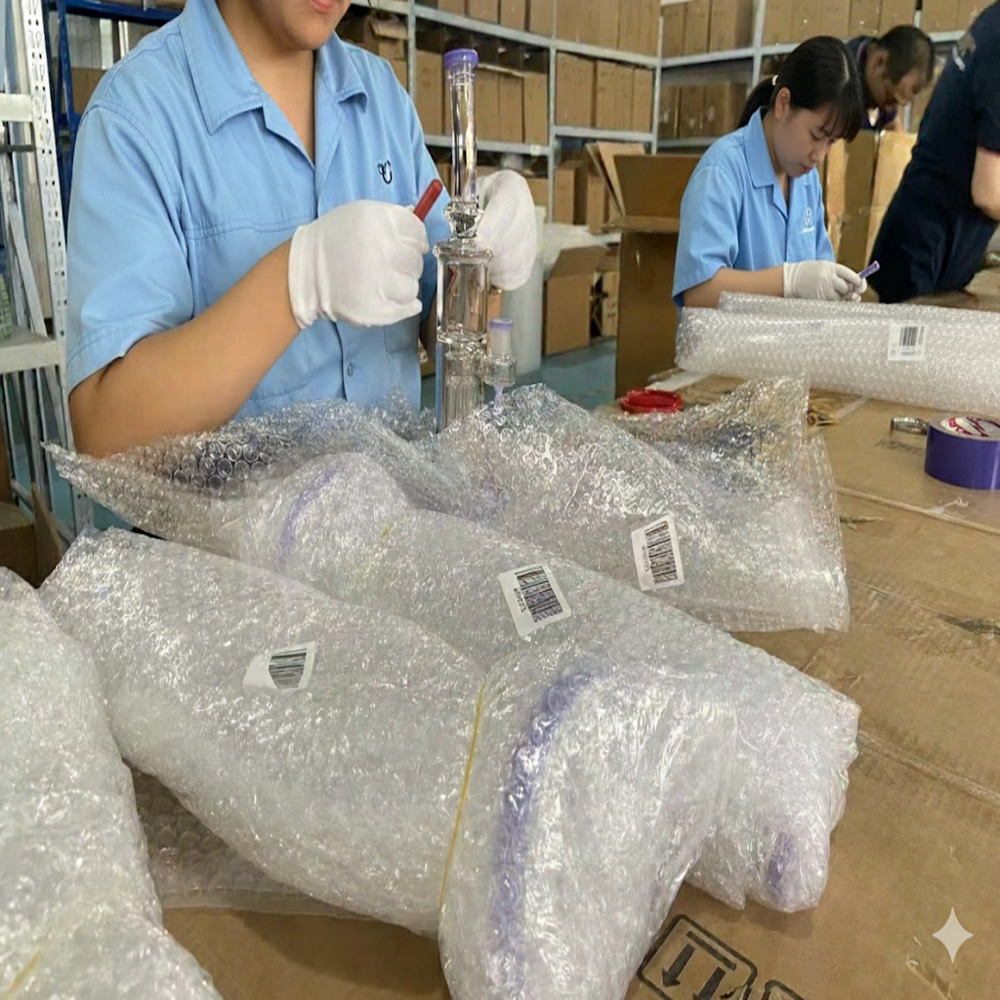
Hand pipes are your volume play. They are cheaper to source, easier to display, and sell faster than water pipes. Stock a mix of simple spoon pipes, sherlocks, steamrollers, and a few artistic pieces. Hand pipes in the $3-10 wholesale range retail for $12-35, giving you strong margins with faster turnover. Order at least 10-15 hand pipe styles, with deeper quantities on the simpler designs that appeal to the widest audience.
When sourcing glass for your first order, work with a manufacturer that understands retail variety. Elfglass has supplied smoke shops across the USA, UK, Australia, and Canada since 2010. With a 100-piece minimum per design, you can order multiple styles without locking your entire budget into a single SKU. That flexibility matters enormously when you are still learning what your local market prefers.
Ready to Build Your First Glass Inventory?
Elfglass manufactures glass water pipes, hand pipes, and dab rigs with a 100-piece MOQ per design. Request a quote and get pricing within 12 hours.
Dab Rigs and Concentrate Accessories
Concentrates are not a niche anymore. Dab rigs have moved from specialty item to core category in under five years, and the growth curve is still climbing. If your smoke shop does not have a dedicated concentrate section, you are leaving money on the table — and sending customers to the shop down the street.
Your wholesale dab rigs order should include three tiers. Entry-level e-rig accessories and basic nectar collectors at $8-15 wholesale retail for $25-45. Mid-range glass dab rigs with bangers and carb caps at $20-40 wholesale sell for $60-120. Premium electric dab rigs and artistic pieces at $50-100+ wholesale command $150-300+ at retail. Stock at least 8-12 dab rig SKUs for your first order, with heavier quantities on the mid-range options where most buyers land.
Do not forget the consumables that surround dabbing. Quartz bangers, titanium nails, silicone mats, dab tools, and butane torches are all high-margin add-ons that customers buy alongside their rig purchase. These items cost pennies to dollars wholesale and sell at 200-400% markup. They also drive repeat visits when customers need replacements.
Parts, Accessories, and Consumables
Glass gets the glory, but parts and consumables keep the lights on. These are the products customers buy every week — rolling papers, replacement bowls, downstems, screens, ash catchers, cleaning solution. They are low-cost, high-margin, and they bring people through your door on a regular basis. A customer who comes in for rolling papers often walks out with a new hand pipe or a pack of screens they did not plan to buy.
Your wholesale parts and accessories order should include the following essentials:
- Downstems and bowls: The most frequently replaced glass components. Stock multiple sizes (10mm, 14mm, 18mm) in both male and female configurations. Order at least 200-300 pieces across styles.
- Ash catchers: Both functional and popular as upgrades. Inline and showerhead styles cover most customer needs. Wholesale cost $3-10, retail $15-35.
- Rolling papers and wraps: The highest-turnover item in any smoke shop. Carry multiple brands and sizes — king size, 1 1/4, single wide, hemp wraps. Allocate 15% of your budget here and keep shelves full at all times.
- Screens and filters: Brass and glass screens are impulse purchases with 300%+ margins. Stock heavily.
- Cleaning supplies: Isopropyl-based cleaners, salt packs, and replacement pipe cleaners. Low cost, strong margins, and customers run out regularly.
The pattern here is clear: consumables and parts create a recurring revenue loop. Your first order should overstock these relative to glass, because running out of rolling papers in week two is not an option. Customers who cannot find basics do not come back for your premium glass.
How to Read a Wholesale Supplier’s MOQ and Lead Time
Your first wholesale order introduces you to two numbers that govern everything: MOQ (minimum order quantity) and lead time. These are not suggestions — they are the structural constraints that determine how much capital you need upfront and when your shelves will actually have product on them. Understanding them before you place an order prevents costly surprises.
MOQ explained. Most glass manufacturers set MOQ at the design level, meaning you must order a minimum number of pieces per individual style or SKU. At Elfglass, the MOQ is 100 pieces per design. That means if you want five different water pipe styles, your minimum glass order is 500 pieces total. For a first order, this might feel like a lot. But consider the math: 100 pieces of a single hand pipe design at $4 wholesale is $400 in inventory that retails at $15-25 each — generating $1,100-2,100 in revenue from a single SKU.
| Order Phase | Timeline | What Happens |
|---|---|---|
| Inquiry & Quote | Within 12 hours | Supplier responds with pricing, MOQ, and available designs |
| Sampling | 1-3 days | Pre-production sample made for your approval |
| Production | 7-12 days (100+ units) | Full production run after sample approval |
| Payment | T/T terms | 30% deposit to start, 70% before shipment |
| Shipping | 5-15 days (varies by destination) | Ocean freight, air freight, or express depending on urgency |
Lead time explained. From the moment you approve a sample to the moment your order ships, expect 7-12 days for production of 100+ units. Before that, sampling takes 1-3 days. Before that, quote response takes up to 12 hours. Add international shipping (5-15 days depending on method and destination) and you are looking at 3-5 weeks total from first contact to product in hand. Plan your store opening date backward from that timeline.
Payment terms at Elfglass follow the industry standard: T/T with 30% deposit to begin production and 70% balance due before shipment. For a first order of $5,000-10,000, that means your initial cash outlay is $1,500-3,000 to get production started. Factor this into your opening budget alongside rent, buildout, and licensing costs.
Stocking Your First Smoke Shop Order?
Elfglass helps new shops build a balanced first order across glass pipes, rigs and parts with clear MOQ and lead times plus a 30-60-90 day restocking plan. Send your shop profile and get a quote within 12 hours.
MOQ from 100 pieces | BSCI / WRAP / ISO 9001 | NDA before every project
A 30-60-90 Day Restocking Plan
Your first order gets you through the first 30 days. What happens after that determines whether your shop thrives or merely survives. The key is to stop guessing and start reading your POS data. By day 30, you know exactly which SKUs moved fast, which moved slow, and which did not move at all. That data drives every subsequent order.
Day 30 — The Adjustment Order. Review sales data from your first month. Identify your top 10 sellers by unit velocity and your bottom 10 by the same metric. For fast movers, double your reorder quantity. For slow movers, cut them or reduce to a single restock. Introduce 2-3 new SKUs in categories where you see customer demand you could not fill. Place this order within two weeks of day 30 to avoid any shelf gaps.
Day 60 — The Expansion Order. By now you have two months of data and a clearer picture of your customer base. This is the order where you start deepening rather than broadening. Increase quantities on proven winners. Test one or two premium upgrades in categories that sell well at entry level. If mid-range water pipes are your best seller, introduce a higher-end line. If basic hand pipes fly off the shelf, add artistic pieces at a higher price point.
Day 90 — The Optimization Order. At the 90-day mark, your ordering rhythm should be shifting from reactive to predictive. You know your weekly run-rate on consumables. You know which glass styles resonate. This order should be larger and more efficient — fewer SKUs, deeper quantities, better per-unit pricing from your supplier. By day 90, you should also be negotiating better terms or exploring custom designs with your manufacturer to differentiate from competing shops.
| Phase | Focus | Action |
|---|---|---|
| Day 30 | Adjustment | Double down on top sellers, cut bottom performers, fill category gaps |
| Day 60 | Expansion | Introduce premium tiers in proven categories, test new styles |
| Day 90 | Optimization | Consolidate SKUs, deepen quantities, negotiate custom designs |
Artist-collaboration pieces are another way to differentiate your initial inventory. Our artist collaboration licensing guide explains how exclusive designs can command premium retail prices.
Conclusion: Your First Order Sets the Trajectory
Stocking a new smoke shop is not about filling shelves — it is about building a product mix that generates cash flow from day one while giving you the data to optimize over time. Glass pipes and water pipes anchor your margins. Dab rigs capture the growing concentrate market. Parts and consumables keep customers coming back. And a disciplined restocking plan turns initial guesses into data-driven decisions.
The suppliers you choose for that first order matter as much as the products themselves. You need a manufacturer that respects small MOQs, communicates quickly, and has the production capacity to scale with you as your shop grows. Elfglass has been that partner for smoke shop owners since 2010 — with 16 years of manufacturing expertise, BSCI, WRAP, and ISO 9001 certifications, and a commitment to custom molds that stay exclusive to your business.
Your empty shelves will not stay empty for long. Plan the smoke shop first order with intention, execute it with a manufacturer who understands retail, and build from there.
Start Your First Order With Elfglass
100-piece MOQ per design. 12-hour quote response. 7-12 day production. BSCI, WRAP, and ISO 9001 certified. Your custom molds stay exclusive to your business.
Frequently Asked Questions
How much does it cost to stock a new smoke shop?
Initial inventory investment varies by shop size and location, but a typical allocation puts 25-30% of your budget into glass pipes and water pipes, 15% into rolling papers and wraps, and the remaining budget across grinders, lighters, hookah, cigars, and accessories. A small shop might start with $5,000-10,000 in total inventory, while a larger retail location could require $20,000-40,000 for a comprehensive first order.
What is the minimum order quantity for wholesale glass pipes?
Elfglass requires 100 pieces per design per SKU. This allows new smoke shops to order multiple styles — water pipes, hand pipes, dab rigs — without committing to large quantities of any single product. For a first order of five glass styles, the minimum is 500 pieces total, which provides enough inventory to test customer preferences across categories.
How long does a first wholesale order take from start to finish?
The full timeline from initial inquiry to product delivery runs approximately 3-5 weeks. Sampling takes 1-3 days after specification approval. Production runs 7-12 days for orders of 100+ units. International shipping adds 5-15 days depending on the method chosen. Elfglass responds to all inquiries within 12 hours, so the process starts quickly once you submit your product request.
What glass pipe products sell best in a new smoke shop?
Water pipes (bongs) and hand pipes are the core sellers in virtually every smoke shop. Dab rigs represent the fastest-growing category as concentrate use continues to gain mainstream adoption. Downstems, bowls, and ash catchers drive repeat accessory sales because they break, get lost, or need replacement — creating consistent return traffic to your shop.
What markup should a smoke shop put on glass pipes?
Glass pipes typically carry retail markups of 100-300% over wholesale cost. A water pipe purchased for $15 wholesale commonly retails for $45-60. Hand pipes bought at $4 wholesale sell for $15-25. Accessories like downstems and bowls can carry even higher percentage markups due to their low absolute cost. These margins make glass the highest-profit category per dollar of inventory invested.
For buyers looking to grow beyond initial samples, this scaling wholesale orders beyond your first purchase guide provides detailed operational frameworks for the next stage of sourcing. Choosing the right initial mix is the challenge of product assortment.
About the Author
Ava Zeng is the founder of Elfglass, a Shenzhen-based borosilicate glass pipe manufacturer serving B2B brands worldwide. Every guide on this site is grounded in her production-floor experience— the annealing lines, QC checkpoints, and export orders behind each claim.
Before you commit to a supplier, read her founder’s story and trust promise, and the guide to vetting a reliable glass pipe manufacturer— the same red-flag checklist Elfglass applies to its own suppliers.
Ready to Source Custom Glass Pipes?
Get a free quote within 24 hours. MOQ from 100 pieces. NDA-protected design consultation.
