
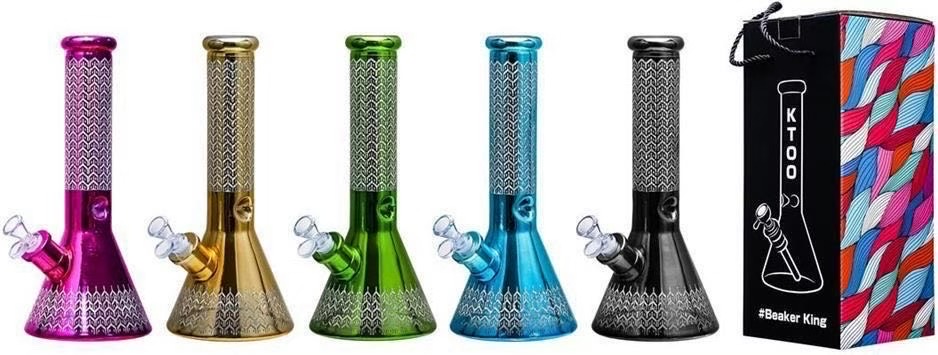
The first time you watch a recycler cycle, the water seems to move in a direction it should not. It climbs a tube, crosses into a second chamber, drains back down, then does it all again. The trick behind how recycler bongs work is two forces trading control: your draw pulls the water up, and gravity sends it back. Smoke rides along for every lap, touching water far longer than a single-chamber pipe allows.
A recycler bong loops smoke and water continuously between two chambers during the draw, passing the smoke through percolation repeatedly for cooler, more filtered hits. The cycle also prevents splash-back, which is why the water keeps cycling instead of draining back down.
This guide breaks the mechanism down the way a product engineer would. First the anatomy, then the four physical stages of the cycle, then the geometry that decides whether a piece runs cleanly or stalls mid-draw. Then the part most explainers skip: what two-chamber construction does to manufacturing yield, and what wholesale buyers should test before units reach a shelf. Elfglass has spent 16 years building borosilicate water pipes in Shenzhen, and recyclers rank among the most demanding designs on its benches.
Key Takeaways
- Two forces drive a recycler: a draw-driven pressure differential lifts water and smoke up the intake, gravity returns them, and the cycle repeats while airflow continues.
- The recycler function is documented in US patent literature — application US 2015/0101620 A1 describes water pumped between chambers to increase smoke-water contact time.
- Chamber balance is the make-or-break spec: badly matched chamber volumes stall the cycle mid-draw, and no spec sheet will tell you a piece is untuned.
- Elfglass accepts OEM and ODM recycler projects from 100 pieces per design, with samples ready in 1-3 days.
- Production runs 7-12 days for orders of 100 or more pieces, inside a monthly capacity of 10,000 pieces.
- The factory holds BSCI, WRAP, and ISO 9001 certification, a real factor for retailers importing glass into the US, UK, Australia, or Canada.
The Anatomy of a Recycler Pipe
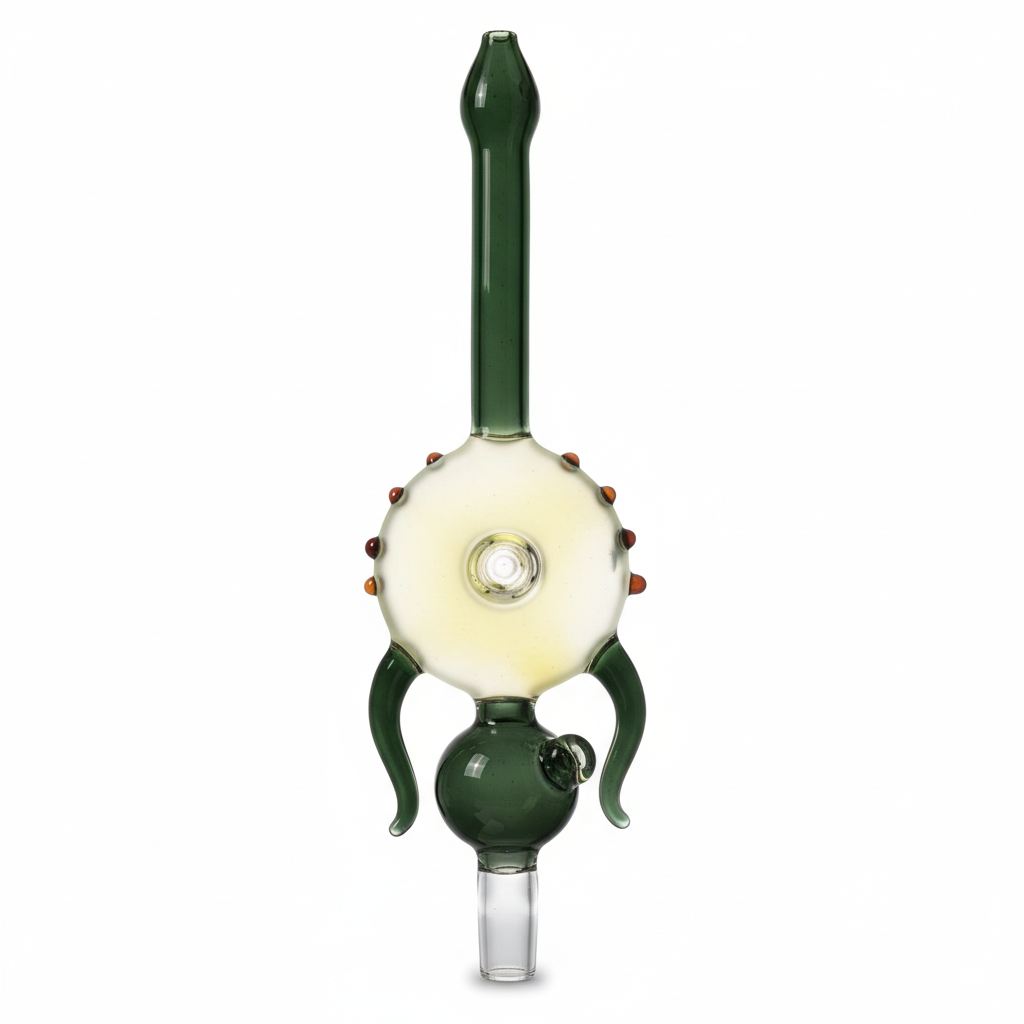
Strip away the marketing names and every recycler resolves to the same parts. Two chambers, a water path between them, and an air path for smoke to travel with the water. The base chamber holds the water and receives smoke from the bowl through a downstem. The upper chamber — a bulb, a drum, or a flattened disc — catches the rising mixture and hands it back down. Two glass passages connect them: an intake tube and a return arm.
Two Passages Do All the Work
The intake tube starts below the waterline in the base, positioned close to where the downstem releases smoke. Its opening is the pickup point: when pressure drops during a draw, water and bubbles enter there and climb. The return arm runs the opposite direction, carrying water from the upper chamber back down into the base. Its crest — the highest point of the bend — sits above the working waterline, so water only crosses it when the cycle actively pushes it up.
Placement is everything. If both openings sat at the same height, nothing would circulate and the piece would behave like an ordinary chamber. The height offset between intake and return is what gives the cycle its direction: up one path, down the other. This is the first detail Elfglass checks when a customer sends a reference sample for replication or improvement, because it is also the first detail a poor copy gets wrong.
The Mouthpiece Stays Out of the Action
The mouthpiece draws from the upper chamber or the return path, never straight off the base. Smoke exits only after spending time with moving water, which is why the pull feels different from a straight tube. Recyclers also split into two broad layouts: open designs with the arm visible outside the glass, and closed-loop designs with the passages hidden inside. Both run identical physics, but the closed loop reads as premium on a retail shelf. Recyclers belong to the same borosilicate family as every other format a shop stocks, and this overview of glass pipe types maps where they sit.
The Cycle in Four Physical Stages
Watch a recycler long enough and the motion stops looking like a trick. Four physical stages repeat in order, each one tied to a specific piece of glass, and the sequence below walks through them one by one.

Stage One: The Draw Drops the Pressure
Pull on the mouthpiece and the air pressure inside the upper chamber falls below the pressure in the base. Air wants to equalize, and its only route runs through the water. That pressure differential is the engine of the whole system: no draw, no cycle. The behavior follows the rules of moving air — faster flow carries lower static pressure, so a brisk draw pulls harder on the water’s surface.
Stage Two: Water Climbs the Intake
The low pressure reaches the intake opening and lifts a slug of water up the tube, with smoke bubbling along inside it. The mixture crests the bend and spills into the upper chamber. Intake diameter sets the character of this stage. A wide intake moves water in slow, heavy surges, while a narrow one quickens the climb but restricts airflow. Tuning that diameter against chamber volume is where design intent shows.
Stage Three: Gravity Sends It Back
Water cannot sit in the upper chamber forever, because the chamber floor drops away into the return arm. Once the level rises past the crest, gravity takes over and the water falls back toward the base. The return path behaves like the lip of a siphon: once started, it keeps pulling until the chamber drains. Smoke that has given up heat to the water gets swept toward the mouthpiece in the same movement.
Stage Four: The Loop Sustains Itself
While the draw continues, the two forces alternate: pressure lifts, gravity returns, pressure lifts again. Water shuttles back and forth, and smoke meets fresh water on every pass. Release the draw and the system settles — all of the water drains back to rest in the base, with no valves involved. That self-draining behavior is part of the elegance. A recycler is a machine with zero moving parts.
Chamber Balance Makes or Breaks Function
Here is the part that separates a working recycler from a frustrating one, and it is pure geometry. The two chambers must hold volumes that match the rhythm of the cycle. If the upper chamber is too large for the base, water piles up there while the base runs dry. The intake gulps air, the loop stutters, and the draw goes flat. Make it too small, and water returns before the transfer finishes, splashing toward the mouthpiece. Both failures look like defects to an end customer, even when the glass is perfectly intact.
The water level belongs to the same category of tuning. A recycler runs on a shallow fill: the waterline must cover the intake opening and sit below the return arm’s crest. Too much water and the cycle delivers mouthfuls; too little and the intake never primes. Every design has a working band, set by its geometry rather than marked on the glass. That is why only running the piece can tell you whether it works.
For buyers, the consequence is concrete. A shop that stocks untested recyclers will absorb returns from customers who hit a stall point and assume the piece arrived broken. The upstream fix is a function test on every sample batch, covered in detail below.
Stock the Glass Pipes Your Customers Actually Buy
Elfglass produces the full wholesale catalog, from hand pipes and sherlocks to dab rigs, percolator bongs, and accessories, in proven best-selling specs. Tell us your market and we will recommend a catalog mix with pricing.
MOQ from 100 pieces | BSCI / WRAP / ISO 9001 | NDA before every project
Recycler vs Single Chamber vs Percolator
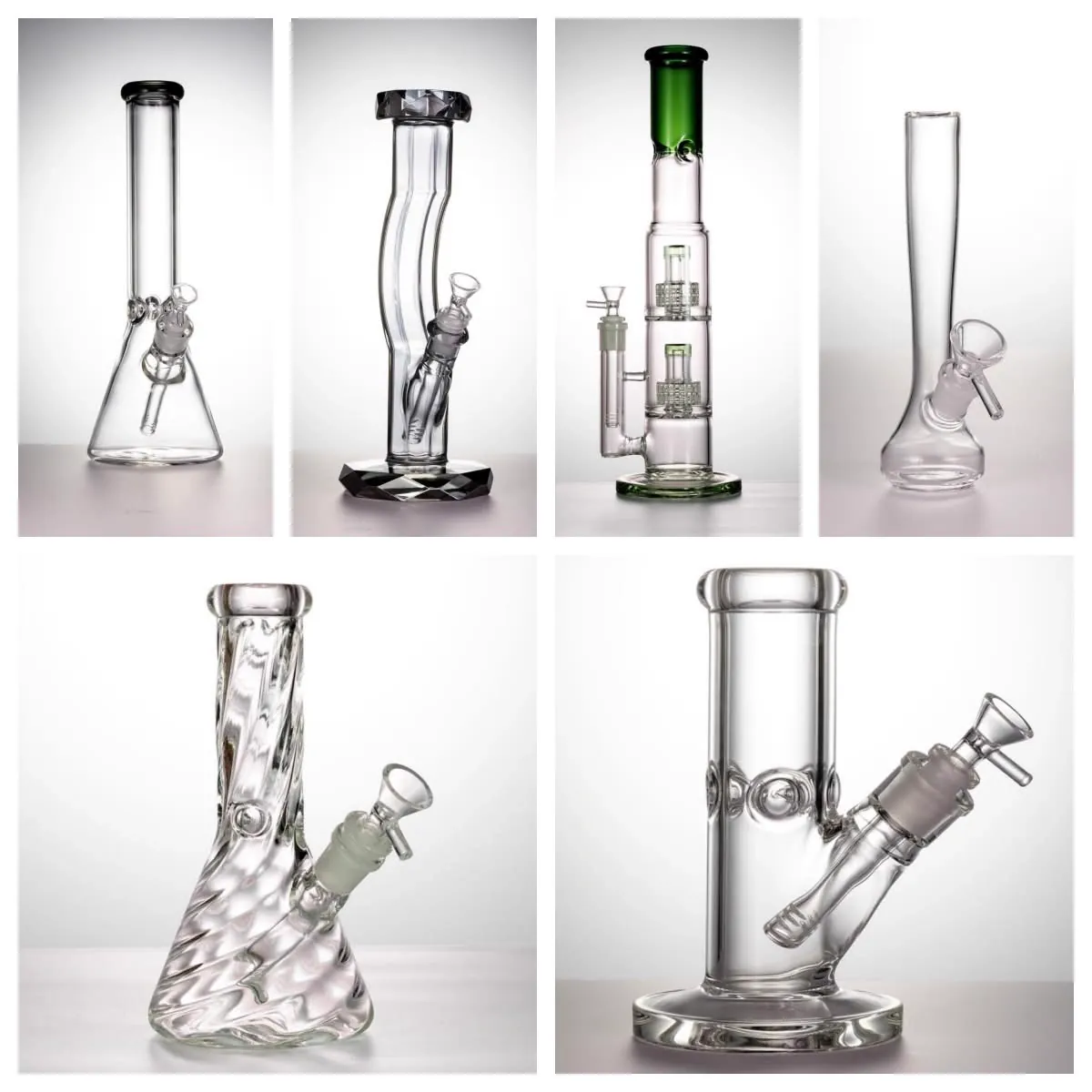
Three formats dominate the water pipe wall in most shops, and each solves filtration differently. The table compares them on the factors that drive purchase decisions.
| Factor | Single-Chamber Pipe | Percolator Pipe | Recycler |
|---|---|---|---|
| Filtration mechanism | One pass through standing water | Smoke forced through diffuser holes or slits | Multi-pass cycling between two chambers |
| Draw feel | Direct and open | Heavy diffusion with some drag | Smooth, steady pull with visible action |
| Water volume needed | Highest | Moderate to high | Lowest |
| Cleaning effort | Easiest — open chamber access | Moderate — extra internal surfaces | Moderate — narrow passages need brushes |
| Best retail fit | Entry shelves, first-time buyers | Mid-tier customers chasing smoothness | Premium shelves, flavor-focused repeat buyers |
The verdict is blunt. Single-chamber pipes are the right volume play: cheap to produce, forgiving to use, and matched to a first-time buyer’s expectations. Percolator builds suit customers who want maximum diffusion and accept the extra cleaning; the percolator types comparison on this site breaks those sub-formats apart. The recycler is the strongest premium option of the three because its function is visible in real time. A clerk can demonstrate the cycle at the counter in a single draw, and visible function closes sales faster than any spec list.
For a retailer deciding the mix, the practical split runs like this: single chambers for breadth, percolators for the middle tiers, recyclers for the top rail. Brand founders building a custom line can go further and shape the chambers around a house style. Elfglass manufactures all three formats as wholesale water pipes with OEM branding, so the format decision and the supplier decision can happen in one conversation.
Why Recyclers Are Harder to Manufacture
Everything above explains why recyclers demand more at the bench. A straight tube is one blow, one chamber, one joint. A recycler multiplies every tolerance. Two chambers must end up at matched volumes, two passages must align in three dimensions, and joints must seal against the very pressure differential the design depends on.
Where the Difficulty Concentrates
Chamber volumes are set while the glass is molten and moving, so the base and the upper bulb are effectively two parts that must agree with each other. Drift shows up later as a stall point, not as a visible flaw — the piece looks perfect and performs poorly. Intake-to-return alignment tells the same story: a few degrees off and the cycle runs asymmetric. Then there is annealing, the slow controlled cool-down that relieves internal stress. The junctions where arms meet chambers concentrate that stress, and poor annealing turns those junctions into future break lines.
The patent record backs up the floor experience. US patent application US 2015/0101620 A1, published in April 2015, describes the recycler as a device that pumps water between different chambers to increase contact time. It also notes that such multi-chamber devices can be difficult and expensive to manufacture. That sentence matters to buyers. When a design is this sensitive to workmanship, supplier capability becomes part of the product itself.
What This Means for Custom Designs
Brand founders sketching a custom recycler should treat the cycle as the design constraint, not the silhouette. Start from a proven chamber ratio and working water level, then style around them; the reverse order produces beautiful glass that stalls. Protecting an original layout belongs in the same conversation — Elfglass signs an NDA before any project starts and keeps custom molds exclusive to the client. Sampling speed matters because tuning happens by iteration, and Elfglass turns samples around in 1-3 days, so a balance tweak costs days rather than weeks. When a shape needs fresh tooling, the custom mold guide covers how that process runs.
Source recyclers built to actually cycle
Elfglass produces open and closed-loop recyclers under OEM and ODM agreements, starting at 100 pieces per design, backed by BSCI, WRAP, and ISO 9001 certification. Send a reference design or sketch and get a quote back within 12 hours.
The Function Test Before You Stock Them
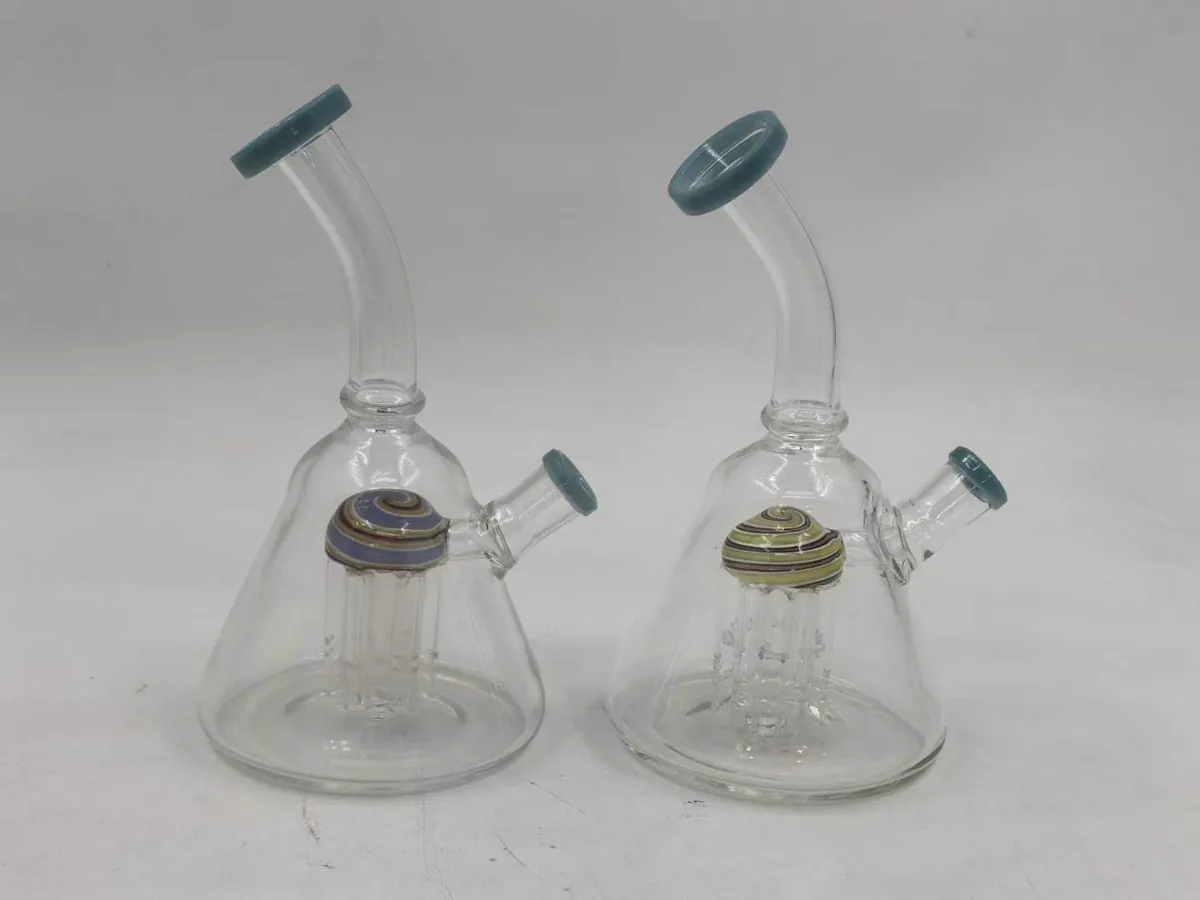
A recycler either cycles or it does not, and the verdict takes only moments. Every unit that matters — each sample, plus spot-checks from every production run — should pass the same short test.
Run the Fill and Draw
Fill the piece to its working level, covering the intake and staying below the return crest. Draw gently and watch the first full cycle: water should climb the intake, cross into the upper chamber, and drain back without hesitation. Keep drawing for a few seconds and check that the rhythm stays even, with no gurgling asymmetry and nothing reaching the mouthpiece. Then stop and watch the drain-back — all water should settle into the base. Any stall, splash-over, or leftover pool in the upper chamber is a reject signal.
Check the Joints and the Base
The cycle runs on pressure, so every ground joint must seat flush with no wobble and no hiss of leaking air. A leaking joint bleeds off exactly the differential that lifts the water. Pick the piece up and feel its balance, since upper chambers make recyclers top-heavy. Set it down and give it a nudge: a design that tips easily will break in normal use and come back as a warranty claim. Inspect the arm junctions for thin or stressed glass while the piece is in your hands.
Evaluate Samples Like an Operator
The function test belongs inside a wider sample review covering glass thickness, joint finish, logo execution, and packaging. Elfglass’s sample evaluation checklist walks through that full pass. Once a sample clears both the checklist and the cycle test, the low-risk next step is a trial order. MOQs start at 100 pieces per design, small enough to field-test a SKU without overcommitting. The 100-piece trial order guide maps that route in detail. Sampling takes 1-3 days and production takes 7-12 days for orders of 100 or more, so a retailer can move from first sample to stocked shelf inside a month.
Frequently Asked Questions About Recycler Function
How do recycler bongs work step by step?
A draw drops pressure in the upper chamber, lifting water and smoke up the intake tube. Gravity then returns the water through the return arm, and the loop repeats for as long as airflow continues.
Are recycler bongs better than percolator pipes?
They suit different buyers. Recyclers give longer smoke-water contact with a visible, demonstrable cycle, while percolators focus on diffusion. For premium retail shelves, recyclers usually justify their higher price better.
Why does a recycler stall mid-draw?
Stalling usually means unbalanced chambers or a wrong water level. Water piles up in one chamber, the intake gulps air, and the loop breaks. Function-test every sample before approving a bulk order.
How much water does a recycler need?
A shallow fill. The waterline must cover the intake opening and stay below the return arm’s crest — high enough to prime the cycle, low enough that nothing reaches the mouthpiece.
What should retailers check before stocking recyclers?
Run the piece: fill it, draw, watch a full cycle, then watch it drain back to rest. Check joint fit, base stability, and glass condition at the arm junctions before signing off.
The Bottom Line on Recycler Sourcing
A recycler runs on a pressure differential and gravity, trading control back and forth for as long as the draw continues. That simple loop hides demanding geometry: balanced chambers, a tuned intake, and a clean return path. Buyers who understand the mechanism can tell a tuned piece from a decorative one in a single function test. Browse our wholesale dab rigs to see how production recyclers are tuned, or ask the factory team about your own spec.
- Two forces drive the cycle: draw pressure lifts the water, gravity returns it, and the loop repeats while airflow continues.
- Chamber balance decides function — unbalanced designs stall, and no spec sheet will warn you.
- Recyclers take more hot-work skill than straight tubes, so supplier capability matters as much as unit price.
- Fill, draw, watch, drain: the four-step function test belongs in every sample sign-off before bulk is approved.
If you are weighing recycler SKUs for your next order, start with a sample and run the cycle test yourself. Elfglass’s team can walk you through chamber options suited to your market, from 100 pieces per design.
Get a Quote for Your Next Order
Building your wholesale lineup? with recycler configurations your customers actually ask for? Explore our wholesale water pipe collections for MOQ, tiered pricing, and factory-direct lead times. Send us your product spec and target quantity — contact our factory team or message us on WhatsApp, and we will reply with pricing and lead times within 24 hours.
About the Author
Ava Zeng is the founder of Elfglass, a Shenzhen-based borosilicate glass pipe manufacturer serving B2B brands worldwide. Every guide on this site is grounded in her production-floor experience— the annealing lines, QC checkpoints, and export orders behind each claim.
Before you commit to a supplier, read her founder’s story and trust promise. Then see the guide to vetting a reliable glass pipe manufacturer — the same red-flag checklist Elfglass applies to its own suppliers.
Ready to Source Custom Glass Pipes?
Get a free quote within 24 hours. MOQ from 100 pieces. NDA-protected design consultation.
