
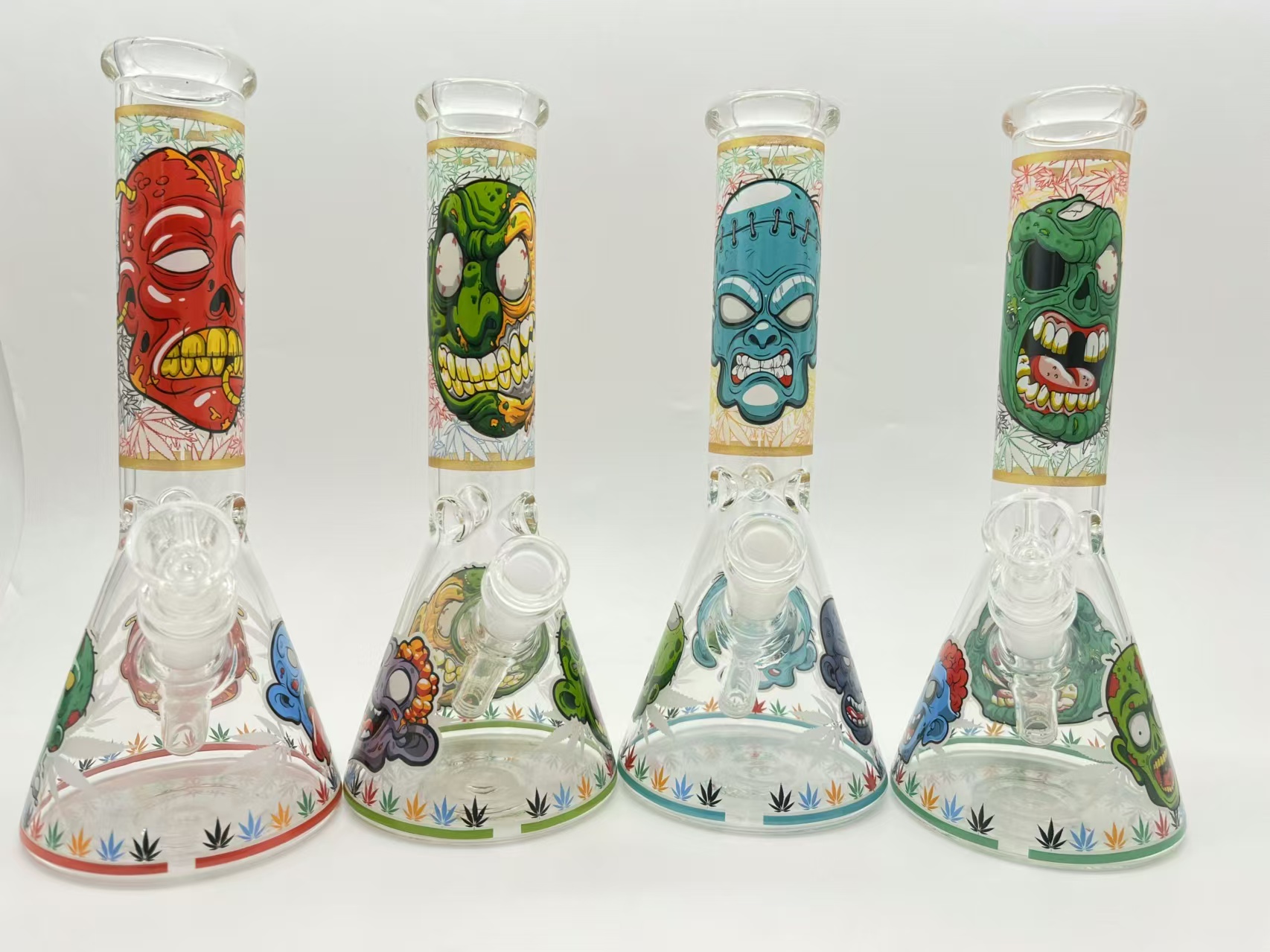
The sample box has arrived, and you need to evaluate the glass pipe sample inside before you commit to a bulk order. You cut the tape, part the foam, and lift out a piece that looks exactly like the render you approved. Beauty is easy to judge. Sample fee terms and durability are not, and that gap is where money gets lost. For the full timeline from first sketch to finished sample in hand, see our rapid sample turnaround guide.
After sixteen years of producing glass pipes in Shenzhen, the Elfglass team has watched buyers make the same two mistakes. Some reject solid samples over cosmetic quirks that vanish in normal use. Others approve beautiful samples with hidden structural flaws that surface only after the bulk order ships. Both errors cost real money.
This guide hands you the framework a factory QC bench applies before a batch clears for shipment. It covers five inspection zones, a four-grade verdict scale, and a defect-report format that gets suppliers to actually fix things. Work through it once and it takes the guesswork out of approve, revise, or reject.
Key Takeaways
- Every time you evaluate a glass pipe sample, work through five zones: visual, dimensional, material, functional, and packaging. Skipping one leaves a blind spot the bulk order will find.
- Stones — grains of unmelted material fused into the wall — are automatic rejects, while a few tiny air seeds away from joints are normal in hand-blown pieces.
- Joints must seat flush by hand with no rock and no force. A forced fit can split the receiver; a loose one leaks every session.
- Elfglass cuts samples for standard designs within 1-3 days, which leaves plenty of time for a full audit before any approval.
- Your verdict gates real capital: even the 100-piece minimum order per design is 100 units you must sell if the sample misled you.
- Photograph and measure every defect before you contact the supplier. Specific reports get fixed samples; vague complaints get vague replies.
The Five Zone Sample Audit Framework
On a production floor, no batch ships on a first impression. Trained inspectors move each piece through checkpoints in a fixed order and record what they see. Treat your sample desk the same way. A fixed sequence stops a pretty finish from charming you while a leaking joint hides in plain sight.
The five zones are visual, dimensional, material, functional, and packaging. Each answers a different question. Visual: does the glass carry defects? Dimensional: was it made to spec? Material: is it the right glass, properly cooled? Functional: does it draw, seal, and assemble? Packaging: will it survive freight?
The most expensive mistake is approving beauty and missing function. A water pipe that photographs perfectly but weeps at the downstem joint will earn returns your customers describe in one star. Run zones one through five in order, and write down a result for each before you form an opinion. To evaluate a glass pipe sample honestly, the record comes first and the verdict comes last.
Zone One Visual Inspection Under Bright Light
Start with light. A daylight-balanced lamp or a bright window beats any warm retail spotlight, which flatters color and hides texture. Hold the piece at arm’s length first, then bring it close and rotate it slowly. You are looking for anything that breaks the smooth continuity of the glass.
Seeds, Stones, and Trapped Air
Small air bubbles sealed inside the wall are called seeds. A few tiny seeds in a non-critical area belong to hand-blown glass; they are part of the craft’s character. Clusters of seeds, or seeds near joints, bends, and bowl bases, tell a different story: rushed torch work or dirty raw material. Stones draw the hard line. A stone is a grain of unmelted batch material fused into the wall, and it never bonds properly with the glass around it. Any stone means reject, full stop, because it behaves like a crack waiting for heat.
Surface Marks and Color Consistency
Run a gloved fingertip over the surface. A scratch that catches your nail is a depth defect, not a polish mark, and depth defects concentrate stress. Cold marks look like dull, matte patches where the glass cooled before it could fuse cleanly; they carry uneven internal stress and can crack on their own. If you received several samples in the same color, line them up side by side. Color drift across the row reveals inconsistent furnace batches, and it reads louder on a retail shelf than it does in your office.
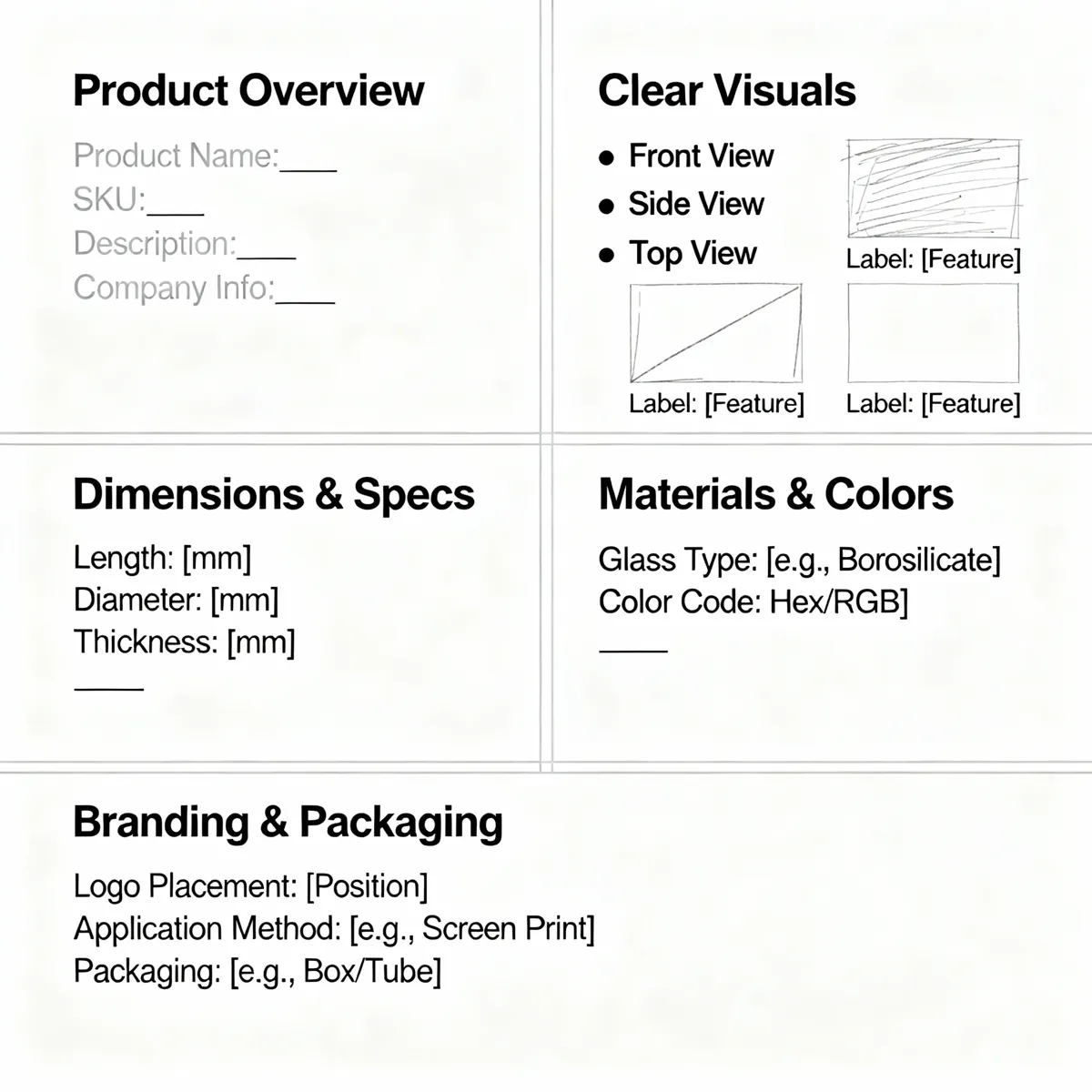
Zone Two Dimensional Checks With a Caliper
Eyes judge surface. Measurements judge spec. An inexpensive digital caliper turns this zone from guesswork into evidence, and it pays for itself the first time it catches a thin wall. Buyers who skip measuring are effectively asking the supplier to grade its own homework.
Measuring Wall Thickness at Multiple Points
Measure the wall at several points on the bowl, the stem, and the base, and write each reading down. Compare the readings against the approved spec sheet rather than against your memory of the drawing. Thin spots matter most, because they flex more, heat faster, and crack first. Hand-blown glass always carries some variation. At Elfglass, inspectors hold each piece to an internal tolerance band set for hand work, and pieces outside the band go back to the torch. Your audit needs the same logic: a consistent wall that matches spec, not a perfect wall that never exists.
Judging Joint Fit by Hand
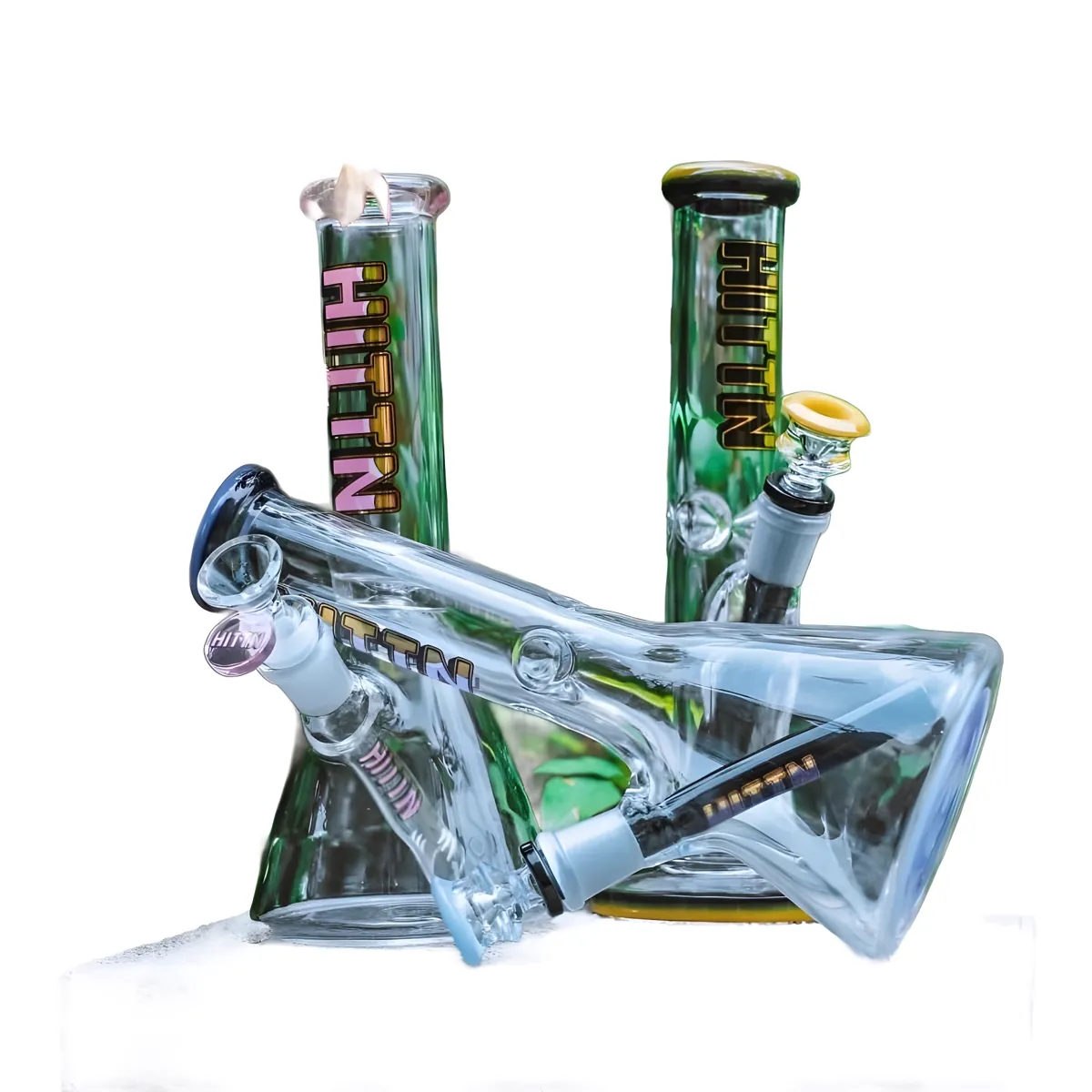
Seat the bowl or downstem by hand. The joint should slide home with light pressure, sit flush, and stay still when you press on it. A joint that needs force is oversized and can split the receiver during normal use. A joint that rocks is undersized and will leak air every session. For pieces with standard 10mm, 14mm, or 18mm joints, confirm the size and test interchangeability between samples. Your customers will mix parts from different purchases, so the samples should mix too.
Height, Weight, and Balance
Check overall height and width against the spec sheet, and weigh the piece. Glass sells on feel. A sample much lighter than expected usually hides thin walls; one much heavier may carry pooled glass that throws off balance. Log the numbers even when they pass, because bulk inspection is a comparison exercise. Later you will measure production units against these same readings and spot drift immediately.
Zone Three Material Verification and Thermal Limits
This zone frustrates buyers, because glass type is invisible. Borosilicate and soda-lime can look identical on a shelf. The good news: you do not need a laboratory to screen out the worst cases, and written documentation does the rest.
Why the Glass Type Decides Everything
Working glass lives through temperature swings: flame on one side, cool air on the other. Borosilicate expands only slightly when heated, so those swings create little internal stress. Ordinary soda-lime glass expands much more, which is why bottle glass shatters when heated unevenly. Every Elfglass piece starts as borosilicate tubing, and that material choice drives the thermal behavior you are trying to verify.
Flame Tests and Their Limits
A brief pass of a lighter flame on a discreet spot, such as the base bottom, is the classic screening test. Soda-lime tends to cloud, soften, or crack under short flame exposure followed by a cold rinse, while healthy borosilicate shrugs it off. Trust the test only as far as it deserves. It separates obvious soda-lime from glass that survives a flame, but it cannot grade borosilicate quality, and a well-polished surface can disguise weaker material. Treat any sample that clouds or cracks as a reject and stop testing there.
Annealing and the Stress You Cannot See
Annealing is the controlled slow cool that bleeds locked-in stress out of finished glass. Skip it or rush it, and the piece can crack days later with no flame involved. Cheap polarized light reveals what eyes cannot: place the piece between a phone screen and polarized sunglasses, then look for bright swirls around joints and thick joins. A calm, even glow suggests proper cooling; loud rainbows near a joint suggest trouble. Ask your supplier to describe the annealing step before anything else, because the confidence of that answer is itself a data point. glass thickness specifications.
Paperwork Beats Parlor Tricks
Request the material specification in writing: glass type, tubing details if shared, and the supplier’s quality certification. Elfglass holds ISO 9001 certification and treats written specifications as standard practice on every order. The ISO 9001 quality management standard is the international benchmark for exactly this kind of process discipline. A supplier who cannot tell you what glass they melt is telling you something important.
Zone Four Functional Tests for Airflow and Seals
A sample can pass your eyes and your caliper and still fail at its job. Function is where retail reputations die, so give this zone real time. Water pipes deserve the full routine; hand pipe (the spoon pipe being the most common shape)s need the draw test at minimum.
Draw Testing Airflow
Draw air through the unlit pipe. The pull should feel smooth and even, with no sudden pinch and no rattle from loose parts. For water pipes, fill to the normal level — just above the downstem opening — and draw again. A well-tuned piece pulls open but not empty; slight resistance means the bowl and percolation are working together. Too tight points to an undersized hole or an internal obstruction. Too loose usually means weak filtration. Pick the draw you would happily sell to a customer, not the one that merely works.

Seals, Leaks, and Joint Cycling
Fill the chamber, set the piece upright, and give it several minutes. Then look closely at every joint, the downstem seat, and the base for seepage. On the Elfglass QC bench, inspectors also seat and pull each removable joint repeatedly — around ten cycles — before a piece passes. The grind should stay smooth the whole way, with no grit and no glass dust. Dust means the joint is wearing itself out, and your customers would simply finish the job.
Approval is the midpoint, not the finish line
A clean verdict only matters if the factory behind it can repeat the result at volume. Elfglass turns approved samples into bulk runs with 100-piece minimums per design, 1-3 day sampling, and 7-12 day production for orders of 100 pieces or more.
Inspect Real Production Glass Before You Commit
We ship COE 3.3 borosilicate samples in 1 to 3 days and back every order with a documented QC process and inspection report. Request a sample kit and judge the wall thickness, color, and finish yourself.
MOQ from 100 pieces | BSCI / WRAP / ISO 9001 | NDA before every project
Zone Five Packaging and Labeling Review
Buyers check packaging last. Freight checks it first. Your sample survived one careful courier box; your bulk order will face pallets, trucks, and ocean containers. Judge the packaging like a freight forwarder would, not like a gift recipient. If international shipping is new to you, factor freight handling into the verdict before you approve anything fragile.
Inner Protection and the Drop Test
Each piece needs its own wrap, snug around protruding parts — bowls, joints, stems — without rubbing the surface. Loose tissue paper is a red flag at sample stage, because bulk production copies whatever you accept. Then run the honest test: seal the box, drop it flat from waist height onto a hard floor, and inspect every piece afterward. Any new chip or crack means the packaging needs reinforcement before you approve a container, not after it lands in your warehouse.
Labels, SKUs, and Market Markings
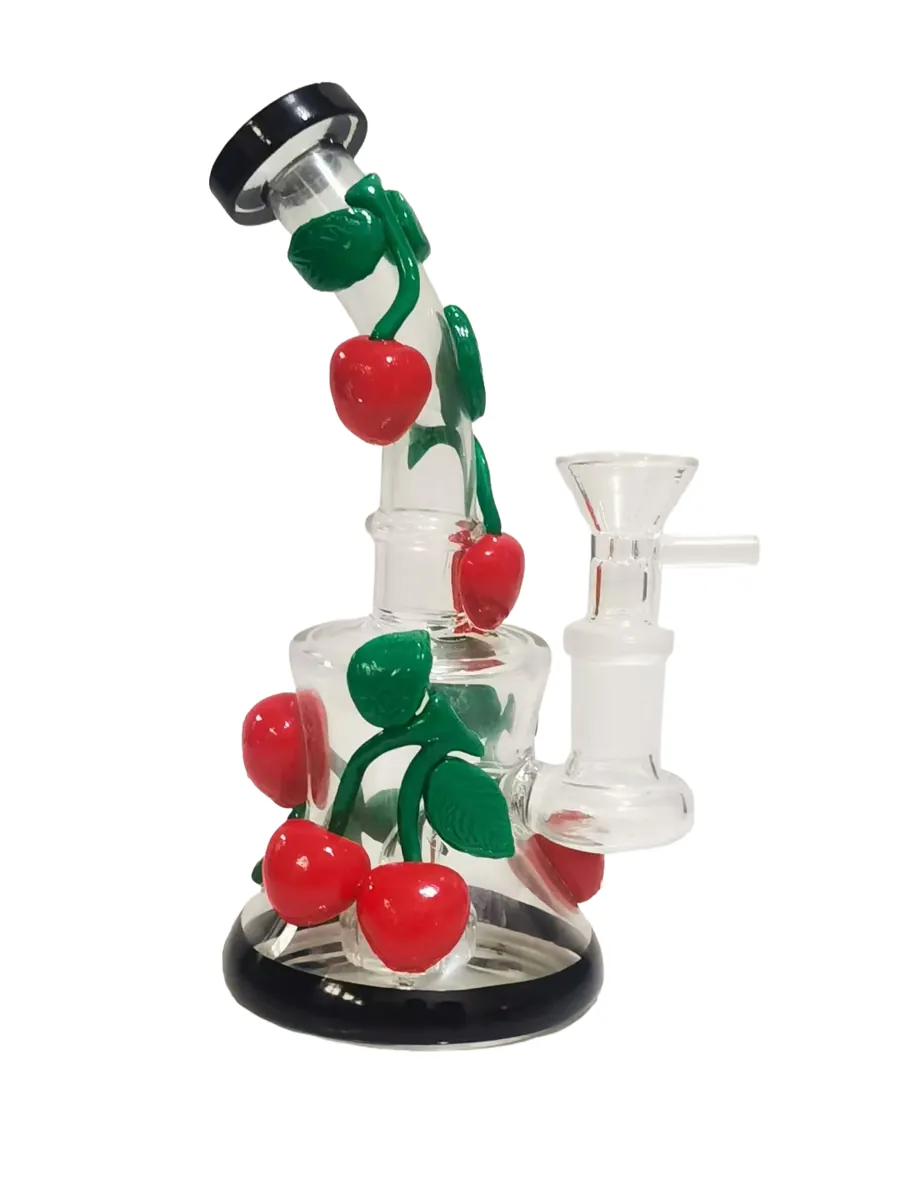
Verify SKU codes, brand marks, and any required warnings on each unit or box. Mislabeled inventory creates fulfillment errors that are miserable to fix after customs clears the shipment. Market rules differ by destination: the UK government publishes marking and labeling requirements for imported goods, and your own market may add more. Check those rules at sample stage, when a reprint costs pennies, not at the container stage, when it costs a delay.
Grading the Sample From Approve to Reject
Findings mean nothing until they become a verdict. Use four grades, and pick one in writing before you email anyone. The scale borrows the logic behind lot-by-lot acceptance standards such as ISO 2859-1. Those standards define in advance how much defect is acceptable in an inspected batch. Set the bar before you look, then measure against it.
| Grade | What You Found | Your Move |
|---|---|---|
| Approve | No structural defects. Minor cosmetic variation consistent with hand-blown work. Joints seat flush with no rock. Function passes. Packaging adequate for freight. | Approve for bulk. Photograph the cosmetic baseline and share it with the supplier, so both sides hold the same definition of acceptable. |
| Conditional | Sound structure, but non-customer-facing cosmetic flaws or thin packaging are present. | Approve in writing with precise conditions attached to the bulk order. One sentence per condition, each with a way to verify it. |
| Revise | Wall readings drift from spec, joints rock or leak, airflow is clearly off, dimensions visibly stray from the approved drawing, or a screening test fails. | Request a revised sample and attach a documented defect report with photos and measurements. Name the zone that failed and why. |
| Reject | Stones, cracks, failed material screening, or dimensions far from the approved spec. | Reject outright and reassess the supplier relationship before spending anything further. Ask whether the QC capability was overstated during vetting. |
Be honest about the grade you assign. A conditional grade is only valid when you can state each condition in one sentence; if you cannot, the sample is a revise. If a supplier keeps sending revise-grade samples, the problem is supplier selection, not your inspection.
Writing Defect Feedback Suppliers Actually Fix
The fastest way to waste a revision round is a vague complaint. “Quality is not good enough” gives a factory nothing to adjust. Specific, documented feedback is the difference between a better second sample and an identical one. Ava Zeng, the founder of Elfglass, puts it plainly: “What kills a great idea is never the technology, but the communication gap and a lack of empathy.”
The Four Field Defect Report
For every defect, record four fields. Type: seed, stone, scratch, dimension drift, joint fault, or function failure. Location: where it sits on the piece. Evidence: a photo with a ruler or caliper in frame for scale. Reading: the measurement itself, or a severity rating. One structured table beats twenty chat messages. Production teams fix what they can see and measure, and a clear report lets them trace the fault to a process step.
Setting Terms Before the First Sample
Agree on revision timing before samples ship, not after they disappoint. Elfglass cuts samples for standard designs within 1-3 days and signs an NDA before any OEM project starts, so detailed design feedback stays protected on both sides. Suppliers who cannot commit to a revision date are telling you something about their planning. For the full back-and-forth across multiple rounds, the sample revision process breakdown covers what to expect at each cycle.
Making the Final Approval Decision
The verdict is a business call wearing a quality costume. Weigh the factors below before you send the approval email, because each one changes what a fair grade looks like.
First Orders Deserve Stricter Standards
Hold a first sample to approve-grade only. You have no delivery history to lean on, so the sample itself must carry all the trust. After several clean orders, conditional grades on minor points become reasonable — the track record, not optimism, is what changed. The reorder checklist for glass suppliers describes which checks keep that trust honest over time.
The Cost Math Behind the Verdict
Delay feels expensive until you price the alternative. A revise round costs shipping days. A bad approval costs a 100-piece minimum you cannot sell, plus returns from customers who trusted the photos. That is why low-risk structures like the 100-piece MOQ trial order program exist: small commitments keep the downside small while you verify a partner. Elfglass answers quote requests within 12 hours, so the cost question never has to stall the verdict. When approval finally lands, move straight to production terms; the wholesale water pipes program page lists current options and minimums.
Keep the Approved Sample as Evidence
Whatever verdict you issue, write it down with the date, the findings, and any conditions. Store the approved sample sealed and labeled, because it becomes the physical baseline for bulk inspection and your evidence if quality drifts later. A dispute over a signed sample is a short conversation. A dispute over a memory is not.
Frequently Asked Questions
How many samples should I evaluate before approving a design?
Request two or three per design. One piece might be the best one the factory made that week. Several pieces let you compare consistency across units before you commit any capital.
Which defects are cosmetic and which are structural?
Cosmetic flaws sit on the surface away from stress points, like faint polish marks or minor color drift. Stones, cracks, rocking joints, and walls far below spec are structural, and they force a revise or reject verdict.
Can I verify glass type without a laboratory?
Only partly. Brief flame exposure plus a cold rinse screens out obvious soda-lime, but it cannot grade borosilicate quality. Written material specifications and supplier certifications give stronger evidence.
How should I store the approved sample?
Keep it sealed, labeled, and photographed from several angles. It becomes the physical baseline for inspecting bulk production, and it is your evidence if a dispute arises later.
What if bulk units do not match the approved sample?
Re-run the five-zone audit on delivered units and document every deviation with photos and measurements. Send the defect report to your supplier with a specific remediation request tied to your written agreement.
Conclusion
A sample box is a decision wrapped in foam. To evaluate a glass pipe sample properly, run it through the five zones, assign one of the four grades in writing, and send feedback specific enough to fix. Do that, and the approval email becomes the easy part. Unsure how to grade one of the five zones? Send the Elfglass team your sample photos and we will walk you through a real grading sheet.
Key points to remember:
- Bright light and a caliper do most of the work: the eyes find surface flaws, and measurements find spec drift.
- Stones, cracks, forced or rocking joints, and failed screening tests are automatic rejects, not negotiating positions.
- Flame tests screen; written material specifications and certifications verify.
- The approved sample, stored and labeled, is your baseline for every bulk delivery that follows.
Elfglass has run this same audit on its own production floor for sixteen years, from 100-piece trial orders to repeat shipments across the US, UK, Australia, and Canada. Put your next sample through the framework and see what verdict it earns.
Get a Quote for Your Next Order
Planning a custom run? your evaluation checklist, applied to a real sample set? Send your design files and target quantity to our factory team or message us on WhatsApp — we will reply with a feasibility check, pricing, and production timeline within 24 hours.
Wondering what happens on the factory side while you inspect? Our sampling and production workflow explains how Elfglass builds, checks, and ships each sample round.
About the Author
Ava Zeng is the founder of Elfglass, a Shenzhen-based borosilicate glass pipe manufacturer serving B2B brands worldwide. Every guide on this site is grounded in her production-floor experience— the annealing lines, QC checkpoints, and export orders behind each claim.
Before you commit to a supplier, read her founder’s story and trust promise. Then see the guide to vetting a reliable glass pipe manufacturer — the same red-flag checklist Elfglass applies to its own suppliers.
Ready to Source Custom Glass Pipes?
Get a free quote within 24 hours. MOQ from 100 pieces. NDA-protected design consultation.
