
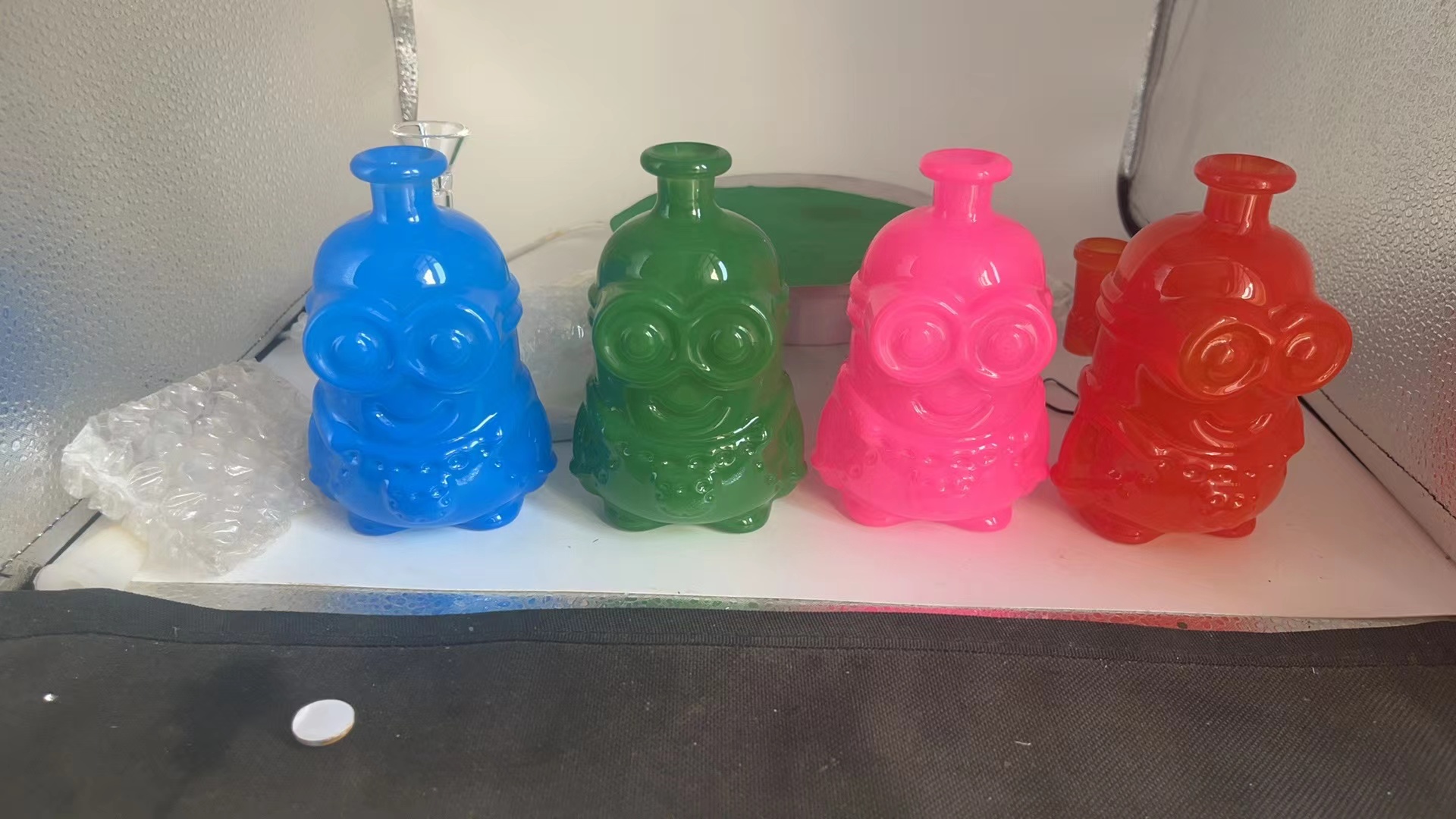
On the screen, everything looks perfect. Prototyping is the only way to discover what that digital file cannot show you.
The lines are smooth, the glass renders with a mesmerizing gloss, and that bong rotating in your CAD software looks ready to conquer the market.
It is easy to fall in love with a digital file.
It costs nothing to rotate, it never breaks, and the lighting is always perfect.
But the screen cannot tell you if the piece is too heavy to hold comfortably.
Your mouse cannot simulate whether the airflow is restrictive.
A render cannot tell you if the sound of the water recycling is satisfying.
This is the dangerous gap between a digital dream and a physical product.
This is where the importance of prototyping becomes undeniable.
At Elfglass, we are not just 3D modelers; we are makers.
We operate with a core belief: The importance of prototyping is equal to the design itself.
It is the first step where your dream lands on solid ground, and it is the single most important insurance policy for your brand. That insurance starts even before the first prototype: writing a design brief that locks down dimensions, materials, and tolerances gives our engineers something concrete to test against.
The Importance of Prototyping for Tactile Feedback
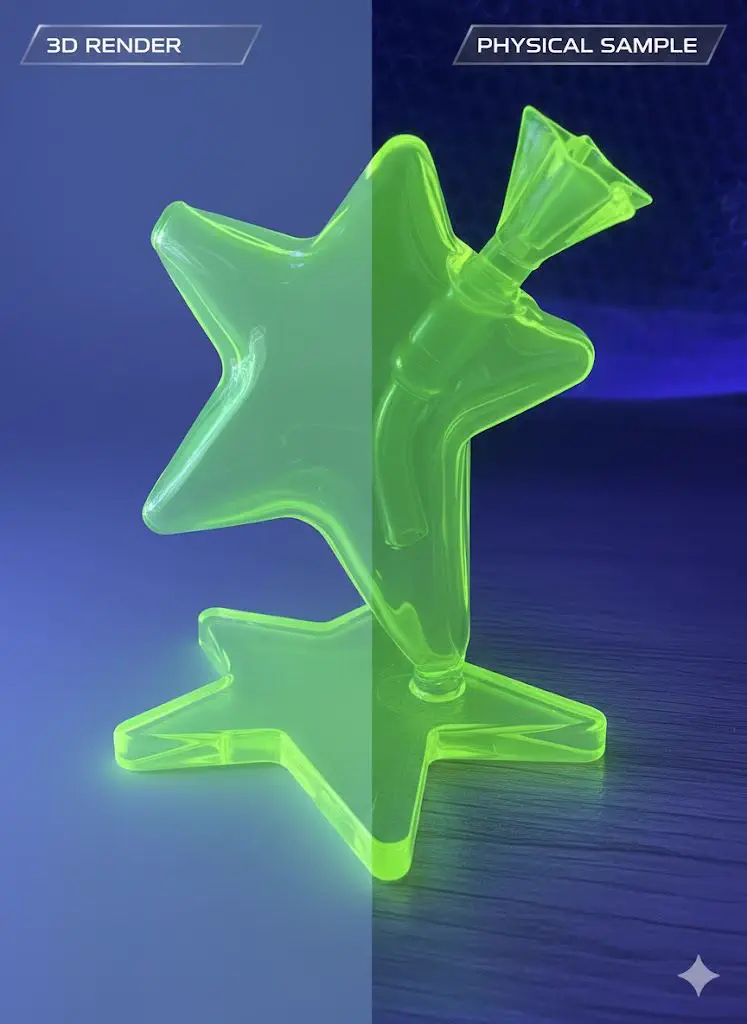
You can stare at a screen all day.
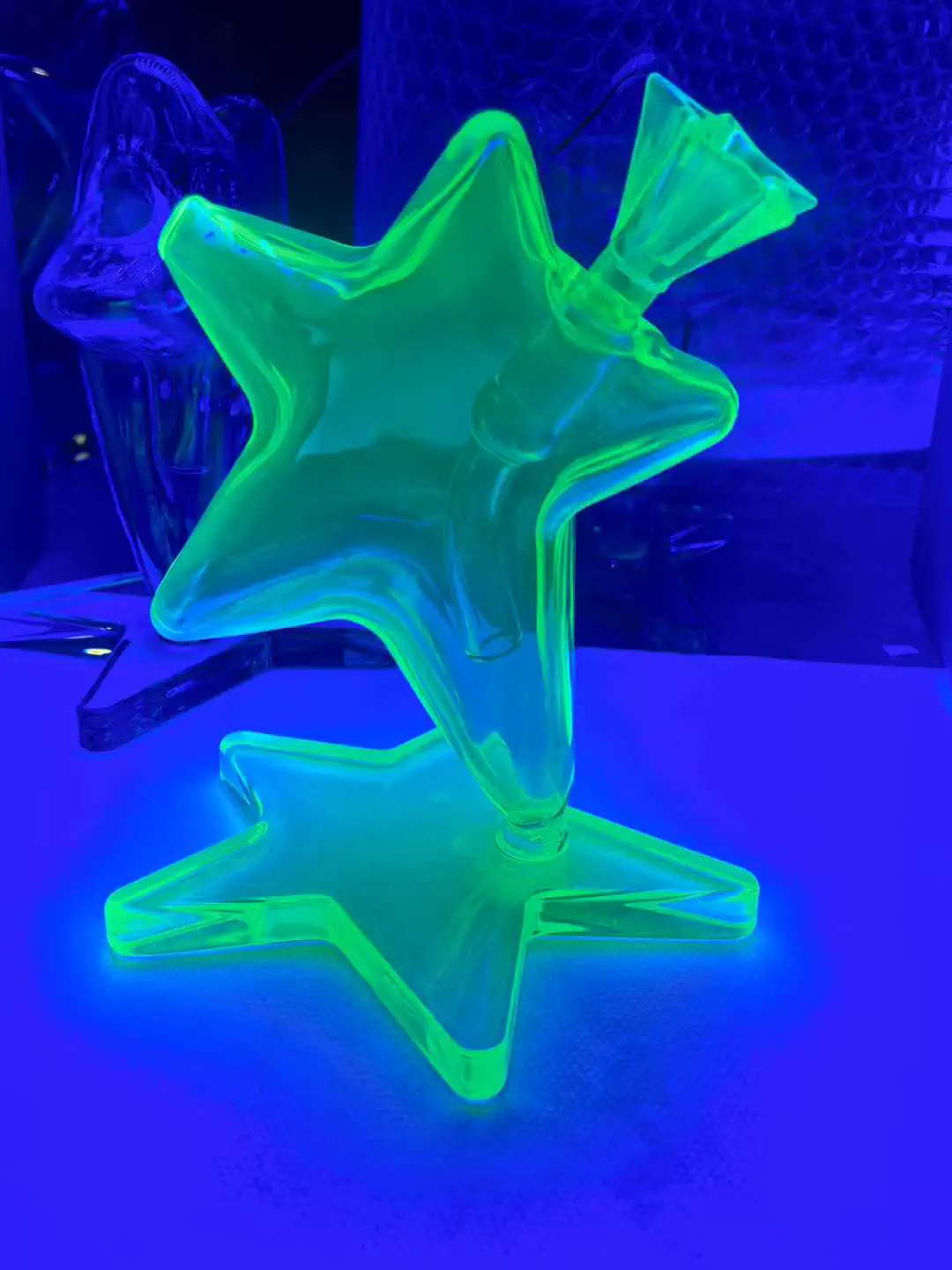
But until you actually hold that glass tube, feeling its weight settle into your palm, you don’t really “own” the design.
We often hear clients say, “The 3D looks flawless, let’s skip to mass production.”
This is a siren song that leads to shipwrecks.
Ergonomic Reality Checks
Glass pipes are intimate objects.
There are ergonomic nuances that mathematics can predict, but only hands can verify.
Understanding the importance of prototyping allows you to test:
-
The Neck Angle: Does the mouthpiece angle force the user to crane their neck uncomfortably?
-
The Flame Proximity: Are fingers dangerously close to the heat source?
-
The Weight Distribution: Is the base heavy enough to prevent tipping?
The “Hit” Factor
For smoking accessories, airflow isn’t just physics—it’s a feeling.
By investing in a prototype, you allow for the critical Water Test.
We fill the piece, test the drag, and listen to the acoustics.
The Financial Importance of Prototyping: Saving Your Budget
We understand the hesitation.
A single custom glass prototype costs significantly more than a unit from a production run.
It takes time—usually about two weeks—to produce.
You need to reframe this expense.
Prototyping is not a cost; it is a shield.
The Cost of Correction
Imagine skipping the prototype and cutting the steel molds for mass production immediately.
You order 1,000 units. When they arrive, you realize the joint size is slightly off.
-
In the prototype phase: Fixing this costs a few hours of engineering time.
-
In the production phase: You have just scrapped 1,000 units of inventory and expensive steel molds.
According to a study on product development costs, correcting a problem in the development phase is exponentially cheaper than fixing it during production.
This principle holds true for glass: the earlier you catch a flaw, the less it costs. (For a deeper dive into product development lifecycles, see this analysis by Harvard Business Review).
Investor Confidence
If you are pitching your brand to investors, a 3D render is a promise, but a prototype is proof.
Walking into a meeting with a functional sample speaks louder than a PowerPoint slide.
It demonstrates you understand the importance of prototyping in execution.
(Related: Read about our process from concept to design in From Napkin Sketch to Reality in 24 Hours.)
Our Prototyping Philosophy: Empathy in Execution
We don’t just “print” glass. We calibrate it.
When our engineers craft a prototype, they are effectively running a simulation of the mass production process.
If a specific curve is difficult to blow consistently, we catch it now. We solve the manufacturing headaches before you ever sign a purchase order.
But beyond the engineering, there is the human element.
“Believe me, I’ve seen the look in a founder’s eyes when they hold their prototype for the first time. It’s not just relief; it’s the moment they realize, ‘This is real. I actually did this.’ That moment is why we do what we do.”
We insist on this process because we are protective of your vision.
Turn Your Concept Into Production-Ready Glass
Elfglass takes you from design brief and CAD/STEP files to prototyping, branding, and mold exclusivity, with your IP protected by NDA. Send us your concept and we will return a manufacturable plan and quote.
MOQ from 100 pieces | BSCI / WRAP / ISO 9001 | NDA before every project
What is “The Golden Sample”?
Once the process involves feedback and revisions, we eventually arrive at the final version.
In manufacturing terms, this is called the Golden Sample.
The complete prototyping workflow — from design brief through sample approval to mass production — is mapped out in this custom manufacturing guide.
The Golden Sample is the holy grail of your production run.
It is the approved, perfect physical standard.
-
It is the physical contract: “Quality” is no longer subjective; it is defined by “Does it look exactly like the Golden Sample?”
-
Consistency Base: All QC (Quality Control) inspectors use this sample as the benchmark.
A Founder’s Advice: Evaluating Your First Sample
So, you’ve listened to the advice about the importance of prototyping.
The box has arrived from Elfglass. How should you evaluate it?
Here is a checklist to ensure you don’t miss Common Design Flaws:
-
The Blind Test: Close your eyes. Pick it up. Does it feel balanced?
-
The Function Test: Fill it with water. Inhale. Is the resistance comfortable?
-
The Aesthetic Audit: Check the logo placement. Is the decal crisp?
-
The Destructive Test (Optional): If budget allows, knock it over (gently). See where the stress points are.
The Two-Week Prototype Timeline: What Happens at Each Stage
A custom glass prototype takes roughly two weeks — but that is not two weeks of idle waiting. Each stage answers a specific question, and knowing the sequence helps you prepare the right inputs at the right moment so the cycle is not held up waiting on you. Here is how the two weeks actually break down.
| Stage | What We Do | What You Provide / Decide |
|---|---|---|
| Design brief intake | Lock dimensions, material, joint size, and tolerances into a testable spec | A brief concrete enough to engineer against — not just a render |
| DFM feasibility check | Flag curves or thickness transitions that will not blow consistently | Approval to adjust, or a decision on what is non-negotiable |
| Sample blowing | Hand-form the prototype in Borosilicate 3.3, simulating production | — |
| Annealing | Soak and slow-cool to release internal stress before it ships | — |
| QC and water test | Check ergonomics, drag, acoustics, and joint fit on the physical piece | — |
| Ship to founder | Send the prototype for your blind, function, and aesthetic tests | Your structured feedback, which decides whether a second version is needed |
The single biggest cause of a slipped timeline is not the glass — it is a vague brief at intake, or slow feedback at the end. Front-load the decisions that only you can make and the two weeks stays two weeks.
Giving Prototype Feedback That Shortens the Cycle
How you report what you feel determines how fast the second version is right. Notes like “make it better” cost a whole cycle; notes that isolate one variable at a time land on the first revision. This is the feedback discipline we ask founders to use.
- Test one variable per round. Change the neck angle or the base weight, not both at once — otherwise you cannot tell which adjustment fixed the problem, and the prototyping methodology of one-variable-per-cycle breaks down.
- Describe the sensation, not just the geometry. “The drag feels airy at the top of the pull” is actionable; “airflow is off” is not. Tell us what your hand and lung felt, in the moment you felt it.
- Separate must-fix from nice-to-have. A joint that wobbles is a must-fix; a logo a millimeter lower is a preference. Labeling them lets us prioritize the revision that matters for function.
- Reference the Golden Sample criteria. Judge the prototype against the approved standard it will become — weight, balance, drag, logo crispness — so your notes map directly onto the QC benchmark inspectors will later use.
- Send it in writing, with photos or a short clip. A ten-second video of the water test tells us more than a paragraph, and it removes interpretation drift between your hands and our engineers.
Conclusion: Slow is Fast
In the startup world, speed is worshipped. But in hardware and glass manufacturing, “slow is fast.”
Taking two weeks to prototype seems like a pause, but it is actually a shortcut.
It allows you to bypass the loop of errors and returns.
It allows you to go to market with a product that performs perfectly.
Never underestimate the importance of prototyping.
Don’t gamble with your production budget. Getting it right the first time is the cheapest strategy there is.
Ready to turn your digital concept into a physical reality? [Order Your Prototype Today] – Secure Your Production Success.
Frequently Asked Questions (FAQ)
Q1: What if I am not satisfied with the first prototype?
A1: This is exactly why we prototype! It is common to make minor adjustments after the first sample.
We take your feedback and produce a second version if necessary.
Q2: Is the prototyping fee refundable?
A2: Typically, the prototyping fee covers engineering time.
However, for large OEM orders, we can often discuss crediting a portion of these costs against the bulk invoice.
Q3: Can a 3D-printed plastic sample replace a real glass prototype?
A3: A 3D-printed model is great for checking size, but it cannot test weight or airflow.
To truly verify the performance, you need to respect the importance of prototyping with real glass.
Building your wholesale lineup? Explore our prototyped water pipe designs for MOQ, tiered pricing, and factory-direct lead times.
Get a Quote for Your Next Order
Planning a custom run? your prototype, built before you commit to molds? Send your design files and target quantity to our factory team or message us on WhatsApp — we will reply with a feasibility check, pricing, and production timeline within 24 hours.
About the Author
Ava Zeng is the founder of Elfglass, a Shenzhen-based borosilicate glass pipe manufacturer serving B2B brands worldwide. Every guide on this site is grounded in her production-floor experience— the annealing lines, QC checkpoints, and export orders behind each claim.
Before you commit to a supplier, read her founder’s story and trust promise, and the guide to vetting a reliable glass pipe manufacturer— the same red-flag checklist Elfglass applies to its own suppliers. For a detailed walkthrough, read about sample revision cycles.
Prototyping iteration follows the prototyping methodology, where each cycle tests one variable before moving to the next design gate.
Ready to Source Custom Glass Pipes?
Get a free quote within 24 hours. MOQ from 100 pieces. NDA-protected design consultation.
