
If you are sourcing glass pipes for a retail brand, a smoke shop chain, or a private-label line, the factory you partner with determines everything — product quality, lead-time reliability, and whether your design actually survives the jump from sketch to physical glass. Yet most buyers searching for a custom glass pipe manufacturer land on marketplace listings that tell them nothing about how the process actually works, what it costs, or where the hidden risks sit.
This guide closes that gap. It walks you through the full order-to-delivery cycle based on how a real, certified factory operates — not generic advice recycled across a dozen blog posts. You will learn the exact timeline from first consultation to bulk shipment, the QC checkpoints that separate a trustworthy partner from a risky one, and the customization options available at each stage.
What a Custom Glass Pipe Manufacturer Actually Does
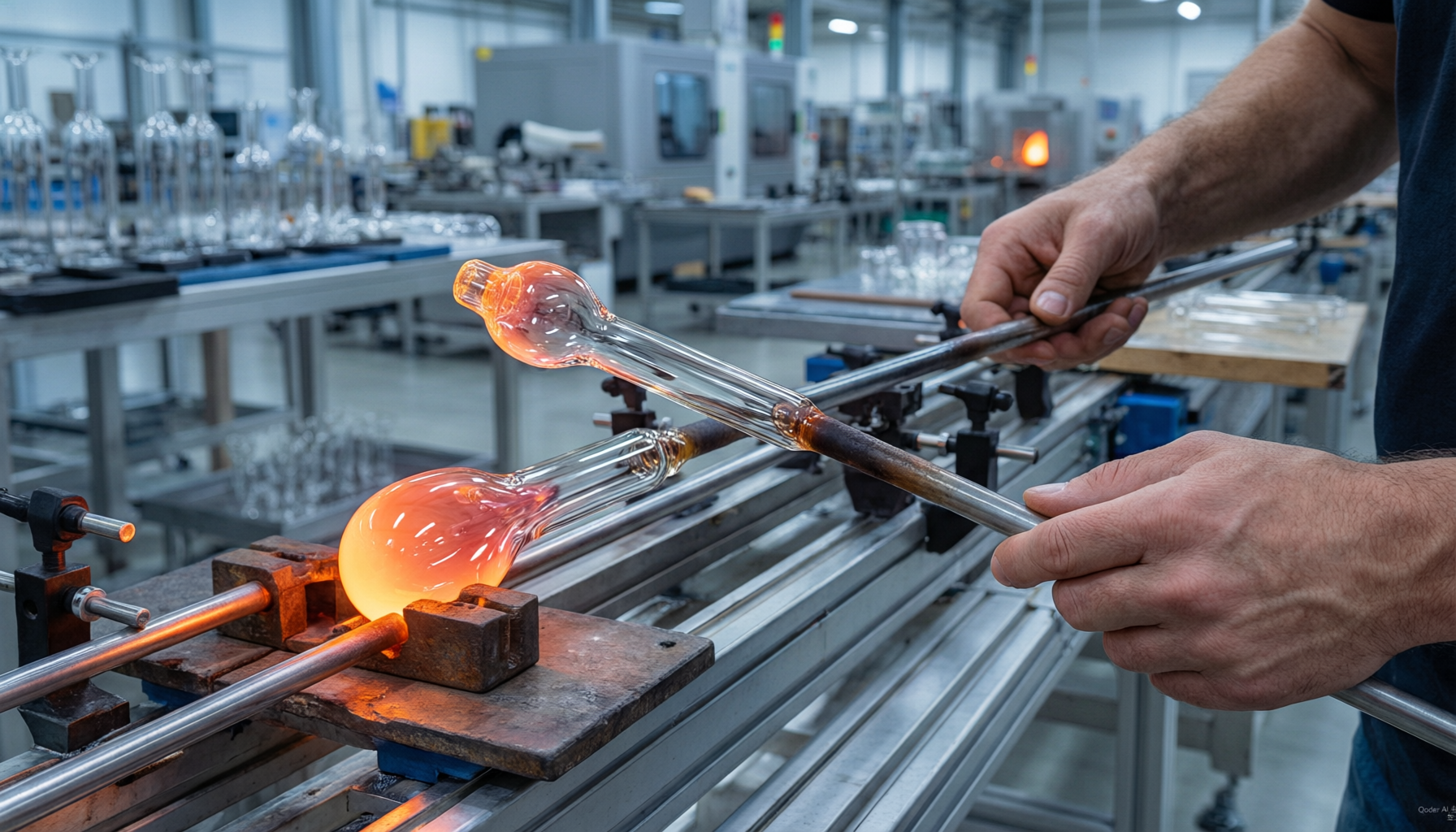
A custom glass pipe manufacturer is not a trading company that sources from unnamed workshops and slaps your logo on a box. It is a factory with its own glass-blowing artisans, its own R&D team, and its own quality-control infrastructure — one that transforms your design concept into a finished, inspectable, shippable borosilicate glass product.
The distinction matters because the smoking accessories market is flooded with intermediaries who present themselves as factories. A genuine manufacturer can show you the production floor on a live video call, walk you through each step of the blowing process, and produce a sample from your spec sheet within days — not weeks. At Elfglass’s manufacturing facility, for example, a 12-person R&D team produces a 3D digital mockup within 24 hours of receiving a design brief, and a physical sample within seven days.
The core services a real manufacturer provides include:
- Design-to-prototype translation: turning sketches, mood boards, or CAD files into a manufacturable glass product
- Custom mold fabrication for unique shapes, percolator configurations, and joint sizes
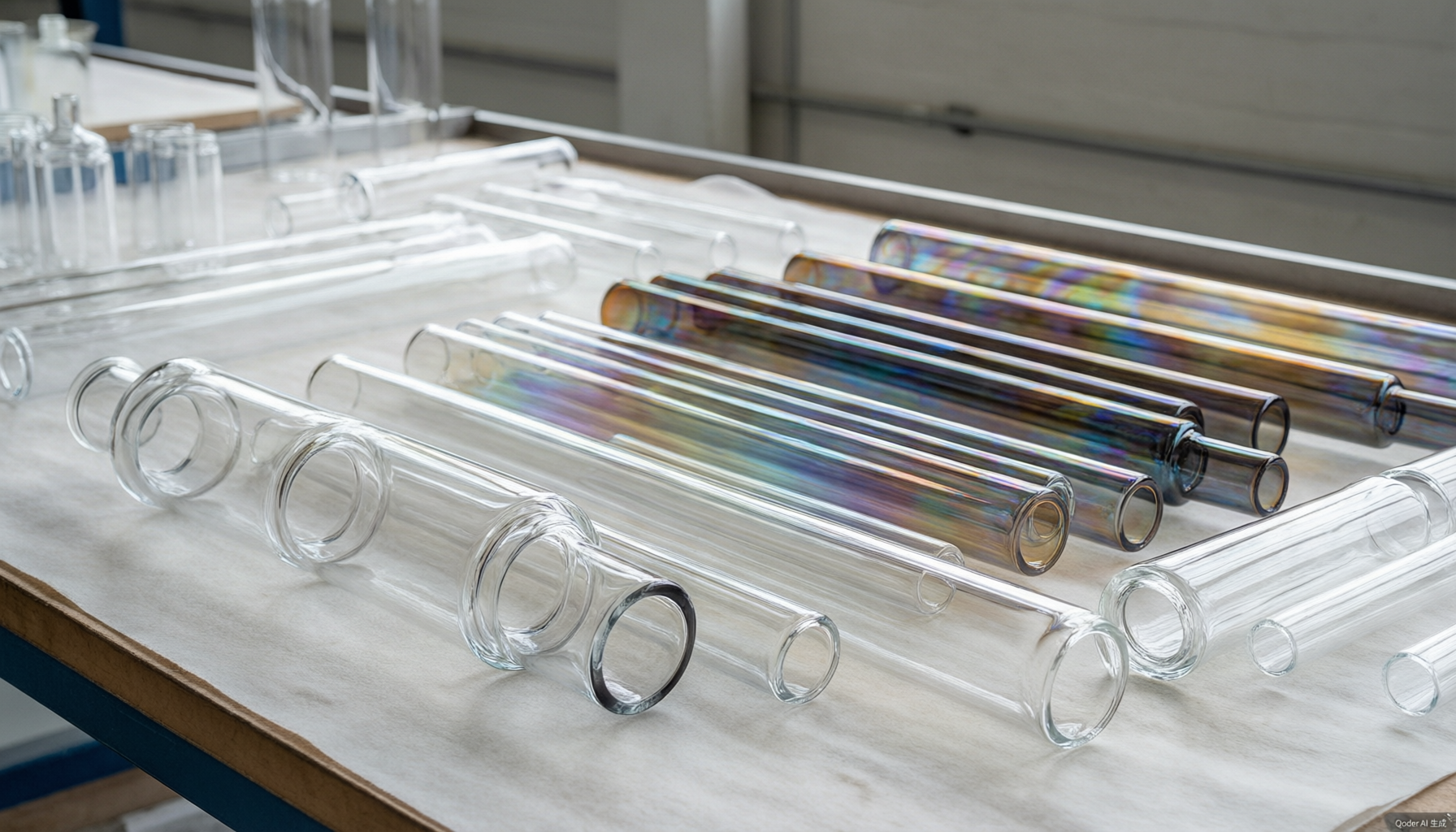
- Material selection guidance — borosilicate glass thickness (5 mm to 9 mm), color chemistry, and fuming options
- Branding application: logo engraving, sandblasting, baked-on graphics, and custom retail packaging
- Triple-check quality inspection with documented reports for every shipment
If the supplier you are evaluating cannot describe each of these capabilities with specific numbers — team size, timeline, material specs — you are likely talking to a trader, not a manufacturer. The trader-vs-factory distinction is one of the first things to verify.
The 6-Step Custom Manufacturing Process
Every custom glass pipe order follows the same fundamental sequence. Understanding each step — and what you should expect at each gate — is the difference between a smooth partnership and a costly misunderstanding.
Step 1: Design Consultation and Brief Submission
The process begins when you submit a design brief: a document describing the pipe type (hand pipe, water pipe, dab rig), target dimensions, glass thickness, color palette, percolator style, joint configuration, and branding requirements. If you do not have a formal brief yet, most manufacturers will help you build one. Elfglass, for instance, operates on a principle they call “Empathy Before Engineering” — understanding what the buyer is trying to achieve emotionally and commercially before any technical work begins.
A strong design brief covers:
- Product category and target end-user (head shop retail, concentrate enthusiasts, medical-grade accessories)
- Dimensional specifications including joint angle (14 mm, 18 mm), wall thickness preference, and overall height
- Color and finish requirements — transparent, fumed, matte sandblasted, or baked-on artwork
- Branding elements: logo placement, packaging specifications, and any retail display requirements
- Target unit cost and order volume
For a detailed walkthrough on preparing this document, see the design brief writing guide.
Step 2: Digital Rendering and Engineering Review
Within 24 hours of receiving your brief, the manufacturer’s R&D team produces a 3D digital mockup. This rendering shows the exact proportions, joint placements, percolator geometry, and logo positioning. It is not a rough sketch — it is a precision model that accounts for the physical constraints of hand-blown borosilicate glass.
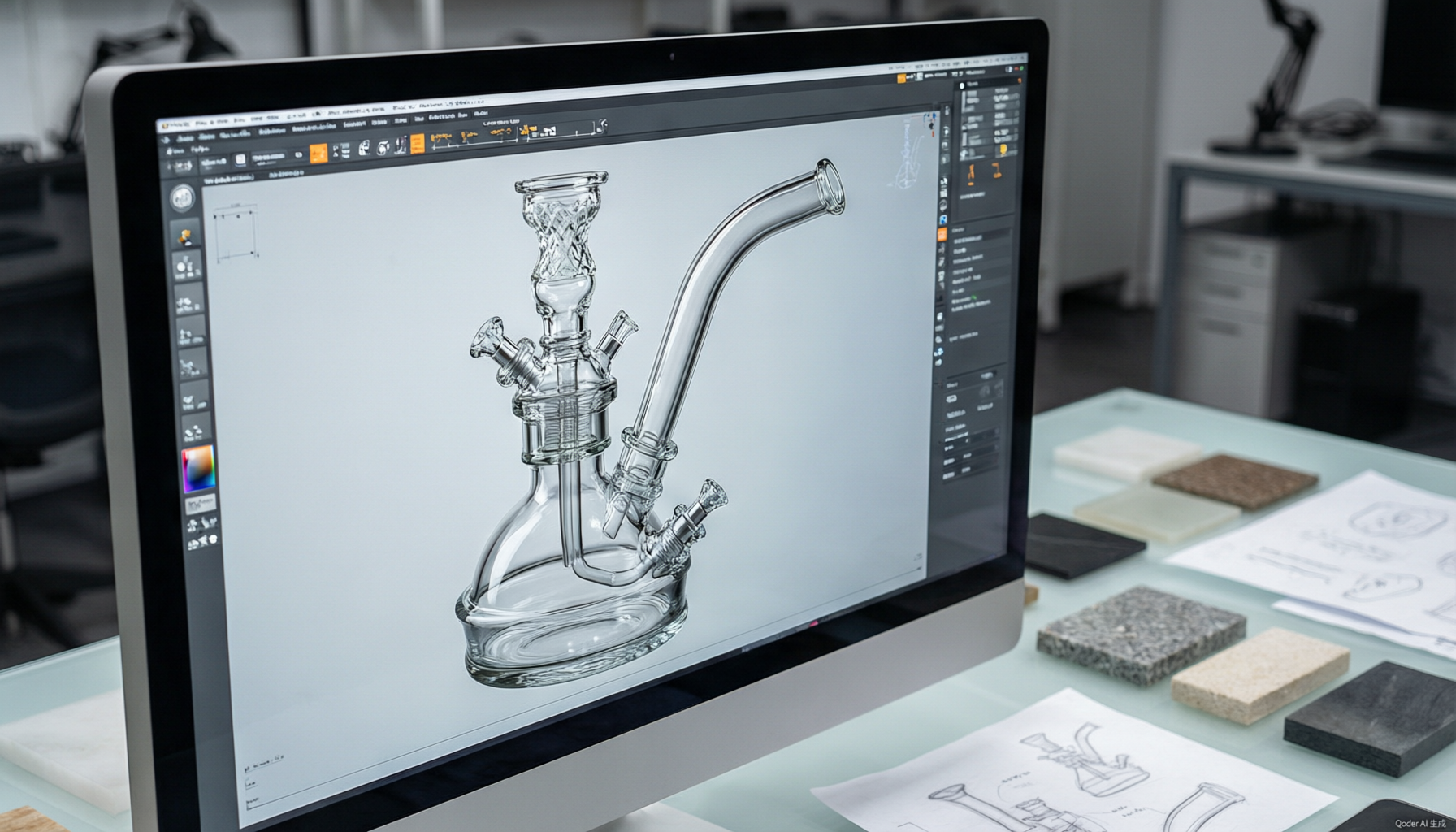
This is where engineering review adds critical value. A skilled R&D team will flag design elements that are technically unfeasible — a recycler loop too tight for consistent glass flow, a wall thickness that would compromise structural integrity, or a percolator configuration that would trap residue. The best manufacturers raise these issues proactively during the rendering stage, not after you receive a broken sample. The common design flaws guide covers the mistakes this review stage is designed to catch.
At this point, you should also receive an honest feasibility assessment. If a manufacturer agrees to every specification without pushback, that is a red flag — it suggests they will take your money rather than protect your investment. The article on five red flags to avoid explores this “blind compliance” danger in detail.
Step 3: Physical Sampling and Revision
Once you approve the digital rendering, the factory moves to physical sampling. A master artisan hand-blows the first prototype using your approved specifications. This sample serves multiple purposes: it validates the design in three dimensions, tests the glass thickness and weight balance, and confirms that branding elements (engraving, fuming, colors) render correctly on the actual material.
The sampling phase typically spans five business days (Days 3 through 7 in the production cycle). During this window, you should expect:
- High-resolution photographs of the sample from multiple angles
- Dimensional measurements verified against your spec sheet
- Weight documentation
- A video walkthrough if you cannot inspect in person
If revisions are needed — a joint angle adjustment, a color shift, a logo repositioning — the factory produces an updated sample. Most orders converge on an approved sample within one to two revision cycles, provided the initial design brief was thorough. For complex designs involving custom molds, see the custom mold fabrication guide for additional timeline considerations.
The importance of this prototyping stage cannot be overstated. Skipping it to save a few days is how buyers end up with 500 units of a product that does not match their vision. The prototyping guide explains why this step is non-negotiable.
Step 4: Pre-Production Approval and Tooling
After you sign off on the physical sample, the factory locks the specification and prepares for mass production. This stage involves creating or finalizing any custom molds, calibrating the glass-blowing stations for your specific dimensions, and staging raw materials — borosilicate glass tubes in the required thickness and color.
If your design requires a custom mold, add five to seven business days to the timeline. Standard molds (common joint sizes, popular percolator configurations) are typically already available. The OEM vs. ODM comparison explains when you need a fully custom tool versus when an existing mold can be adapted to your specifications.
Before bulk production begins, you should receive a pre-production confirmation document that locks in:
- Final approved sample reference (with photos)
- Unit count and pricing tier
- Production start date and estimated completion date
- QC checkpoint schedule
- Packaging and labeling specifications
For buyers new to importing, the import guide covers the documentation and compliance requirements you will need to prepare in parallel.
Step 5: Mass Production
Bulk production is where the manufacturer’s infrastructure is tested. At Elfglass’s Hebei production facility, 134 artisans operate eight production lines with an annual capacity of 1.5 million units. Not every factory operates at this scale, and the right partner for you depends on your order volume and product complexity. Browse our wholesale water pipes collection for pieces produced on those same lines.
During mass production, a reliable manufacturer runs in-line quality checks — not just a final inspection at the end. The quality control guide details what in-line QC should look like: dimensional spot-checks every 50 units, visual inspection for bubbles and stress fractures, and joint-fit verification against the approved sample.
Production time for a 500-unit order typically spans five to eight business days after tooling is complete. Larger orders (1,000+) may require ten to twelve business days. The MOQ and trial order guide explains how to structure your first order to minimize risk while validating production quality.
Step 6: Final QC, Packing, and Shipment
Before any unit leaves the factory, it passes through a triple-check QC process. Every single piece is inspected — not a random sample, but each individual unit. The inspection covers:
- Visual integrity: no cracks, bubbles, or stress points
- Dimensional accuracy: height, width, joint diameter within tolerance
- Functional test: joint fit, percolator flow, stability on a flat surface
- Branding verification: logo placement, color match against approved sample
- Packaging integrity: custom foam inserts, box labeling, and shipping marks
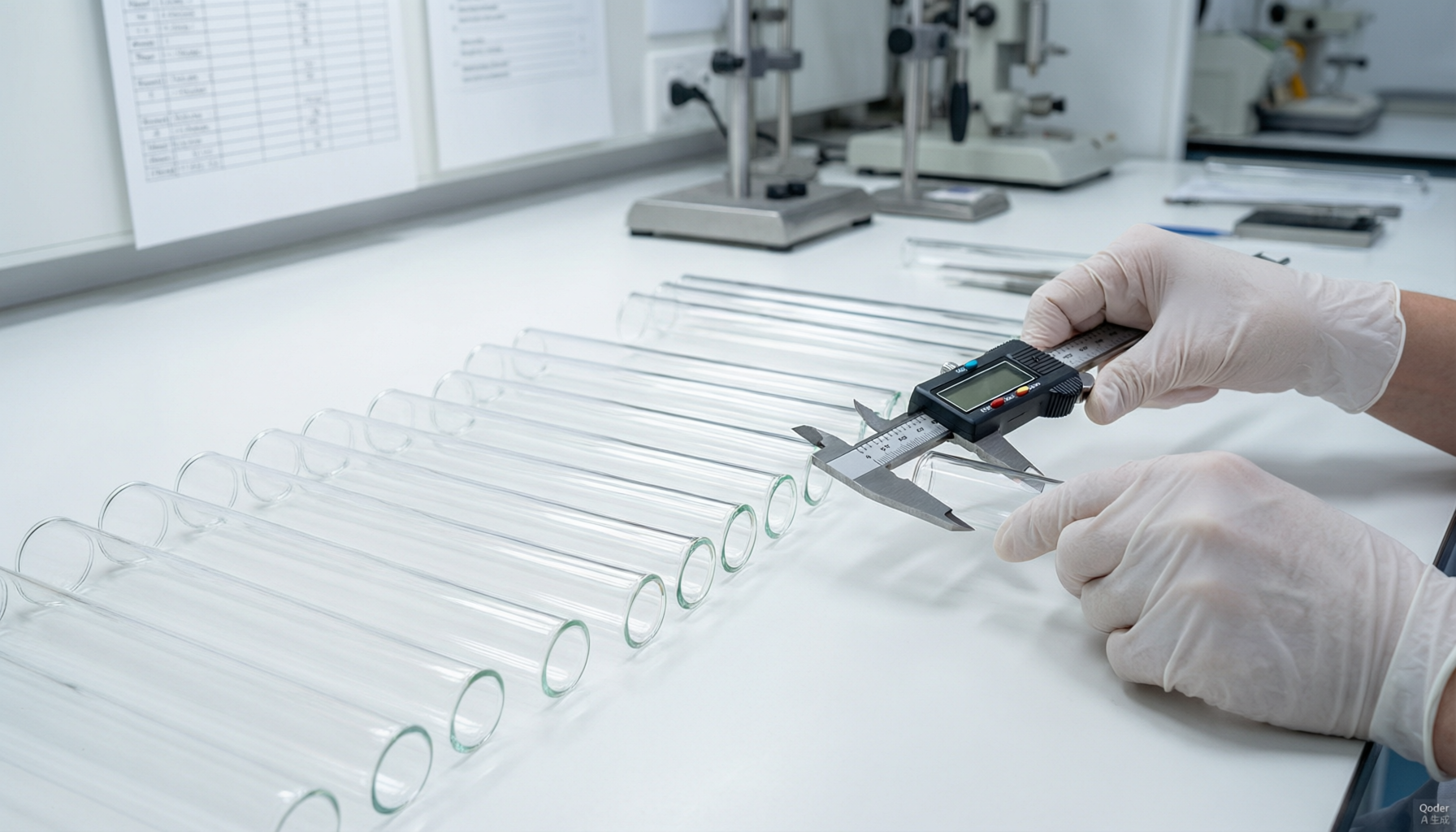
A full QC inspection report accompanies every shipment. This document is not optional — it is your evidence that the order was verified before leaving the factory, and it serves as the basis for any damage or discrepancy claims during transit. The order inspection checklist helps you cross-reference the factory report against what actually arrives.
Shipping options include sea freight (typical transit times covered in the port guide) and express courier for urgent or small-batch orders. The protective packaging guide details how custom foam inserts and double-wall cartons prevent transit damage.
Timeline and Cost Breakdown
Here is a realistic timeline for a standard custom glass pipe order, from first contact to shipment:
| Phase | Duration | Key Deliverable |
|---|---|---|
| Design consultation | Day 1 | Approved design brief |
| Digital rendering | Day 2 (24-hour turnaround) | 3D mockup with engineering notes |
| Physical sampling | Days 3–7 | Hand-blown prototype with photos and measurements |
| Sample revision (if needed) | +3–5 days per cycle | Revised sample matching approved spec |
| Custom mold fabrication (if needed) | +5–7 days | Production-ready mold |
| Bulk production (500 units) | Days 8–13 | Finished, QC-inspected units |
| Packing and shipment prep | Days 14–15 | Packed cartons with QC report |
Total cycle: approximately 15 business days from consultation to shipment for orders using standard tooling. Add one to two weeks if custom mold fabrication is required.
Cost structure for custom glass pipes depends on four variables:
- Complexity: A simple hand pipe with a logo engraving costs significantly less than a multi-chamber recycler rig with fumed color work and sandblasted branding.
- Volume: Unit price drops across pricing tiers — typically at 100 (trial), 500, and 1,000+ units. The pricing tiers guide breaks down how volume discounts work.
- Material: Standard clear borosilicate is the baseline. Fumed precious metals (silver, gold), baked-on graphics, and specialty colors add per-unit cost.
- Packaging: Custom foam inserts and branded retail boxes add tooling cost for the first run but drop to marginal cost on reorders.
For a detailed cost analysis including import duties and landed cost calculations, see the import cost breakdown.
Customization Options Available
A full-service custom glass pipe manufacturer offers modifications at every level of the product — from the glass itself to the retail packaging it ships in.
Glass Material and Dimensions
All custom pipes are hand-blown from high borosilicate glass (3.3 borosilicate), with wall thickness options from 5 mm to 9 mm. Thicker glass delivers a heavier, more premium feel and greater impact resistance; thinner glass reduces weight and material cost. The borosilicate deep dive covers the material science in detail.
Buyers can specify custom dimensions for any product category: water pipes (8 to 18 inches), hand pipes, dab rigs, and accessories. Joint configurations (14 mm, 18 mm, male or female) and percolator types (tree, showerhead, honeycomb, helix) are all customizable.
Color, Fuming, and Surface Finish
Glass color is achieved through metallic salt fuming — a process where precious metals (silver, gold) are vaporized onto the glass surface to create iridescent effects. The glass color chemistry guide explains how different metals produce different hues. Beyond fuming, manufacturers offer sandblasted matte finishes, baked-on graphics for detailed artwork, and transparent or opaque color tints mixed directly into the glass batch.
For brands building a product line, the 2026 color trends report identifies which finishes are driving buyer demand this year.
Branding and Logo Application
Three primary methods are used to apply branding to custom glass pipes:
- Laser engraving: Precise, permanent, and ideal for logos with fine detail. Works on clear and colored glass.
- Sandblasting: Creates a frosted, tactile finish. Best for bold logos and text on larger surface areas.
- Baked-on graphics: Allows multi-color artwork and complex designs to be fused permanently into the glass surface.
The logo application techniques guide compares all three methods with examples, and the branding techniques article covers how to choose the right method for your product line.
Custom Packaging
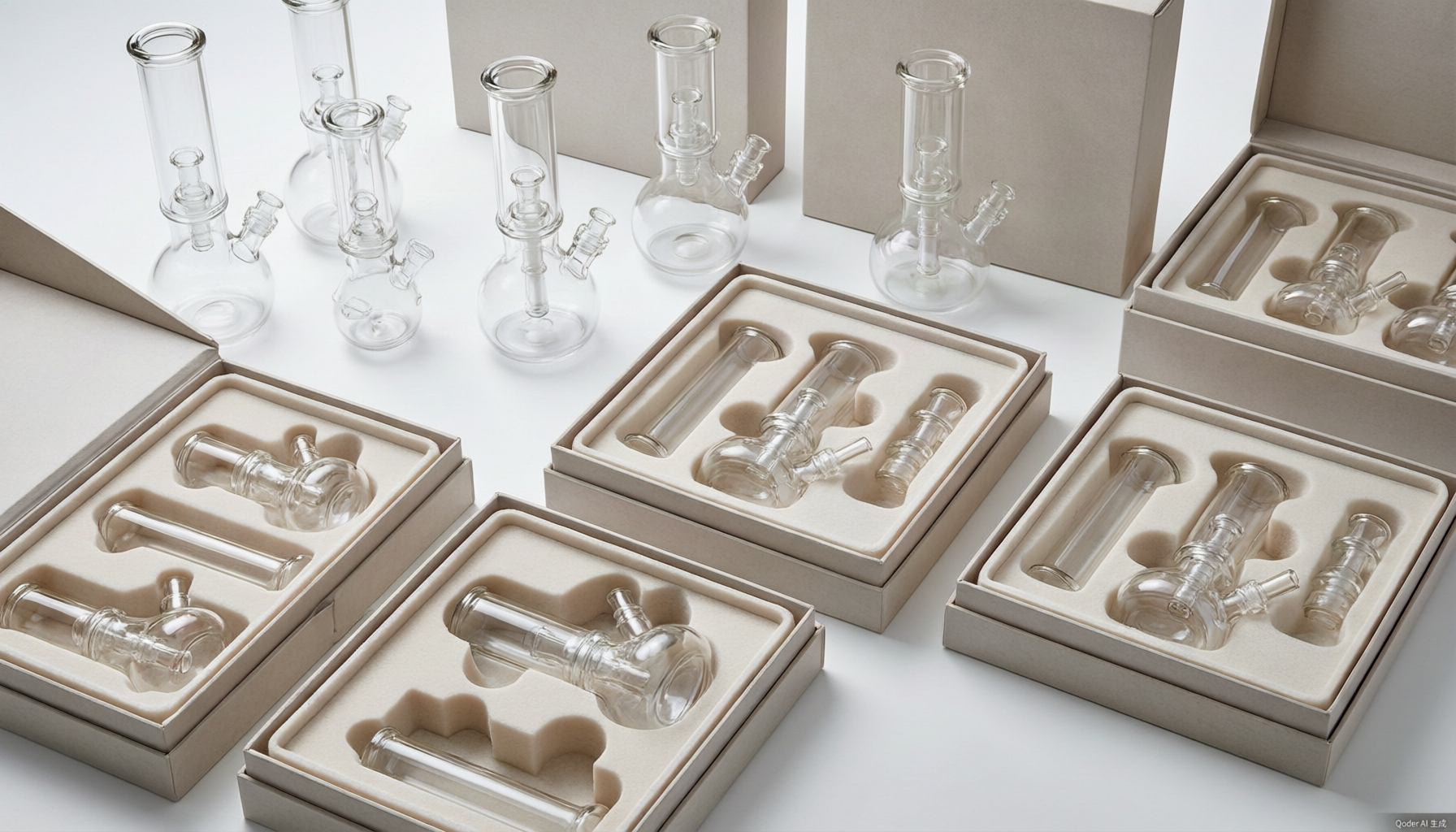
Packaging customization extends beyond a printed box. Manufacturers produce custom foam inserts that cradle each piece precisely, preventing transit damage and creating a premium unboxing experience. The factory-direct packaging guide and packaging methods comparison cover the full range of options.
Vetting a Custom Glass Pipe Manufacturer?
Elfglass is a real factory—own artisans, own R&D, own QC line—and shows you the production floor on a live video call with material certificates and a full inspection report. Send your brief and get a quote within 12 hours.
MOQ from 100 pieces | BSCI / WRAP / ISO 9001 | NDA before every project
How to Verify a Custom Glass Pipe Manufacturer
Before committing to a production order, verify that the manufacturer meets baseline standards. The factory audit checklist provides a complete scoring framework, but here are the non-negotiable checks:
- Certifications: ISO 9001 (quality management), BSCI (social compliance), WRAP (workplace standards), RoHS and REACH (chemical safety). These are not optional — they determine whether your product can legally enter target markets.
- Production transparency: The factory should offer live video walkthroughs of the production floor. If they refuse or deflect, you are likely dealing with a trading company, not a manufacturer.
- R&D capability: Ask for the team size and sample turnaround time. A 24-hour digital mockup turnaround indicates a mature engineering team; anything beyond 72 hours suggests limited capacity.
- QC documentation: Request a sample QC report from a recent order. A trustworthy manufacturer will provide it without hesitation. The inspection report reading guide helps you evaluate what you receive.
- Client references: Ask for case studies or references from buyers in your target market. A manufacturer serving US, UK, Australian, and Canadian markets will have relevant compliance experience.
The supplier evaluation questions guide provides a ready-to-use question list for your first conversation with a potential manufacturing partner.
Frequently Asked Questions
What is a custom glass pipe manufacturer?
A custom glass pipe manufacturer is a factory that produces hand-blown borosilicate glass smoking pipes to a buyer’s proprietary designs, dimensions, and branding specifications. The service covers mold fabrication, prototyping, bulk production, triple-check quality inspection, and export logistics. Leading manufacturers operate multiple production lines with annual capacity exceeding 1.5 million units and hold ISO 9001, BSCI, RoHS, and REACH certifications.
How long does custom glass pipe production take?
A typical custom glass pipe order follows a 15-business-day cycle: Day 1 covers the initial design consultation, Day 2 delivers a 3D digital rendering, Days 3 through 7 produce a physical sample for review and revision, and the remaining days are allocated to bulk production, triple-check QC inspection, and shipment preparation. Complex designs with custom molds may add 5 to 7 days for mold fabrication.
What is the MOQ for custom glass pipes?
Leading custom glass pipe manufacturers offer MOQs starting at 100 pieces for trial orders. Volume pricing tiers typically apply at 500 and 1,000 unit thresholds. NDA-protected OEM manufacturing is available for buyers who need to protect proprietary designs during the sampling and production process.
What glass material is used for custom pipes?
Custom glass pipes are hand-blown from high borosilicate glass (3.3 borosilicate) with wall thickness options ranging from 5 mm to 9 mm. Borosilicate glass is chosen for its superior heat resistance, chemical stability, and durability compared to soda-lime glass. The material is fully sustainable and meets RoHS and REACH compliance requirements for international markets.
What certifications should a glass pipe manufacturer hold?
A reliable custom glass pipe manufacturer should hold ISO 9001 for quality management systems, BSCI for social compliance auditing, and WRAP for workplace standards. For product-level compliance, RoHS and REACH certifications ensure the glass and any decorative coatings meet chemical safety requirements in the US, EU, UK, Canada, and Australia.
Start Your Custom Order
If you have a design concept ready — or even a rough idea of what your next product line should look like — the fastest path forward is a direct conversation with the manufacturing team. At Elfglass, the consultation-to-mockup turnaround is 24 hours, and the full sample-to-shipment cycle completes within 15 business days.
Reach out via WhatsApp at +86 13530361570 or submit an inquiry through the contact page. Responses are guaranteed within 12 business hours.
Whether you are launching your first private-label line or expanding an existing catalog with new shapes and colorways, the manufacturing process is designed to move from concept to physical product as quickly as the glass allows — without cutting the engineering reviews that keep quality consistent at scale.
Ready to Start Your Custom Glass Pipe Project?
Get a free quote within 24 hours. MOQ from 100 pieces. NDA-protected design consultation.
About the Author
Ava Zeng is the founder of Elfglass, a Shenzhen-based borosilicate glass pipe manufacturer serving B2B brands worldwide. Every guide on this site is grounded in her production-floor experience— the annealing lines, QC checkpoints, and export orders behind each claim.
Before you commit to a supplier, read her founder’s story and trust promise, and the guide to vetting a reliable glass pipe manufacturer— the same red-flag checklist Elfglass applies to its own suppliers.
