You have the brand name. The white label vs private label decision is what turns that name into an actual product. For more context, see this exclusive designs vs open catalog.
You have the vision.
You have the domain name and the Shopify store ready to go.
But you are missing the most important piece of the puzzle: the product.
Standing at the edge of the manufacturing world, you are faced with a fork in the road.
To your left is White Labeling: the fast track.
It promises products on your shelves in weeks.
To your right is Private Label Glass Pipes: the scenic route.
It requires patience and engineering, but it promises something else—a legacy.
For a new founder in the glass smoking accessories market, this choice isn’t just about logistics; it is about identity.
Are you building a cash flow business, or are you building a brand asset?
At Elfglass, we believe that your supply chain is your strategy.
This guide will decode the differences between these two paths, specifically for private label glass pipes, stripping away the jargon so you can make the decision that aligns with your ambition.
Private label means your brand name will eventually sit on the glass itself. If you are still choosing that name, our practical guide to naming your smoke shop brand covers the tests a name should pass before it becomes a product line. And once your name is on the glass, owned channels amplify it: our guide to
Path 1: White Labeling — The “Fast Pass” to Market
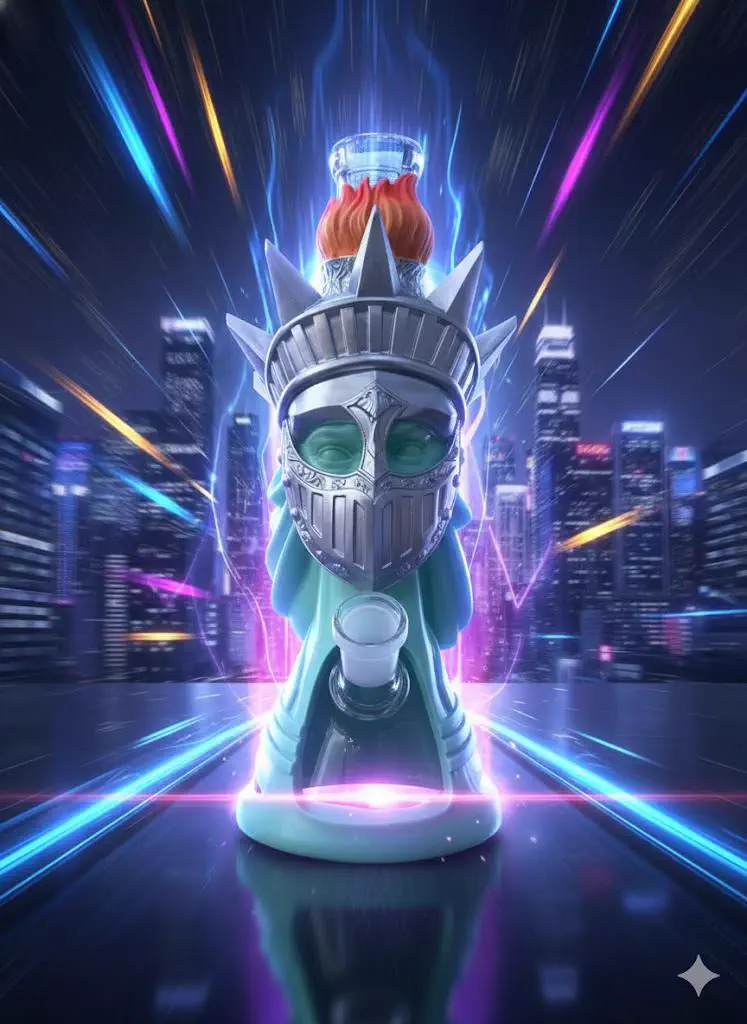
The Definition: White Labeling is the practice of buying a generic, pre-manufactured product from a factory and selling it as-is, or perhaps with a simple sticker on the packaging.
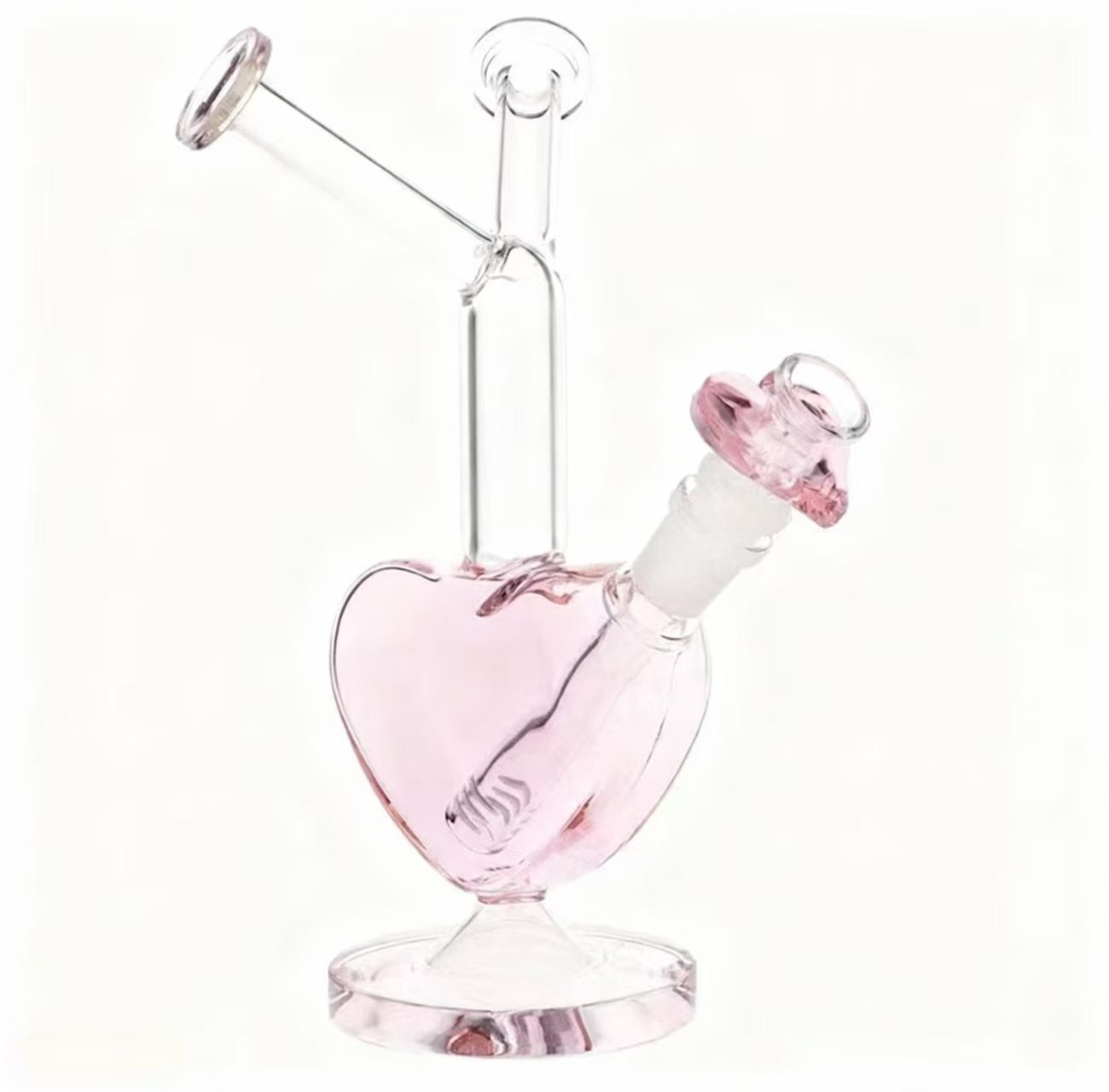
In the glass industry, this looks like buying a standard 10-inch beaker bong that is also being sold to 500 other smoke shops.
The Advantages (The “Sugar Rush”)
-
Speed to Market: You can technically start selling next week.
-
Low Upfront Cost: You avoid the costs of molds and R&D.
-
Market Validation: These designs are usually “proven sellers.”
The Disadvantages (The Crash)
-
Zero Uniqueness: If your customer can reverse-image search your water pipe and find it on AliExpress for $5 less, you lose.
-
The “Race to the Bottom”: You are forced to differentiate on price, squeezing your margins.
-
Low Brand Equity: You are building a store, not a brand.
Path 2: Private Label Glass Pipes — The “Architect’s” Path
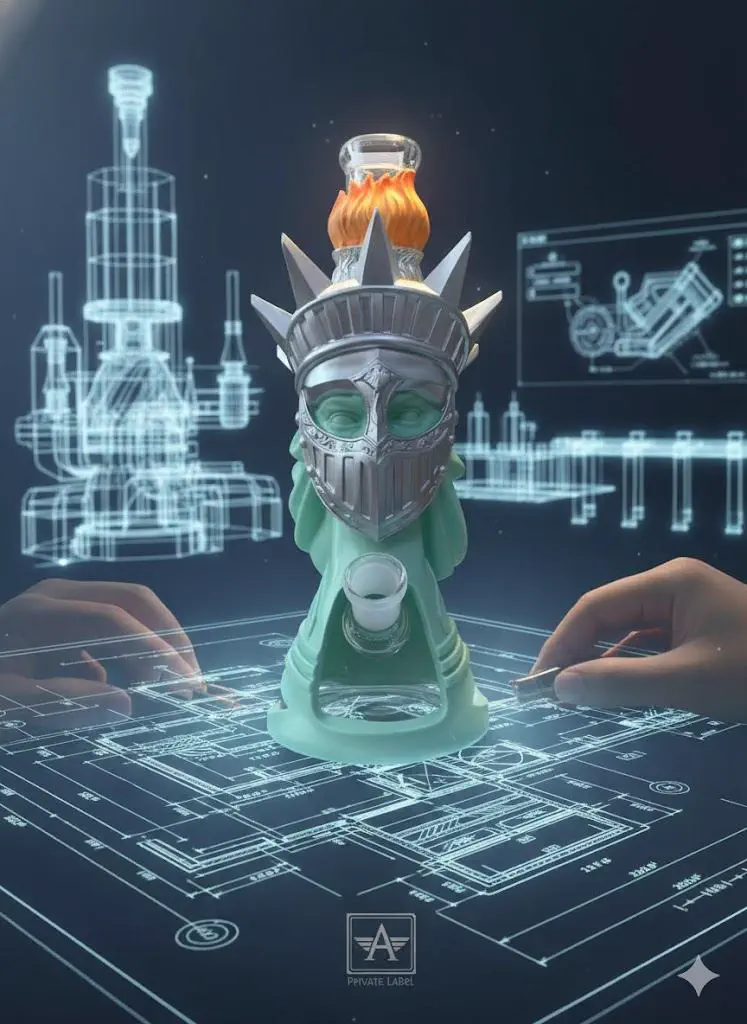
The Definition: Creating private label glass pipes involves partnering with a manufacturer (like Elfglass) to create a product that is sold exclusively under your brand.
In the glass industry, this is a spectrum. It can range from “Light Private Label” (baking on your unique decal) to “Full OEM” (creating a custom mold).
Regardless of the depth, the key is that the product looks and feels like yours.
The Advantages (The Legacy Build)
-
Total Exclusivity: You aren’t competing with Amazon. You are the only source for this specific version.
-
Pricing Power: When your product is unique, you dictate the price. You aren’t selling “a bong”; you are selling “The Experience.”
-
Asset Building: You are building Intellectual Property (IP). Whether it’s a custom mold or a trademarked visual style, you are creating assets — and assets only hold value if you secure them. Our guide to protecting your product design IP when sourcing overseas covers exactly how.
The Disadvantages (The Investment)
-
Longer Lead Times: Good things take time. You need to account for design approval and the “Golden Sample.”
-
Higher MOQs: Factories require Minimum Order Quantities to make the setup efficiency worth it. (Though at Elfglass, we keep these accessible).
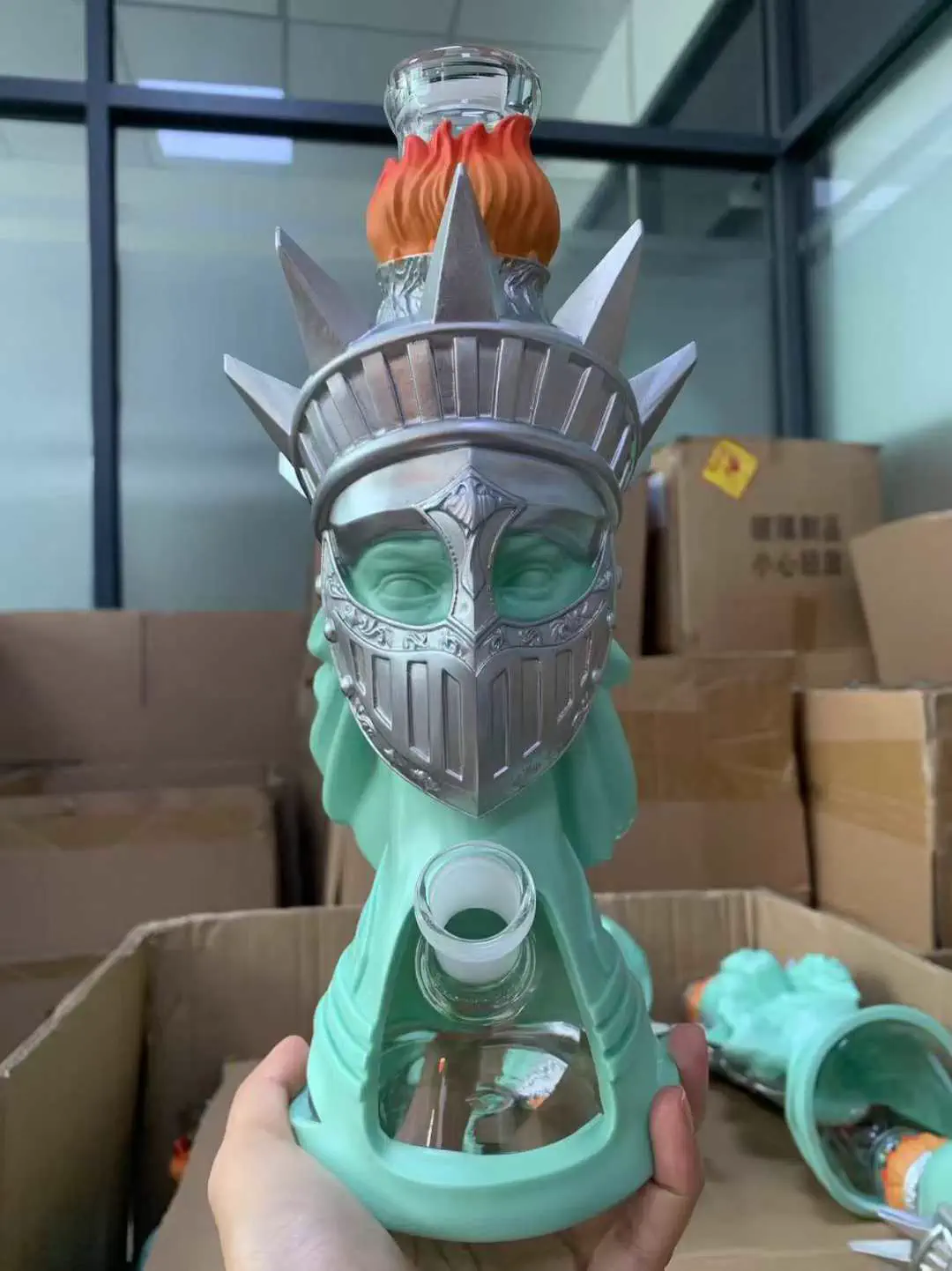
The Strategic Comparison: White Label vs. Private Label Glass Pipes
To help you visualize the trade-offs, think of it this way:
Visualizing the Journey
-
White Label is like renting a furnished apartment. It’s quick and easy, but you can’t paint the walls, and the landlord can kick you out.
-
Private Label is like building a custom home. It takes planning and investment, but every room is designed for you, and you own the equity.
(For a broader business perspective on these models, you can read this analysis by Forbes.)
Turn Your Concept Into Production-Ready Glass
Elfglass takes you from design brief and CAD/STEP files to prototyping, branding, and mold exclusivity, with your IP protected by NDA. Send us your concept and we will return a manufacturable plan and quote.
MOQ from 100 pieces | BSCI / WRAP / ISO 9001 | NDA before every project
Which Path is Right for You? A Decision Framework
You don’t have to guess. Use this simple framework to determine where you fall.
Choose White Label If:
-
You are a “Dropshipper” or affiliate marketer just testing traffic sources.
-
You have zero interest in product development or design.
-
You need to launch this week to catch a seasonal trend (like 4/20).
Choose Private Label Glass Pipes (Partner with Elfglass) If:
-
You are a “Visionary” founder who wants to solve a specific user problem.
-
You want to build a brand that can be sold or acquired in the future.
-
You care deeply about the unboxing experience.
-
You are ready to invest in a “moat” to protect your business from copycats.
The “Bridge” Strategy
Many of our most successful clients, like “Smart” (a privacy-focused brand builder) and “Max” (a scaling wholesaler), actually use a hybrid approach.
They might use White Label to fill out their catalog with standard accessories while investing their capital into private label glass pipes for their hero products.
This aligns perfectly with our comprehensive guide on Wholesale Glass Pipes & Bongs: A Partnership Guide to Sourcing from China, where we discuss balancing your portfolio.
This allows you to launch quickly while still building a unique identity where it matters most.
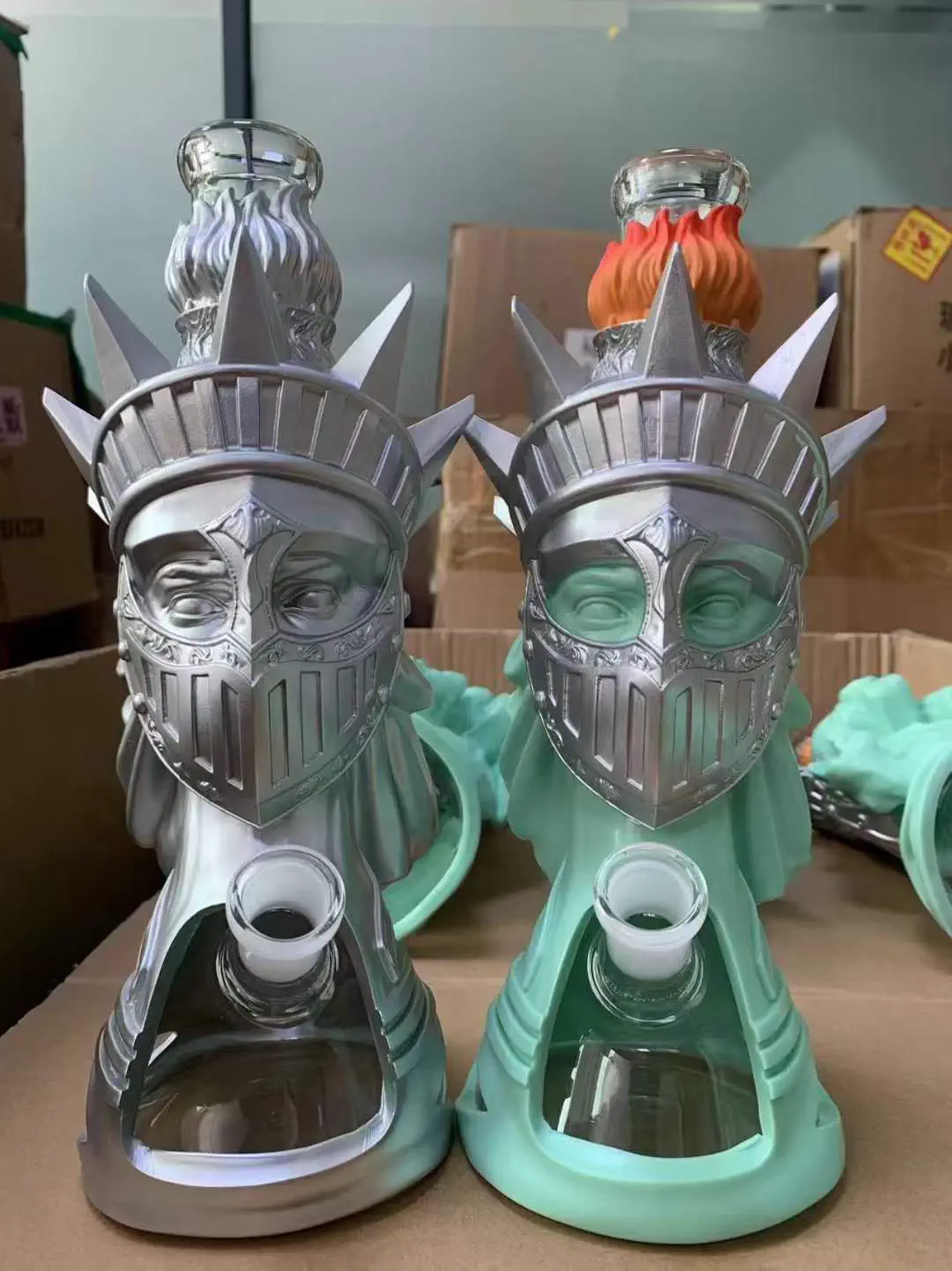
White Label vs Private Label: Cost, Timeline, and Risk at a Glance
The two paths are described above in prose; condensed into one table, the trade-off becomes a decision you can make against your actual budget and launch date. Every figure restates a point already covered — the value is in seeing speed, cost, and risk side by side rather than scattered across two sections.
| Dimension | White Label | Private Label / OEM |
|---|---|---|
| Speed to market | Weeks — you can sell almost immediately | Longer — design approval plus a Golden Sample cycle |
| Upfront cost | Low — no molds, no R&D | Higher — tooling and sampling investment |
| Typical MOQ | Low; buy stock designs as-is | ~100 units for logo application; 500–1,000 for a custom mold |
| Exclusivity | None — the same piece is sold to hundreds of shops | Total — you are the only source for that version |
| Pricing power | Weak — forced to compete on price | Strong — uniqueness lets you set the price |
| Asset built | A store, not a brand | Intellectual property: a mold, a trademarked visual style |
| Core risk | Reverse-image-searchable; a race to the bottom | Capital tied up before first sale; longer runway |
The Light-to-Full Private Label Ladder: Choosing Your Depth
Private label is not a single switch — it is a spectrum, and you can buy in at the rung that matches your budget and your ambition. Each step down adds exclusivity and cost. Most founders do not need to start at full OEM; they start one or two rungs down and climb as the brand proves out.
- Rung 1 — Decal or logo on a stock shape. The lightest touch: your mark baked onto an existing design. Lowest MOQ (around 100 units), fastest to launch, first real step off pure white label.
- Rung 2 — Custom color on a stock shape. A proprietary colorway on a proven geometry. Adds visual exclusivity without new tooling; a separate kiln setup, so plan the lead time.
- Rung 3 — Custom packaging and unboxing. Your box, insert, and reveal. The product is shared but the experience is yours — a disproportionate brand lift for the cost.
- Rung 4 — Modified geometry on an existing mold. Tweaking proportions, joints, or percolators on a base tool. More exclusive than color, cheaper than a wholly new mold.
- Rung 5 — Full custom OEM mold. A shape that exists nowhere else. Highest MOQ (500–1,000 units) and tooling cost, but the deepest moat — this is the rung that becomes a sellable asset.
The bridge strategy above is really about which rung you fund first: white label fills the catalog while you invest capital at the rung that becomes your hero product. Climb deliberately — each rung you own is one a copycat cannot simply reorder from a trading company.
Our Role: The “Private Label” Technical Partner
While White Labeling has its place, Elfglass was built for the Private Label and OEM journey.
We are not a warehouse of generic goods; we are a studio of creators.
Our philosophy of “Empathetic Forging” means we are designed to take your vision and make it real.
-
We handle the complexity: From molds to decal application.
-
We protect your IP: Your private label designs are safe with us.
-
We lower the barrier: We offer reasonable MOQs and transparent pricing.
Conclusion: Choosing Your Legacy
The choice between White Label and private label glass pipes is fundamentally a choice about the future.
White Label is about selling a product. Private Label is about building a legacy.
If you are ready to stop reselling someone else’s work and start building an asset that belongs to you, we are ready to help. We are more than a factory; we are your Technical Partner.
Ready to build a brand that is truly yours? [Contact Elfglass] to start your Private Label journey.
Frequently Asked Questions
Are OEM and private label glass pipes the same thing?
They are closely related. Private label usually refers to applying your branding to an existing product, while OEM means creating a completely new product from scratch. Elfglass handles both.
Can I start with white label and switch to private label later?
Absolutely. You can use white label products to test styles, then invest in private label glass pipes for the winning styles to improve your margins.
What is the typical MOQ for a private label glass project?
It varies. For simple logo application, MOQs can be as low as 100 units; for fully custom shapes, MOQs might start at 500-1,000 units.
Get a Quote for Your Next Order
Planning a custom run? your label and packaging plan, with samples? Send your design files and target quantity to our factory team or message us on WhatsApp — we will reply with a feasibility check, pricing, and production timeline within 24 hours.
Whichever path you choose, our OEM and private label process explains exactly how sampling, branding, and bulk production work at Elfglass.
About the Author
Ava Zeng is the founder of Elfglass, a Shenzhen-based borosilicate glass pipe manufacturer serving B2B brands worldwide. Every guide on this site is grounded in her production-floor experience— the annealing lines, QC checkpoints, and export orders behind each claim.
Before you commit to a supplier, read her founder’s story and trust promise, and the guide to vetting a reliable glass pipe manufacturer— the same red-flag checklist Elfglass applies to its own suppliers.
Ready to Source Custom Glass Pipes?
Get a free quote within 24 hours. MOQ from 100 pieces. NDA-protected design consultation.
