
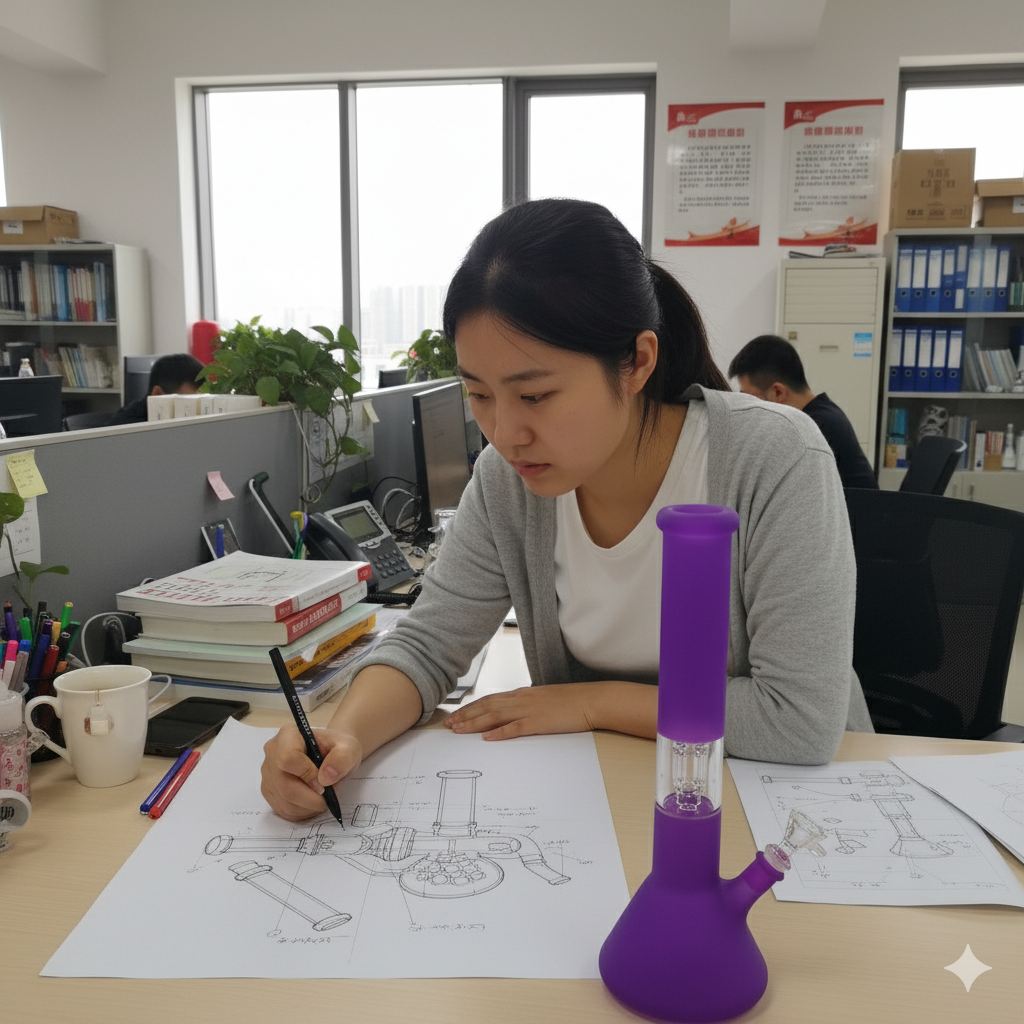
The most underused differentiation lever in glass pipes is not the glass. It is what wraps around it. Walk a wholesale showroom and nine out of ten pieces are clear borosilicate in near-identical silhouettes — beautiful, functional, and impossible for a customer to tell apart at a glance. Now set down one pipe wearing a colored silicone sleeve: instant grip, instant color, instant brand surface, and a product that survives a drop that would shatter its naked neighbors. That single accessory changes how the pipe looks, feels, ships and sells.
For an OEM brand, the silicone sleeve is quietly one of the highest-return additions you can make. It costs far less than complex glass art, yet it tackles three expensive problems at once: breakage in transit and use, sameness on a crowded shelf, and the lack of a durable branding canvas. It also opens doors to buyer segments — outdoor, festival, travel, gift and novelty — that plain glass barely reaches. This is not a gimmick; it is a product-line strategy hiding in an accessory.
This guide covers the whole opportunity: what a silicone sleeve actually does, why it pays off for an OEM brand, the material and food-safety side, how to design the fit and the branding, who buys sleeved glass, and the path from a sketch to a bulk order. We have run silicone-integrated OEM projects at Elfglass since 2010, and this is how we brief brands considering the move. For the wider set of ways to make a pipe your own, see our glass pipe branding techniques guide.
A silicone sleeve glass pipe pairs a functional glass body with a silicone outer sleeve or silicone base, mouthpiece and joint covers. The silicone adds grip, protects against drops, insulates heat and provides a colorful, brandable surface. For an OEM brand it is a low-cost differentiation lever that reduces breakage and widens appeal. Specify food-grade silicone, custom colors and debossed or printed logos, from a 100-piece MOQ.
Key Takeaways
- A silicone sleeve adds grip, drop protection, heat insulation and a branding surface to any glass pipe.
- It is one of the cheapest ways to differentiate in a market of visually identical clear glass.
- Reducing breakage protects margin in transit, on the shelf and in the customer’s hands.
- Specify food-grade silicone; US food-contact rubber and silicone fall under FDA 21 CFR 177.2600.
- Silicone takes logos by debossing, embossing or printing, and matches custom Pantone colors.
- Custom molding has tooling cost, so sleeves suit committed runs; Elfglass MOQ is 100 pieces per design.
Table of Contents
What a Silicone Sleeve Actually Does
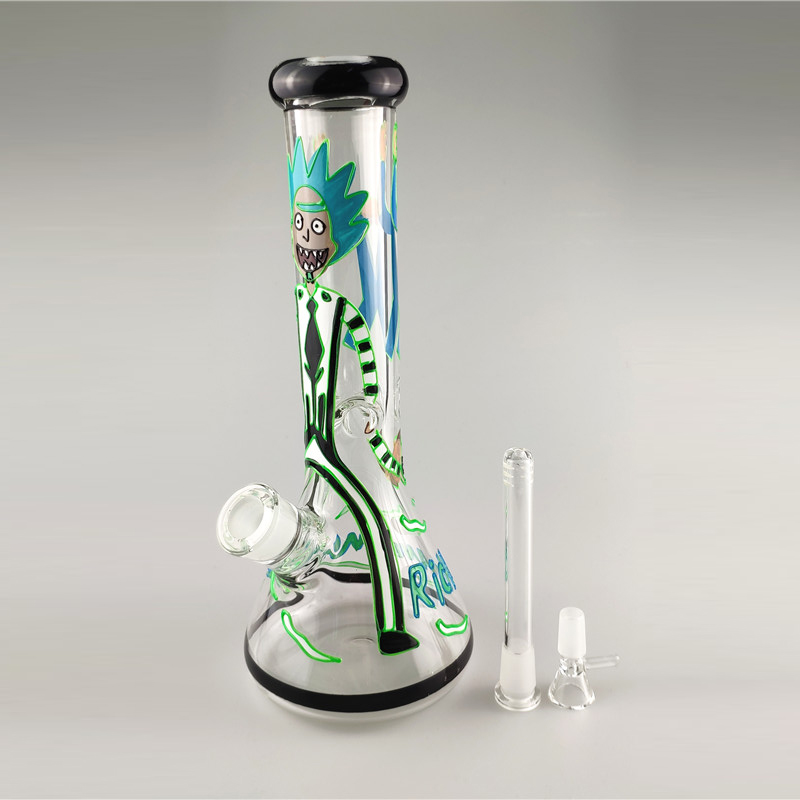
A silicone sleeve is a molded silicone skin that stretches over all or part of a glass pipe, or a set of silicone components — a base, a mouthpiece, joint covers, a body wrap — integrated with the glass. The glass still does everything a pipe must do; the silicone changes everything about how it survives and presents. Four benefits matter to a brand.
First, grip and handling. Silicone is soft and high-friction, so a sleeved pipe is far harder to drop than smooth glass, and more comfortable to hold. Second, protection. The sleeve acts as a bumper, absorbing the knocks and short drops that chip or shatter bare glass — the single most common cause of loss in this category. Third, heat insulation. Silicone tolerates temperature and gives the user a cooler, safer surface to grip. Fourth, and most valuable to an OEM, a branding canvas: a large, colorful, moldable surface that glass alone does not offer. Each of these is a selling point you can put on packaging and a product page.
| Benefit | What Silicone Adds | Why It Sells |
|---|---|---|
| Grip | Soft, high-friction surface | Comfortable, secure, less slippery than glass |
| Protection | A bumper that absorbs knocks and drops | Fewer chips and breakages, longer product life |
| Heat insulation | A cooler touch surface | Safer, more comfortable handling |
| Branding | Colorful, moldable canvas | Shelf standout, logo, custom color identity |
Why It Is an OEM Opportunity
Here is the strategic case. In a category where the base product — clear borosilicate glass — is largely commoditized and visually uniform, differentiation is expensive. Custom glass shapes need molds and skilled labor; intricate color work needs artists and time. A silicone sleeve delivers a large share of that differentiation for a fraction of the cost and complexity. It is the fastest visual and tactile way to make a pipe unmistakably yours.
The economics reinforce it. Breakage is a silent margin killer: pieces lost in transit, damaged on the shelf, or cracked in a customer’s first week become returns, replacements and reputational cost. A silicone sleeve materially cuts that loss, so it partly pays for itself before you count a single extra sale. And because a sleeved pipe reads as more rugged, more colorful and more premium, it supports a higher price point than the same pipe naked. You are adding a cheap component that reduces cost and lifts price at the same time — a rare combination.
Building a Silicone-Integrated Glass Line?
Elfglass produces glass pipes and integrated silicone sleeves, bases and mouthpieces as one OEM project — custom colors, debossed logos and food-grade material under NDA. Send your design or a rough sketch and get a quote within 12 hours, MOQ from 100 pieces, samples in 1 to 3 days.
MOQ from 100 pieces | BSCI / WRAP / ISO 9001 | NDA before every project
Materials and Food-Grade Silicone
Not all silicone is equal, and because a pipe touches the user’s mouth and can see heat, the material specification matters. Silicone rubber is a synthetic elastomer built from siloxane bonds, valued for staying flexible across a wide temperature range, resisting UV and ozone, and being chemically inert — it does not react with what it touches or degrade quickly. Those are exactly the properties you want wrapped around a functional glass piece. The broader family of silicone materials spans soft gels to firm rubbers, so sleeve firmness can be tuned.
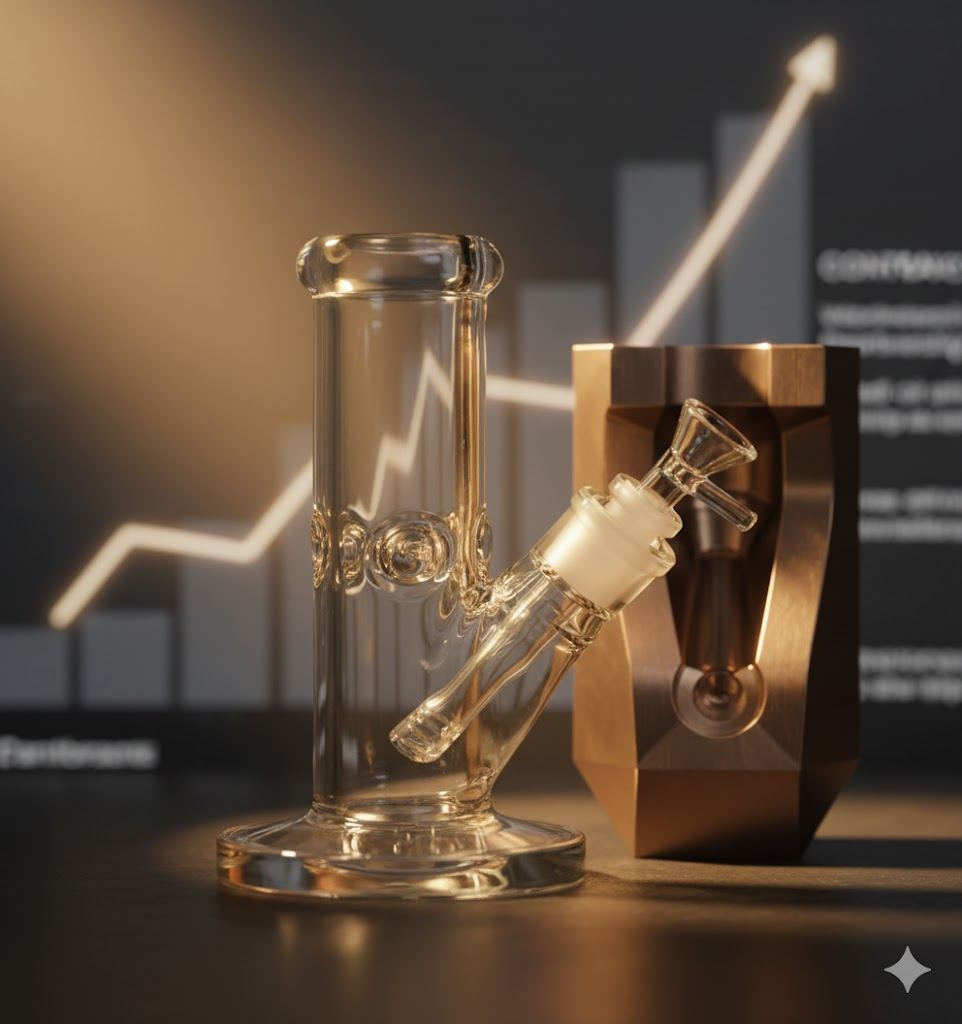
For anything contacting the mouth, specify food-grade silicone. In the United States, rubber and silicone articles intended for repeated food contact are governed by FDA regulation 21 CFR 177.2600, which sets requirements for the composition and extractables of such rubber articles. The practical instruction to a supplier is simple: use food-grade, ideally platinum-cured silicone, avoid cheap fillers that can off-gas or leave odor, and be able to provide material documentation. A reputable OEM will supply this without hesitation; hesitation is itself a red flag. Hardness, measured by durometer, also matters — a sleeve needs enough firmness to stay put on the glass and enough give to stretch on and feel soft.
Designing the Sleeve: Fit, Form and Branding
Fit is the engineering heart of a good sleeve. Silicone stretches, which is an advantage and a trap: a sleeve must grip the glass firmly enough never to slip or twist, yet stretch on and off for cleaning without tearing or loosening over time. That means the mold must be dimensioned to the exact glass profile it will wear, with the right wall thickness and durometer. This is why a sleeve designed against a real production pipe — not a guess — outperforms a generic one, and why sampling on your actual glass is essential before bulk.
Decide early between a slip-on sleeve and integrated silicone parts. A sleeve wraps an existing glass shape and is the lower-tooling route; integrated components such as a silicone base, mouthpiece or joint covers are molded as part of the product design and offer a more seamless, purpose-built look. Both can carry branding. Silicone takes a logo by debossing (pressed in), embossing (raised), or printing, and it can be color-matched to a Pantone reference so your brand color is exact. Debossed and embossed logos are the most durable because they are part of the mold rather than an applied ink. Custom colors and molded logos require a mold, which carries a one-time tooling cost — economical across a committed run, not for a single sample.
| Design Choice | Options | Trade-off |
|---|---|---|
| Attachment | Slip-on sleeve vs integrated silicone parts | Sleeve = lower tooling; integrated = more seamless |
| Logo method | Deboss, emboss, silk-screen or pad print | Deboss/emboss most durable; print adds color detail |
| Color | Stock colors vs custom Pantone match | Custom color needs a mold and tooling cost |
| Firmness | Durometer selection | Firm grips better; softer feels premium but may slip |
Who Buys Silicone-Sleeved Glass
A silicone sleeve is not for every buyer, and that is the point — it lets you reach segments plain glass does not. The largest is the active and outdoor user: people who take a pipe camping, to festivals, to the beach or on travel, where drop risk is high and ruggedness is a feature, not a compromise. For them a sleeved pipe is the sensible choice, and they will pay for the confidence.
Then there are the gift and novelty buyers, drawn to color and character over clinical clarity, and a younger demographic that grew up on colorful, tactile, personalized products and expects the same from this category. Retailers like sleeved lines too: they photograph well, they merchandize in bright color blocks, and they break less on the shop floor. Understanding which segment you are aiming at shapes the sleeve’s color, firmness and branding — a rugged outdoor sleeve and a fashion-forward gift sleeve are different products even on the same glass. Our hand-blown versus machine-made guide explains how the underlying glass choice pairs with these positioning decisions.
The OEM Path from Sketch to Bulk
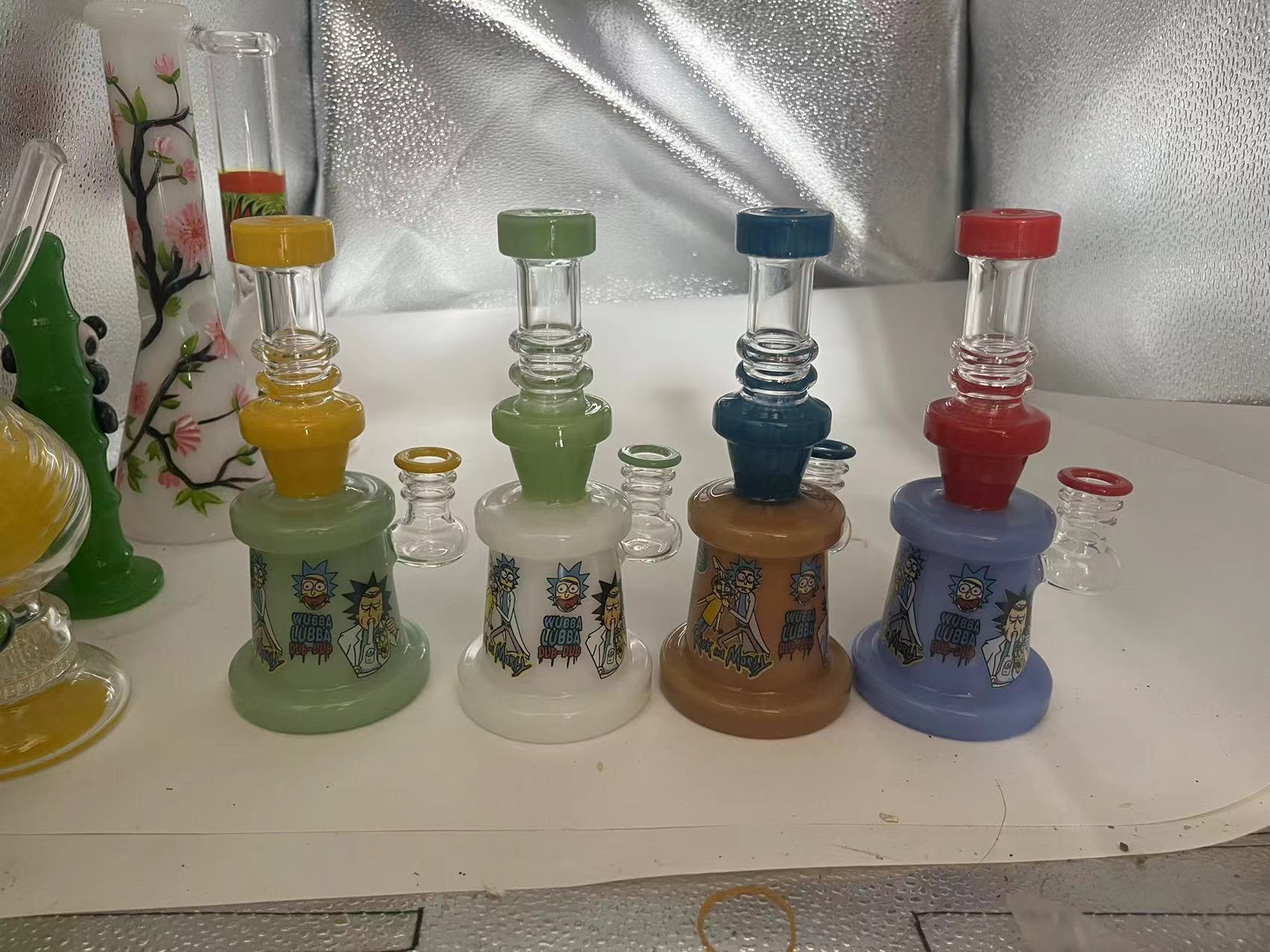
Turning the idea into a shipped product follows a clear path, and knowing it in advance keeps the first order smooth. It starts with your vision — a sketch, a reference product, or just a description of the sleeve and the glass it wraps. That becomes a tech pack: the dimensions, the glass profile, the silicone durometer, the Pantone colors, the logo artwork and its method. From the tech pack a sample is made so you can hold the real thing, test the fit on the actual glass, and approve the color and branding.
Only after sample approval does bulk production begin, and for a first order a custom mold is made if the sleeve or logo is bespoke. At Elfglass the structure is concrete: a minimum order of 100 pieces per design, sampling in 1 to 3 days, and bulk production in 7 to 12 days for orders above 100 pieces, with a custom mold adding first-order tooling time. An NDA is signed before every OEM project so your design stays yours, and quotes come back within 12 hours. Vetting whether a supplier can actually deliver this is its own discipline — our supplier scorecard template scores exactly these capabilities.
Your Silicone Sleeve OEM Action Plan
Pulled together, launching a silicone-sleeved line is a sequence of decisions, not a leap. Work through these in order and you move from concept to a differentiated, protected, brandable product without surprises.
| Step | Action | Why It Matters |
|---|---|---|
| 1. Define the segment | Decide who the sleeve is for — outdoor, gift, fashion | Segment sets color, firmness and branding direction |
| 2. Choose glass + attachment | Pick the glass profile and slip-on sleeve vs integrated parts | Fit and tooling cost are decided here |
| 3. Specify material | Food-grade, platinum-cured silicone; set durometer | Safety, grip and longevity depend on it |
| 4. Design the branding | Logo method (deboss/emboss/print) and Pantone colors | Durable, on-brand identity that stands out |
| 5. Build a tech pack | Dimensions, colors, artwork, material spec in one doc | Prevents misunderstandings and quote errors |
| 6. Sample and test fit | Approve a physical sample on the real glass | Catches fit, color and feel issues before bulk |
| 7. Run bulk under NDA | 100-piece MOQ, 7-12 day production | Your design protected, your timeline known |
Follow that path and a silicone sleeve stops being an accessory and becomes a product line — one that differentiates your brand, protects your margin from breakage, and reaches buyers plain glass never will. The glass is still the hero; the sleeve is how you make it unmistakably yours and hard to break.
Ready to prototype a silicone-sleeved glass line? Request a quote with your sketch or reference product and we will propose the glass, the silicone specification, branding method and a sampled prototype — quote within 12 hours, samples in 1 to 3 days, MOQ from 100 pieces, all under NDA.
What is a silicone sleeve glass pipe?
It is a glass pipe fitted with a silicone outer sleeve or silicone components — typically a body sleeve, a base, a mouthpiece or joint covers. The silicone adds grip, protects the glass from drops and knocks, insulates against heat, and gives a large, colorful surface for branding. The glass still does the functional work; the silicone makes it more durable, safer to handle and easier to differentiate.
Is silicone safe on a glass pipe?
Food-grade silicone is inert, non-toxic and stable across a wide temperature range, which is why it is used for kitchenware and medical products. In the US, rubber and silicone articles intended for repeated food contact are governed by FDA regulation 21 CFR 177.2600. For a pipe, specify food-grade or platinum-cured silicone from a supplier that can provide material documentation, and avoid cheap fillers that can off-gas or degrade.
Why add a silicone sleeve as an OEM brand?
Because it is one of the cheapest ways to differentiate. In a market full of visually similar clear glass, a colored silicone sleeve makes a product stand out on a shelf, reduces costly breakage in transit and use, adds a premium grip and feel, and gives you a branded, colorful surface without the expense of complex glass art. It widens your appeal to outdoor, travel and gift buyers.
Can silicone sleeves be customized with my logo and colors?
Yes. Silicone takes branding well through debossing or embossing (a pressed-in or raised logo), silk-screen or pad printing, and color matching to a Pantone reference. Sleeves can be molded in custom colors and shapes, and integrated silicone parts such as bases and mouthpieces can carry the same branding. Custom molding has a tooling cost, so it suits committed runs rather than one-off samples.
What is the MOQ and lead time for a silicone sleeve OEM order?
At Elfglass the minimum order is 100 pieces per design. Sampling takes 1 to 3 days and bulk production 7 to 12 days for orders above 100 pieces. A custom-molded silicone sleeve adds mold-making time on the first order, but once the mold exists, repeat runs are fast. We sign an NDA before every OEM project and respond to quotes within 12 hours.
Ready to Start Your Custom Glass Pipe Project?
Get a free quote within 24 hours. MOQ from 100 pieces. NDA-protected design consultation.
