
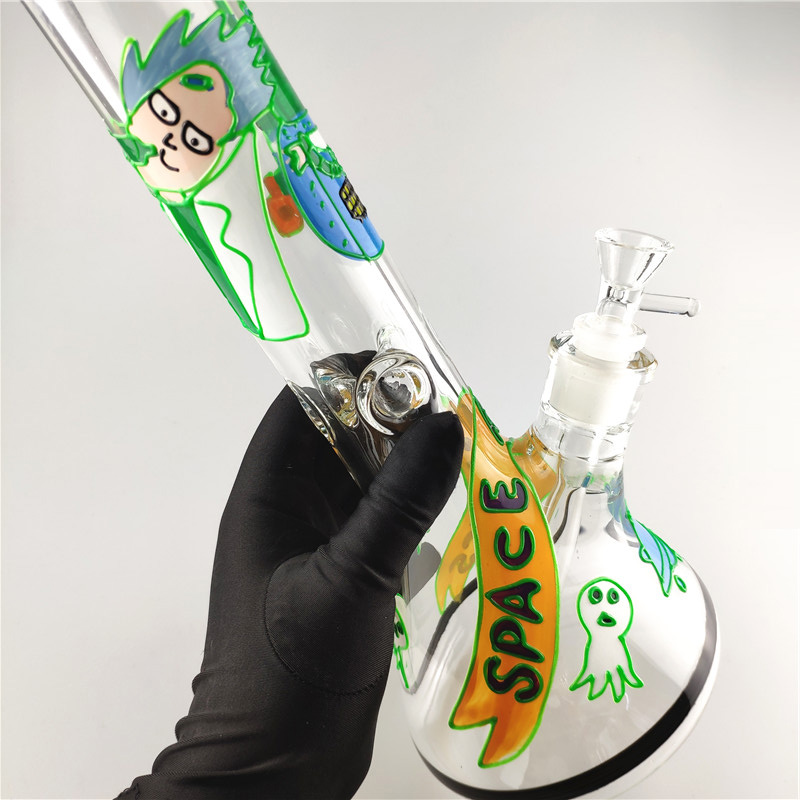
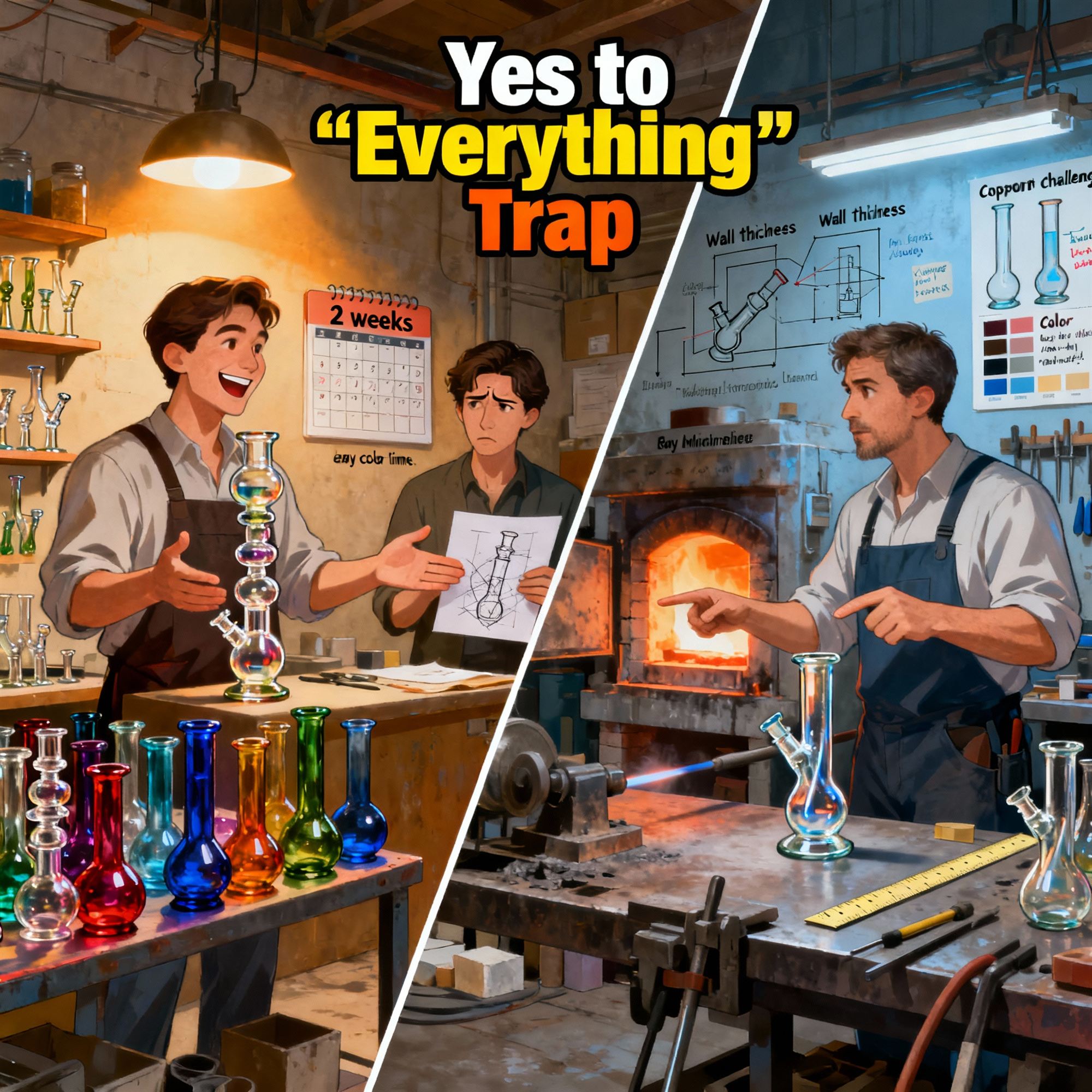
There is a paradox at the heart of custom glass manufacturing that most buyers discover only after they have been burned. The largest factories with the deepest pockets and the longest org charts are often the slowest to respond, the hardest to reach, and the most rigid when a design needs a last-minute adjustment. Meanwhile, a 1,000-square-meter workshop with twenty people at the bench can turn a sketch into a shipped order in under two weeks. At Elfglass, we have spent sixteen years proving that the small factory advantage is not a compromise. It is the entire point. Cross-training across benches follows the principles described in standard references on training and development, which is how a compact team keeps every station covered.
This article tells the story of how a twenty-person team, founded in 2010 by Ava Zeng, built a manufacturing operation that produces 10,000 pieces per month, holds BSCI, WRAP, and ISO 9001 certifications, and still answers the phone on the first ring. If you have ever wondered whether a smaller factory can truly compete with the giants, the answer lies in understanding what small scale actually buys you.
How Twenty People Built Something Different
Ava Zeng started Elfglass in 2010 with a conviction that the glass pipe industry had a people problem, not a technology problem. The blowing techniques, the annealing ovens, the borosilicate raw materials, none of it was mysterious. What was mysterious was why so many buyers felt treated like an afterthought by the very factories they paid. Ava’s response was to build a factory where the person who takes your call is the person who understands your project, and the person who understands your project is the person standing next to the torch.
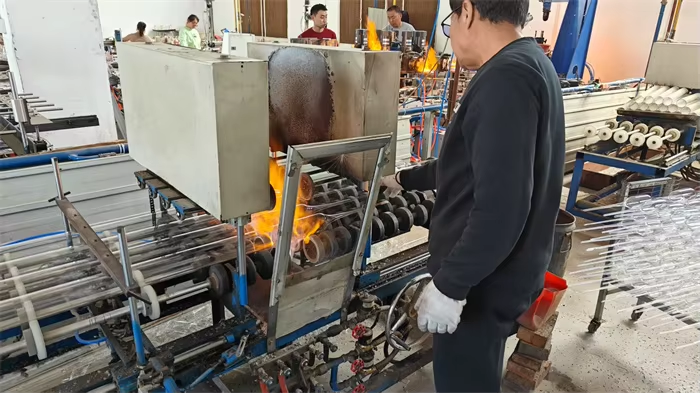
The facility sits at 1,000 square meters. That number matters, because it sets a hard ceiling on how much work-in-progress can exist on the floor at any given moment. A floor that is too large encourages half-finished orders to pile up in corners. A floor that is compact forces every piece to move. Twenty employees means every glassblower knows every other glassblower’s style. It means the quality inspector sat across the lunch table from the person who made the piece she is inspecting. That proximity is not sentimental. It is operational.
Why Small Means Measurably Faster
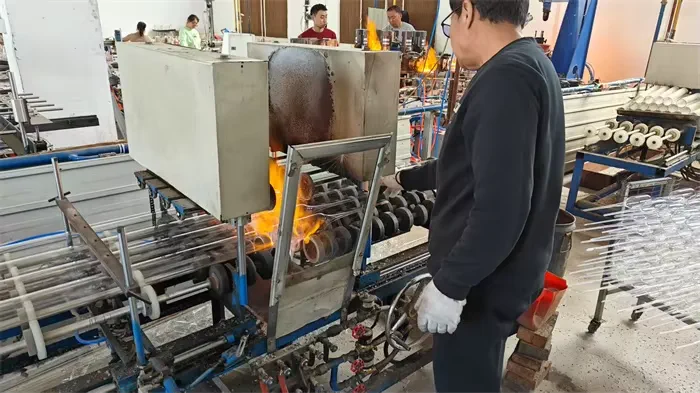
Speed at Elfglass is not a slogan. It is a measurable commitment. Sampling takes one to three days. Production for orders of 100 pieces or more takes seven to twelve days. These are not aspirational targets. They are the operational rhythm of a factory where the decision-maker and the production floor share the same air.
The reason is structural. In a factory of several hundred workers, your order enters a queue managed by a scheduling department that reports to a production manager who reports to a plant director. Each handoff adds a day. At Elfglass, the distance between your email and the glassblower’s torch is one conversation. Ava or a senior team member reads your spec, walks it to the bench, and the first prototype is in your inbox within seventy-two hours. As Ava has said publicly, “What kills a great idea is never the technology, but the communication gap and a lack of empathy.” That philosophy is not decorative. It is the reason sampling is fast.
This philosophy is the same one behind our piece on why speed is sacred respect. When a factory treats your timeline as sacred, it treats your business as sacred.
Communication Without the Middle Layers
Consider what happens when a buyer at a large factory requests a design change after production has started. The request travels from the buyer’s contact to a project coordinator, then to a production supervisor, then to the floor lead, and finally to the glassblower. By the time the change reaches the bench, two days may have passed, and the glassblower may have already completed fifty units the old way.
In a twenty-person factory, that same change travels one step. The buyer speaks to the project lead, who walks ten meters to the bench. The glassblower adjusts the next piece immediately. There is no queue, no ticket system, no interdepartmental meeting. This is the small factory advantage in its purest form: the elimination of every unnecessary step between intention and execution.
We wrote about this dynamic in our article on choosing a glass pipe manufacturing partner. The partnership works because the communication channel is short enough to feel like a conversation, not a negotiation.
Quality Control That Fits in One Room
ISO 9001 certification is often associated with large, bureaucratic quality systems. At Elfglass, ISO 9001 operates inside a compact team where every defect is visible to everyone. When a water pipe fails inspection, the glassblower who made it can see it, hold it, and understand exactly what went wrong within minutes. There is no quality report that travels through three email chains before the maker learns about the problem.
This compactness also means that process improvements happen in real time. If a particular joint angle on a dab rig is causing a recurring stress fracture, the team identifies the pattern within a single production run, not after a monthly quality review. The ISO 9001 framework provides the documentation discipline. The small team provides the speed of correction.
Start a Conversation With a Real Factory Partner
You get a named contact, honest lead times, and an NDA before any OEM project. Tell us what you are building and we will reply within 12 hours with straight answers, not a sales script.
MOQ from 100 pieces | BSCI / WRAP / ISO 9001 | NDA before every project
Flexibility for Brands Still Growing
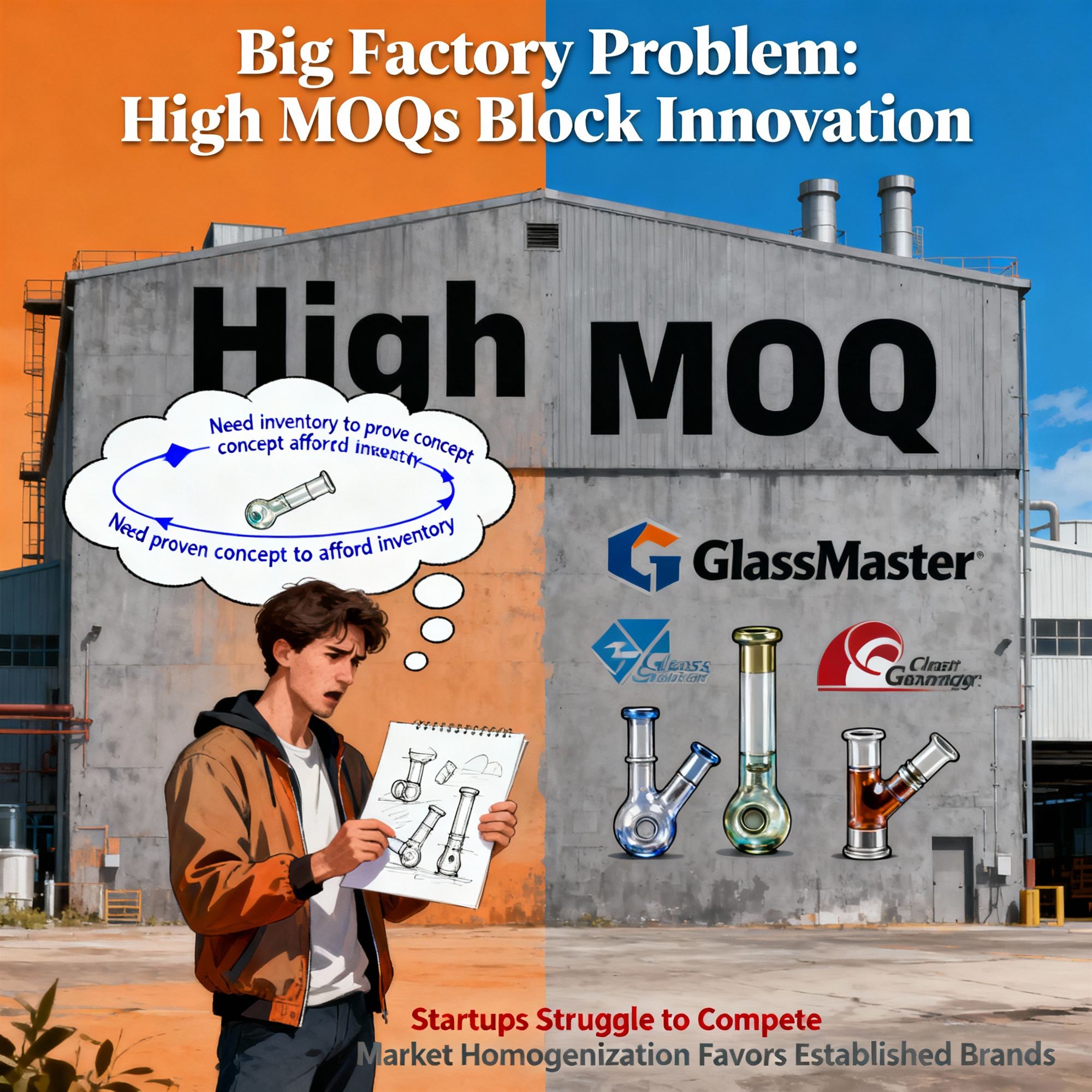
One of the most overlooked dimensions of the small factory advantage is accessibility for emerging brands. Lower minimum orders mean a brand can test a new market or launch a limited-edition line without prohibitive commitment.
Elfglass sets its MOQ at 100 pieces per design or SKU. That threshold allows a brand to test a new water pipe design with real customers before committing to a full production run. It allows a distributor to stock multiple SKUs across hand pipes, dab rigs, and accessories without over-investing in any single product. Custom molds are made exclusive to the client, so the 100-piece order you place today belongs to you completely. If the design succeeds, scaling to 500 or 1,000 pieces requires no new tooling because the mold and the process already belong to your project.
This flexibility extends to brands building diversified catalogs. If you want to discuss your specific requirements, the contact page is the fastest way to start a conversation with the production team directly.
The Empathy That Large Teams Cannot Replicate
Ava Zeng’s most quoted statement is not about glass or manufacturing. It is about people: “What kills a great idea is never the technology, but the communication gap and a lack of empathy.” That sentence captures something that cannot be engineered into a large factory through process improvements alone.
Empathy in manufacturing means understanding that a brand owner who calls at midnight before a trade show is not being difficult. She is anxious because her entire launch depends on a sample arriving on time. It means knowing that a first-time buyer who asks the same question three times is not wasting your time. He is building the confidence he needs to place a larger order. In a twenty-person team, that empathy is not a training module. It is the culture, because every team member has met the buyer, spoken with the buyer, and felt the weight of the buyer’s deadline.
Protecting a client’s creativity is an act of empathy, because it acknowledges that their ideas have value before a single piece is blown. We explain the reasoning behind this practice in our article on why we sign NDAs before every project.
Certifications That Match the Big Factories
A common concern when buyers first encounter a small factory is whether the certifications hold up. Elfglass carries BSCI, WRAP, and ISO 9001 certifications, the same credentials that large export-oriented factories maintain. These are not decorative plaques. BSCI compliance means the factory meets international standards for labor practices, working conditions, and environmental management. WRAP certification confirms responsible, ethical, and humane manufacturing practices. ISO 9001 provides the quality management framework that ensures consistency across every production run.
The difference is that at Elfglass, these certifications are maintained by the people who do the work, not by a compliance department that audits the people who do the work. The glassblower who signs off on a batch knows exactly what the standard requires because she helped pass the last audit.
What Sixteen Years of Small-Scale Taught Us
Elfglass has been operating since 2010. Over sixteen years, the team has seen the pattern that rapid scale creates in this industry. Adding headcount too fast dilutes the proximity that made the factory good in the first place. More layers of coordination slow the very response time that clients depend on. Growth is valuable only when it preserves the operating rhythm that earned trust.
We chose a different path. We kept the floor at 1,000 square meters. We kept the team at twenty. We kept the monthly capacity at 10,000 pieces, which is enough to serve our clients well without stretching the team beyond the point where everyone knows everyone’s work. You can read more about this journey in our reflection on sixteen years of glass.
The small factory advantage is not about being small for its own sake. It is about being small enough that every advantage of scale, speed, and quality remains personal, visible, and correctable in real time.
Frequently Asked Questions
What is the minimum order quantity at a small glass factory?
Elfglass requires a minimum of 100 pieces per design or SKU. This MOQ is specifically designed to allow emerging brands and distributors to test new designs, build diversified catalogs, and scale confidently without overcommitting inventory budget to unproven products.
How fast can a small factory produce custom samples?
Sampling at Elfglass takes one to three days from the moment specifications are confirmed. This speed is possible because there are no scheduling layers between the buyer’s request and the glassblower’s bench. The person who reads your spec is the person who walks it to production.
Does a small factory hold the same certifications as large ones?
Yes. Elfglass holds BSCI, WRAP, and ISO 9001 certifications. These are the same credentials required by major international retailers and distributors. The difference is that at a small factory, the people who maintain the certifications are the same people who manufacture the product.
Can a small factory handle custom molds and exclusive designs?
Absolutely. Elfglass produces custom molds that are exclusive to each client. Your mold belongs to your project completely. The 100-piece MOQ means you can commission a custom design, test it in market, and scale production without sharing the mold with any other buyer.
What products does a small glass pipe factory manufacture?
Elfglass manufactures water pipes, hand pipes, dab rigs, and parts and accessories. The factory offers both OEM and ODM services, meaning clients can bring their own designs for production or work with the Elfglass team to develop new products from concept to finished piece.
Experience the Small Factory Difference
If you have read this far, you already understand what the small factory advantage actually means. It is not about being charmingly artisanal. It is about a twenty-person team that samples in three days, produces in twelve, holds the same certifications as factories ten times its size, and treats your deadline with the seriousness it deserves. Elfglass is A Manufacturer With the Soul of a Designer, and that soul lives in the space between a 1,000-square-meter floor and twenty people who know each other’s work by name.
If you are ready to experience what a small factory can do for your brand, reach out directly. The person who reads your message will be the person who makes your product.
For buyers looking to grow beyond initial samples, this how fast sampling speeds up product validation guide provides detailed operational frameworks for the next stage of sourcing.
For a detailed comparison, see our guide on trade shows vs online sourcing for glass pipes.
About the Author
Ava Zeng is the founder of Elfglass, a Shenzhen-based borosilicate glass pipe manufacturer serving B2B brands worldwide. Every guide on this site is grounded in her production-floor experience— the annealing lines, QC checkpoints, and export orders behind each claim.
Before you commit to a supplier, read her founder’s story and trust promise, and the guide to vetting a reliable glass pipe manufacturer— the same red-flag checklist Elfglass applies to its own suppliers.
Small-team manufacturing follows the small business agility model, where shorter decision chains translate into faster turnaround for buyers.
Ready to Source Custom Glass Pipes?
Get a free quote within 24 hours. MOQ from 100 pieces. NDA-protected design consultation.
