Every buyer who commissions a custom glass pipe design hits the same sticker shock: the mold. A single custom mold can represent a significant chunk of your development budget before a single production piece has been pulled. The question is not whether you need the mold — you do, if your design calls for proprietary shapes, joints, or features. The real question is how you spread that cost so it stops feeling like a barrier and starts behaving like a line item your finance team can live with. That is where tooling cost amortization comes in, and it is the single most misunderstood part of the OEM pricing conversation. Spreading tooling cost across a production run follows the same accounting logic used in injection molding and other molded-goods industries, where the mold is amortized over output volume.
In this guide, I will walk you through exactly how mold cost amortization works in practice — the math, the negotiation points, the contract language, and the order-volume thresholds that determine whether your per-piece price goes down by a few cents or by a meaningful margin. If you are sourcing custom glass pipes for a brand launch or a product-line expansion, this is the financial groundwork you need before you request your first quote.
What Tooling Cost Amortization Actually Means
Tooling cost amortization is the process of distributing a fixed upfront expense — your custom mold — across a defined number of production units so that each piece carries a proportional share of that cost. Instead of paying the full mold fee on day one and absorbing it as a sunk cost, you build it into your unit pricing or spread it across multiple purchase orders over time.
Here is a concrete example. Suppose your custom mold costs $800 and you plan to order 1,000 pieces over the course of several purchase orders. If you amortize the mold cost across all 1,000 units, each piece carries an additional $0.80 of tooling expense. By order number five or six, the mold has paid for itself and your per-piece cost drops to the base production rate alone.
The alternative — paying the mold fee in full upfront — is not wrong. Many buyers prefer it because it simplifies invoicing and gives them a lower per-piece price from the very first order. But for buyers who are testing a new design, entering a new market, or managing cash flow across a product launch, amortization turns a daunting lump sum into something manageable.
Why Mold Costs Exist in Glass Pipe Manufacturing
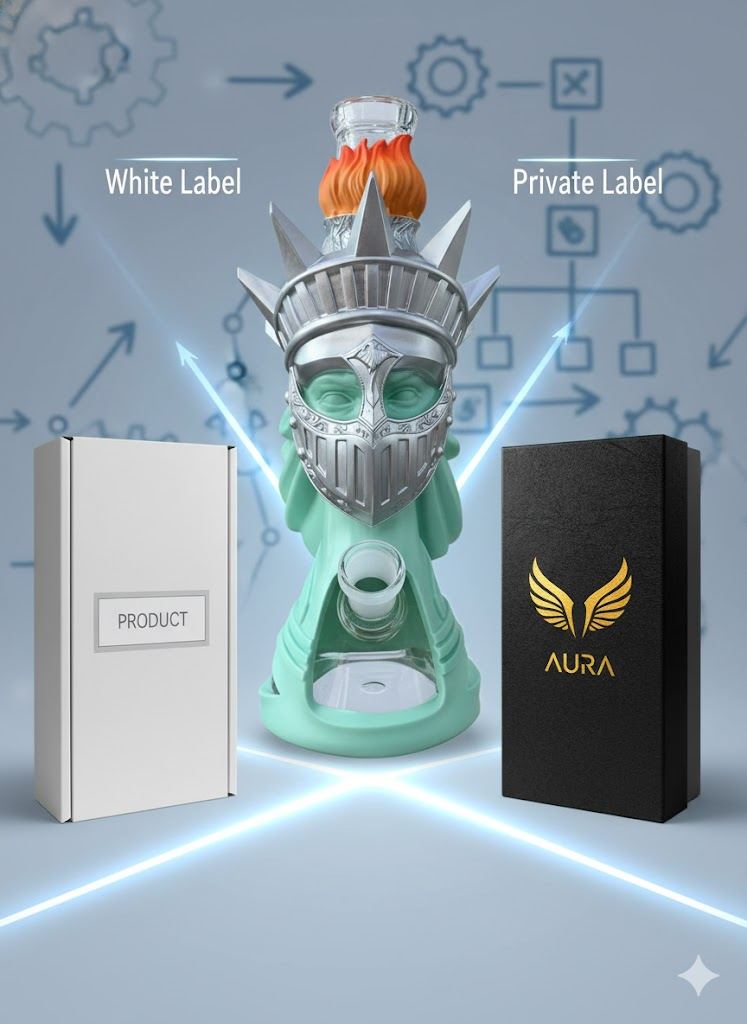
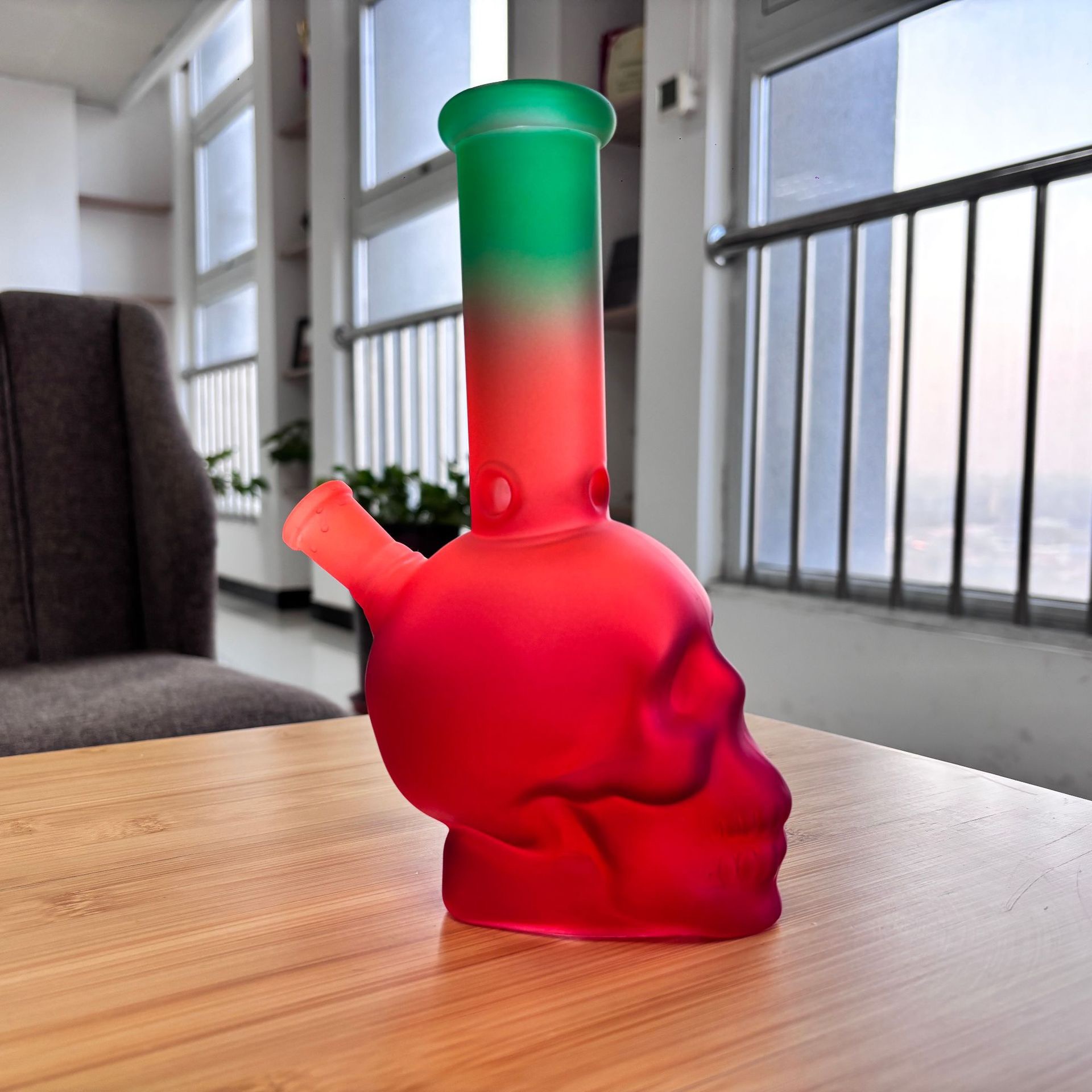
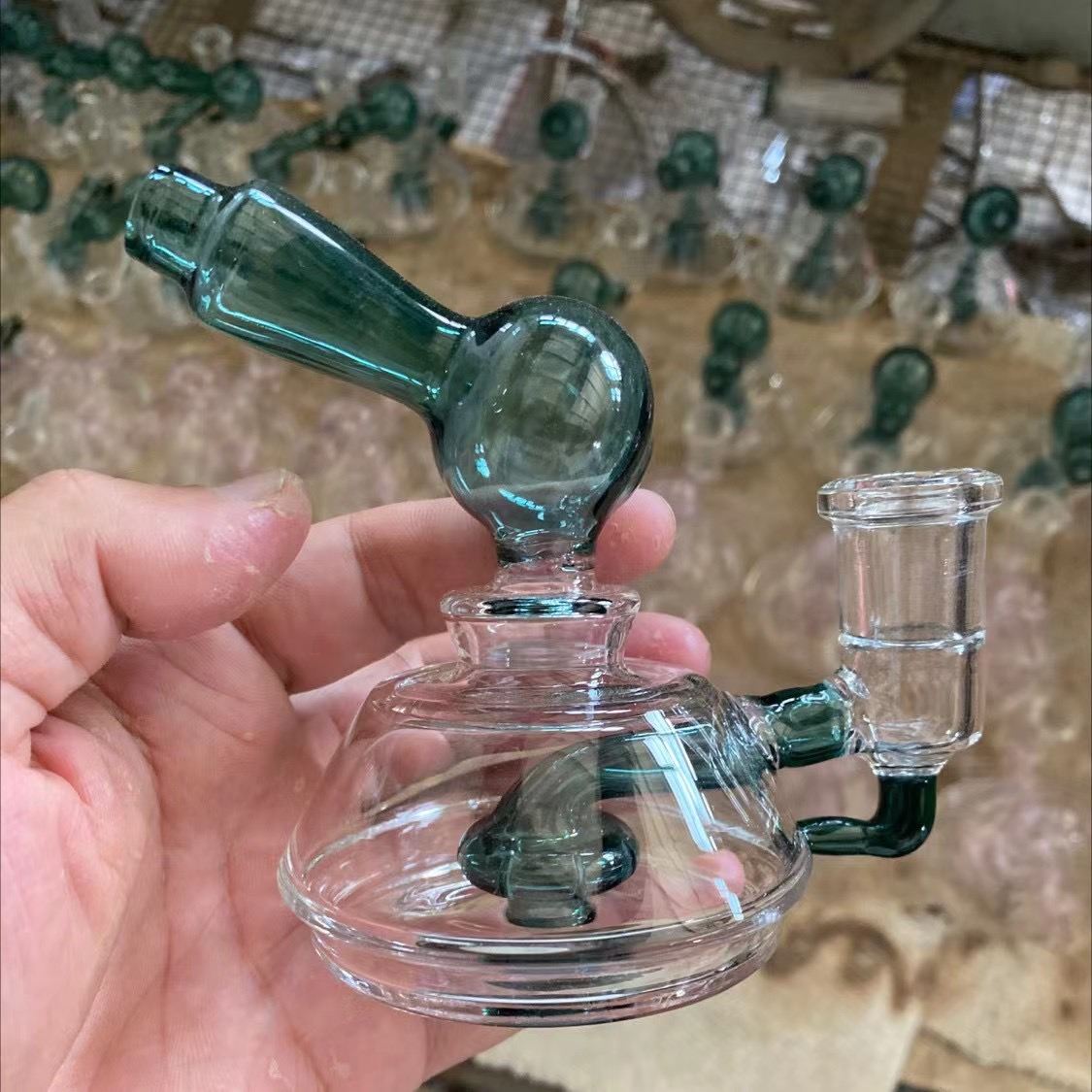
Before we get into the arithmetic, it helps to understand what you are actually paying for. A custom glass pipe mold is not an off-the-shelf component. It is a purpose-built tool, engineered to your exact design specifications, that shapes molten borosilicate glass into the form you want. Every unique curve, every custom joint angle, every proprietary chamber geometry requires its own mold.
The mold-making process involves precision machining, material selection, and testing. At Elfglass, the process starts on Day 1 with a communication session where our engineering team reviews your design files and identifies any manufacturability issues. By Day 2, we deliver a 3D design output for your approval. Once you sign off, the physical mold is produced and tested during the sampling phase (Day 3-7). The entire sequence — from initial brief to delivery of production-ready pieces — runs approximately 15 days. Tooling amortization follows the depreciation schedules used in factory accounting, spreading capital equipment cost across its productive life.
That timeline matters for your amortization calculation because it defines when the mold is ready and when production units start rolling. Every day of the sampling and approval phase is a day where the mold cost is sitting idle. Efficient communication and fast design approvals compress that idle window and get you to amortizing units sooner.
The Math: How to Calculate Amortized Tooling Cost Per Unit
The formula is straightforward:
Amortized cost per unit = Total mold cost / Number of units in the amortization pool
The variables that matter are the ones you can control:
Total Mold Cost
This is the all-in price your manufacturer quotes for the custom mold, including design, machining, testing, and any revisions from the sampling round. At Elfglass, we provide a detailed quote within 12 hours of receiving your specifications, so you have a firm number to work with before you commit. Browse our wholesale parts and accessories collection to see how tooling costs spread across product lines.
Amortization Pool Size
This is the total number of units you plan to produce using this mold. The larger the pool, the lower the per-unit cost. But the pool needs to be realistic — committing to amortize across 10,000 units when your actual demand is 2,000 means you are carrying phantom tooling cost on pieces you will never order.
Amortization Period
This is the timeframe over which you expect to place orders that draw down the pool. If your monthly order volume is 500 pieces and your amortization pool is 2,000, the mold cost spreads across four months. Align this with your sales forecasts so you are not still amortizing a mold for a product that has been discontinued.
Amortization Models: Which Structure Fits Your Order Pattern
There are three common structures manufacturers use to handle tooling cost recovery. Understanding each one puts you in a stronger position at the negotiation table.
Model 1: Full Upfront Payment
You pay the entire mold cost as a separate line item before production begins. Your per-piece price reflects only materials and labor. This model works best when you have high confidence in your order volume and sufficient capital to absorb the upfront hit. It also gives you the cleanest cost structure for accounting purposes — the mold is a capital asset, and your production costs are purely variable.
Model 2: Amortization Into Unit Price
The mold cost is baked into the per-piece price for a defined number of units. Your invoice shows a single line: quantity times unit price. No separate tooling charge. This simplifies your purchasing workflow but makes it harder to see the tooling component of your cost. Ask your supplier to break out the amortization schedule so you can track when the mold cost drops out of your unit price.
Model 3: Hybrid — Partial Upfront, Partial Amortized
You pay a portion of the mold cost upfront (often 30-50%) and the remainder is spread across the first several orders. This balances the supplier’s risk (they recover some tooling cost immediately) with your cash flow constraints. It is the most common model we see in practice for mid-volume buyers ordering in the hundreds to low thousands of pieces per design.
Transparent Tiered Pricing and Flexible MOQ
Elfglass publishes volume tiers, explains every cost driver, and works with first-time buyers on realistic minimums and safe payment terms. Tell us your target quantity and we will quote a tier that protects your margin.
MOQ from 100 pieces | BSCI / WRAP / ISO 9001 | NDA before every project
Order Volume Thresholds: When Amortization Makes Financial Sense
Not every order justifies amortization. The decision depends on the relationship between your mold cost and your expected order volume.
At Elfglass, the minimum order quantity is 100 pieces per design. For a 100-piece test order, amortizing a mold across those units means the tooling cost per piece is at its highest. If the mold costs $800, that is $8.00 per piece just for tooling — on top of the base production cost. For a test batch, most buyers choose to absorb the full mold cost upfront rather than inflate the per-piece price of an already small run.
Amortization starts to make financial sense when your cumulative order volume crosses a threshold where the per-unit tooling cost becomes negligible relative to the base production cost. For most glass pipe designs, that threshold sits around 500-1,000 pieces. Below that, the tooling cost per piece is material enough to affect your margin. Above it, the amortized amount shrinks to cents.
This is why the production process timeline matters so much. With sampling completed by Day 7 and bulk production running 7-12 days for orders of 100 or more, you can move from design approval to shipping in roughly two weeks. Faster turnaround means you place repeat orders sooner, which accelerates your drawdown of the amortization pool and gets you to the lower per-piece cost faster.
Contract Language: Protecting Yourself in the Amortization Agreement
The handshake deal is not enough. Your tooling amortization agreement needs to be explicit about several points to avoid disputes down the line.
Mold Ownership
At Elfglass, custom molds are exclusive to the client who commissioned them. This needs to be stated in writing. If you are amortizing the mold cost across your orders, you need contractual confirmation that the mold is yours — not the manufacturer’s — and that it will not be used to produce pieces for any other party.
Amortization Schedule
The contract should specify the total mold cost, the number of units over which it will be amortized, the per-unit surcharge, and the point at which the surcharge expires. Include a clause that requires the supplier to notify you when the amortization pool is approaching completion so you can prepare for the per-piece price drop.
Revision and Rework
If the mold requires modification after the initial sampling round, who pays? The answer depends on the reason for the change. If the modification stems from a design change you requested, the rework cost is yours. If it stems from a manufacturing defect or a deviation from the approved 3D design, the supplier should absorb it. Get this in writing before the mold goes into production.
Confidentiality
Your design is your intellectual property. At Elfglass, we sign an NDA before every project begins. This protects your design files, your mold specifications, and your order volumes from disclosure. If your supplier is unwilling to sign an NDA, that is a red flag that has nothing to do with tooling cost and everything to do with whether you should be working with them at all. For more on safeguarding your designs, read our guide on protecting product design IP when sourcing overseas.
Reducing Your Effective Tooling Cost: Practical Strategies
Beyond the math and the contract, there are operational moves that lower your effective tooling cost per piece.
Consolidate Designs Where Possible
If your product line includes multiple pieces that share a common joint geometry or chamber shape, design them to use the same mold. One mold serving two or three SKUs amortizes across a larger pool without additional tooling expense. This is where working with a manufacturer that has OEM and ODM capabilities pays off — they can identify design-sharing opportunities you might miss.
Invest in Design Accuracy Upfront
Every mold revision costs money and time. The Elfglass workflow delivers a 3D design by Day 2 specifically to catch errors before the physical mold is cut. Review that 3D output thoroughly. Check joint angles, wall thickness, chamber dimensions, and any branding elements. A correction at the 3D stage costs nothing; a correction after the mold is machined costs a rework fee and delays your sampling timeline.
Plan Your Order Cadence
If you know you will need 2,000 pieces over six months, structure your purchase orders to draw down the amortization pool on a predictable schedule. Monthly orders of 300-400 pieces keep your cash flow steady and ensure the mold cost drops out of your unit price within your planning horizon. Coordinate with your supplier’s production capacity — at Elfglass, our monthly output is 10,000 pieces, so a 400-piece monthly order fits comfortably within our schedule.
Leverage the Sample Revision Process
The sample revision process exists to get the product right before you commit to bulk production. Use it. A sampling round that catches a fit issue or a wall-thickness problem saves you from a mold that produces defective pieces at scale — and a defective mold is the most expensive tooling cost of all, because every unit it produces carries the cost of the defect.
Common Mistakes Buyers Make With Tooling Amortization
After working with B2B brands across multiple markets, I have seen the same errors repeat.
Overestimating demand. Committing to amortize across 5,000 units when your realistic forecast is 1,500 leaves you carrying unamortized tooling cost on 3,500 units you will never order. Be conservative with your pool size. You can always extend it if demand exceeds expectations.
Ignoring the time value of money. An amortization schedule that stretches over 18 months costs you more than the raw math suggests because that capital is tied up and not working elsewhere. Shorter amortization periods are almost always better for your cash position, even if the per-unit surcharge is slightly higher.
Not reading the fine print on mold ownership. Some suppliers retain ownership of the mold even after you have fully amortized the cost. If you decide to move production to another facility, you need the physical mold. Make sure your contract transfers ownership to you upon full amortization — or upon request, regardless of amortization status.
Treating tooling cost as the supplier’s problem. It is not. The mold is built to your specification, for your product, serving your brand. The cost is yours. The question is only how you structure the payment, not whether you should push it onto the supplier. A supplier who absorbs your tooling cost is building it into your unit price somewhere else — usually in a way that is less transparent than a straightforward amortization line item.
How Elfglass Handles Tooling and Mold Costs
We keep it simple. When you need a custom mold, we quote the tooling cost as a separate line item alongside your production quote. You can choose to pay it in full upfront or amortize it across your order volume — we will model both scenarios so you can compare. Our payment terms are T/T with a 30% deposit and 70% balance before shipment, and we apply the same transparency to tooling cost recovery.
Every project starts with an NDA. Every design gets a 3D output by Day 2. Every mold is exclusive to you. And every quote lands in your inbox within 12 hours of your inquiry. That is the operating model Ava Zeng built Elfglass on back in 2010, and it is the reason our clients stay with us across multiple product launches.
As Ava puts it: “What kills a great idea is never the technology, but the communication gap and a lack of empathy.” We built our tooling cost process around that principle — clear numbers, clear contracts, clear ownership. No hidden fees, no surprise rework charges, no ambiguity about who owns the mold.
If you have a design ready for tooling or want to model the amortization math for your next order, get in touch with our team. We will have a quote in your hands within 12 hours.
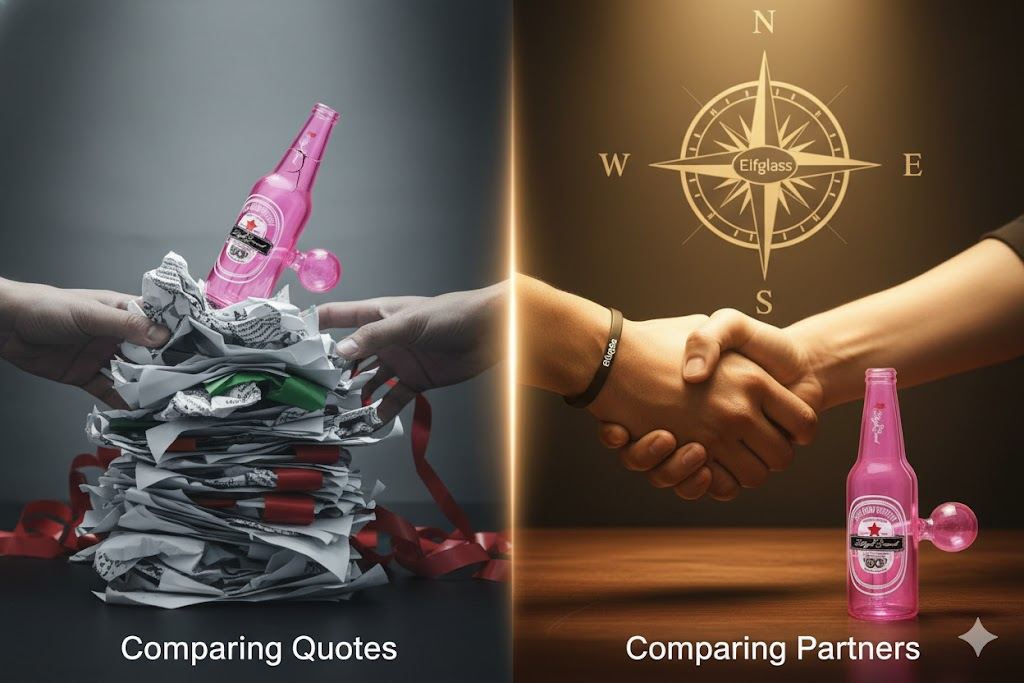
For a detailed comparison, see our guide on first OEM project timeline.
Frequently Asked Questions
What is tooling cost amortization in glass pipe manufacturing?
Tooling cost amortization is the practice of spreading the fixed cost of a custom mold across a defined number of production units, so each piece carries a proportional share of the tooling expense rather than the buyer absorbing the full mold cost as a single upfront payment.
How is mold cost typically amortized per unit?
Divide the total mold cost by the number of units in your amortization pool. For example, an $800 mold amortized across 1,000 pieces adds $0.80 per unit. Once the pool is fully drawn down, the per-piece price drops to the base production cost alone.
Should I pay the mold cost upfront or amortize it?
If you have confidence in your order volume and available capital, upfront payment gives you a lower per-piece price from the first order. If you are testing a new design or managing tight cash flow, amortization spreads the cost across multiple orders and reduces your financial risk.
Who owns the custom mold after amortization is complete?
At Elfglass, custom molds are exclusive to the client who commissioned them from day one. Your contract should explicitly state that mold ownership transfers to you — either upon full amortization or upon request, regardless of amortization status.
How can I reduce my effective tooling cost per piece?
Consolidate designs to share a single mold across multiple SKUs, invest time in the 3D design review to avoid costly mold revisions, plan your order cadence to draw down the amortization pool efficiently, and use the sampling process to catch defects before bulk production begins.
About the Author
Ava Zeng is the founder of Elfglass, a Shenzhen-based borosilicate glass pipe manufacturer serving B2B brands worldwide. Every guide on this site is grounded in her production-floor experience— the annealing lines, QC checkpoints, and export orders behind each claim.
Before you commit to a supplier, read her founder’s story and trust promise, and the guide to vetting a reliable glass pipe manufacturer— the same red-flag checklist Elfglass applies to its own suppliers.
Ready to Source Custom Glass Pipes?
Get a free quote within 24 hours. MOQ from 100 pieces. NDA-protected design consultation.
