
Key Takeaways
- Steamroller pipes are the simplest hand pipe design — a straight tube with a bowl and carb — making them cheap to produce, hard to break, and easy to stock.
- Borosilicate glass is the preferred material for wholesale buyers: lower breakage in transit, better thermal resistance, and higher perceived quality at retail.
- Wholesale unit cost runs $1.50–$5.00 depending on glass type, wall thickness, and customization; retail markup is typically 3–6×.
- MOQ for custom-branded steamrollers starts at 100 units per SKU with 1–3 day sampling and 7–12 day production.
- Steamrollers are not a niche — they are a high-volume counter filler that complements higher-margin water pipes and dab rigs.
What Is a Steamroller Pipe?
A steamroller pipe is a straight-tube hand pipe with a bowl on one end and an open carb (airflow) hole on the opposite side or near the mouthpiece. There is no water filtration, no percolator, no complex chamber — just a straight bore through borosilicate or soft glass. The user lights the bowl, draws smoke into the tube, then covers or uncovers the carb to clear the chamber. The name “steamroller” comes from the sliding motion of a finger or thumb across the carb hole, though many smokers simply call them straight chillums or glass straight pipes. Pair them with wholesale chillums and one-hitters for a complete counter display that covers every price tier. wholesale sherlock pipes guide Hand pipes like these are shaped at the torch using lampworking, a glass-forming technique in which solid glass rods are melted and shaped over a flame (lampworking reference).
In the wholesale hand pipes market, steamrollers sit at the intersection of simplicity and volume. They are among the cheapest glass pipes to manufacture, which makes them attractive for retailers who need reliable counter fillers — low-price impulse buys that sit near the register and move quickly. Unlike heady glass or complex percolator water pipes, steamrollers do not require elaborate packaging or extensive product education. A customer picks one up, sees the price, and the transaction is straightforward.
For B2B buyers importing from China, steamroller pipes are one of the easiest product categories to source. The manufacturing process is fast, the defect rate is low compared to multi-chamber pieces, and customization — logos, colors, fuming — applies cleanly to the straight tube surface. If you are building a wholesale hand pipe order for a smoke shop, head shop, or dispensary, steamrollers belong in the mix alongside spoons and sherlocks.
Related reading: steamroller draw physics.
Materials: Borosilicate vs Soft Glass
The material choice is the single biggest factor in steamroller pipe quality, durability, and wholesale price. There are two options in production:
| Property | Borosilicate Glass | Soft Glass (Soda-Lime) |
|---|---|---|
| Thermal shock resistance | High — survives repeated torch heating | Low — cracks under rapid temperature change |
| Breakage in shipping | Lower — stronger molecular structure | Higher — more fragile |
| Wholesale unit cost (basic, 5mm) | $2.50–$5.00 | $1.50–$3.00 |
| Color options | Clear, tinted (amber, blue, black) | Wide — fumed, millefiori, silver/gold leaf |
| Retail price range (USA) | $15–$30 | $10–$20 |
| Customer complaints | Low | Moderate — cracking, breakage |
For wholesale buyers, borosilicate is the recommended choice for steamroller pipes. The higher unit cost is offset by lower breakage rates during shipping and fewer end-customer returns. A smoke shop owner would rather sell a $20 borosilicate steamroller with zero complaints than move five $10 soft glass pieces and handle two warranty claims.
At Elfglass, our borosilicate steamroller orders account for the majority of straight pipe production. The material is certified, and we provide material specifications on every product spec sheet before sampling begins.
A Note on Thickness
Wall thickness matters more on a steamroller than on most other pipe styles, because there is no structural reinforcement from percolators or joints. A 3mm steamroller works, but a 5mm feels substantial in the hand and signals quality to the retail customer. Most of our wholesale buyers choose 5mm for steamrollers — the cost difference is small (roughly $0.50–$1.00 per unit), but the perceived value at retail is significantly higher.
Stock the Glass Pipes Your Customers Actually Buy
Elfglass produces the full wholesale catalog, from hand pipes and sherlocks to dab rigs, percolator bongs, and accessories, in proven best-selling specs. Tell us your market and we will recommend a catalog mix with pricing.
MOQ from 100 pieces | BSCI / WRAP / ISO 9001 | NDA before every project
Wholesale Pricing: What Drives Unit Cost
Steamroller pipes are among the most straightforward glass products to price. There are fewer variables than with water pipes or dab rigs, but the cost drivers still matter:
| Cost Factor | Impact on Unit Price | Typical Range |
|---|---|---|
| Material (boro vs soft) | High | +$0.50–$2.00 per unit for borosilicate |
| Wall thickness (3mm vs 5mm) | Medium | +$0.30–$1.00 for 5mm |
| Length (3″ vs 6″) | Low–Medium | +$0.20–$0.80 for longer tubes |
| Custom color or fuming | Medium | +$0.50–$2.00 per unit |
| Logo application (sandblast/etch) | Low | +$0.20–$0.50 per unit at 100+ MOQ |
| Custom packaging | Variable | +$0.30–$1.50 per unit |
A basic clear borosilicate steamroller at 5mm thickness, 4 inches long, with no customization, typically lands at $2.50–$3.50 per unit at MOQ 100. Add a sandblasted logo and custom color, and the price moves to $4.00–$5.00. At retail, these same pipes sell for $15–$25 in the USA market, giving retailers a 3–6× markup.
Compare this to importing water pipes from China, where unit costs start at $8–$15 and retail pricing is $40–$80. The absolute margin per unit is higher on bongs, but steamrollers move faster and require less shelf space. A well-stocked counter with 20 steamrollers turning over weekly generates consistent cash flow that supplements the slower-moving, higher-ticket items.
Customization Opportunities for Retail Brands
Steamroller pipes are excellent candidates for customization. The straight cylindrical surface is the easiest canvas in the glass pipe catalog — no curves, no percolator obstacles, no narrow joints. Here is what buyers typically order:
Sandblasted or laser-etched logos. A permanent brand mark on the tube. This is the most common customization request for steamrollers, because the flat surface makes logo application clean and legible. At Elfglass, logo application on straight pipes has a turnaround of 1–3 days for sampling, with the standard MOQ of 100 units per SKU.
Custom colors. Amber, black, blue tint, or fumed finishes. Fumed glass — where silver or gold is vaporized onto the glass surface — creates an iridescent effect that appeals to the heady glass crowd while keeping the steamroller’s simple form. Color-matched steamroller sets (matching a shop’s brand palette) are a growing request from USA and UK retailers.
Glow-in-the-dark or UV-reactive glass. A novelty option that moves well in younger demographics and at events. The cost premium is moderate ($1–$2 per unit), and the visual differentiation is high.
Custom packaging. Branded boxes, foam inserts, or hang-tab packaging for pegboard display. Steamrollers are small enough that packaging costs stay low — a custom printed box adds $0.30–$0.80 per unit depending on complexity.
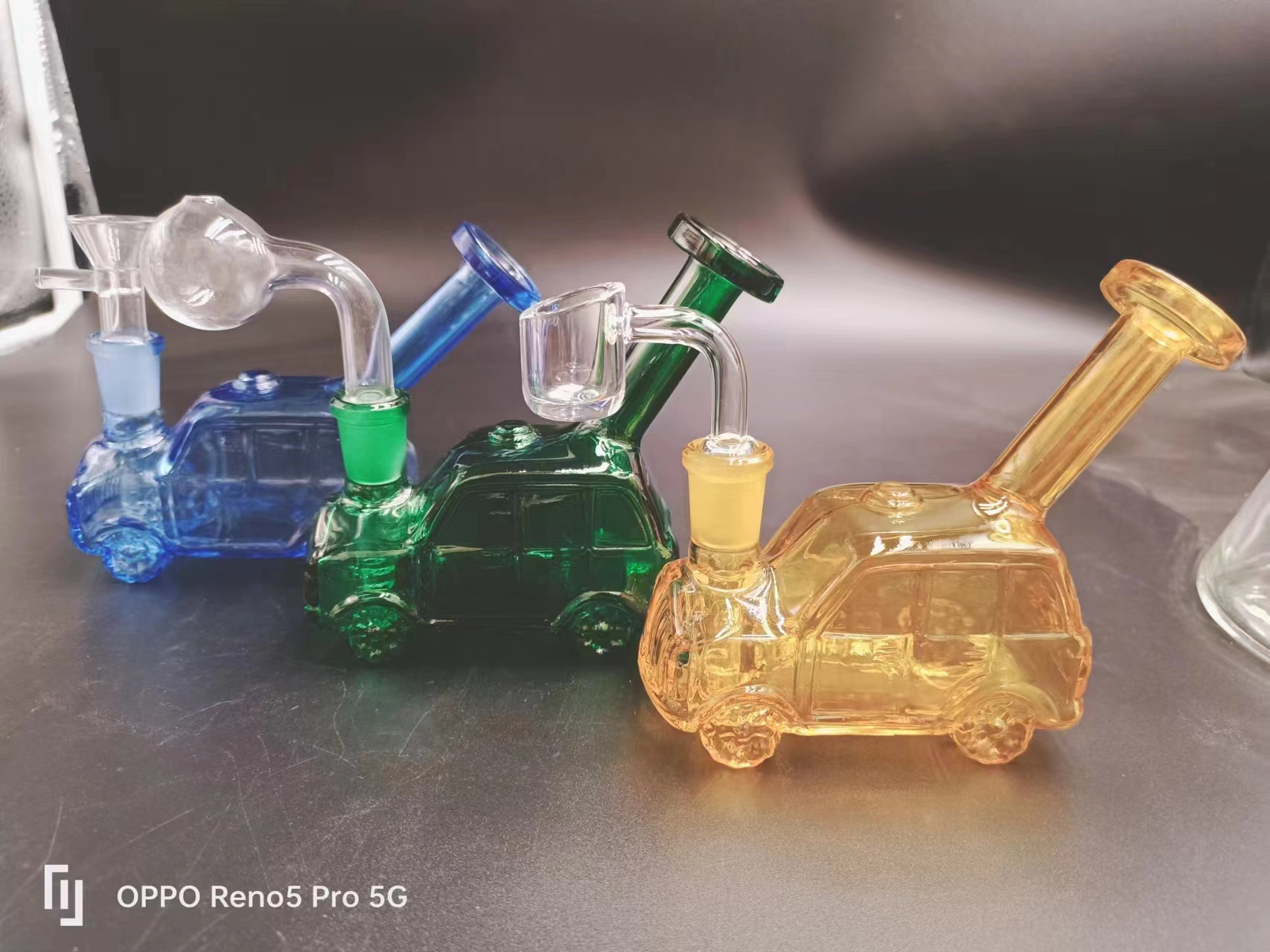
For retailers building a house brand, steamrollers are the ideal entry product. Low unit cost, fast sampling, and a design that is easy to recognize on a shelf. A branded steamroller at $18–$22 retail builds brand awareness every time a customer uses it. Contact our team to request a sample quote for your custom steamroller design.
Quality Control: What to Inspect on Arrival
Steamroller pipes look simple, but there are still quality checkpoints that wholesale buyers should enforce on every shipment:
Tube straightness. Roll the pipe on a flat surface. Any wobble indicates warping during annealing. A warped steamroller draws unevenly and looks defective on the shelf.
Bowl joint integrity. The point where the bowl meets the main tube is the most common stress fracture area. Inspect for hairline cracks, incomplete fusing, or rough transitions. A poorly joined bowl will crack within the first few uses.
Carb hole edges. The carb should be smooth and fire-polished. Sharp or rough edges mean the pipe was not finished properly, and the customer will notice immediately.
Annealing quality. Proper annealing relieves internal stress in the glass. Poorly annealed steamrollers will crack under normal use — sometimes within the first week. If you receive a shipment with a crack rate above 2–3%, the annealing cycle was rushed. Request a replacement and document the defect rate with photos.
Wall thickness consistency. Hold the pipe up to light and rotate. Dark spots or uneven transparency indicate inconsistent wall thickness, which creates weak points.
At Elfglass, every steamroller order goes through a three-point inspection before packing: visual check, dimensional verification against the approved sample, and a random-sample thermal shock test. The QC protocol is documented in the product spec sheet that ships with every order. For a deeper look at supplier vetting, see our wholesale glass pipe QC guide.
Are Steamrollers Still Relevant in 2026?
Yes — and the data from wholesale order patterns supports it. Steamroller pipes are not a trend item. They are a staple. While recycler bongs, complex percolator systems, and artistic heady pieces dominate social media and drive excitement, steamrollers move steadily in the background as one of the highest-volume hand pipe categories by unit count.
Consider the retail math: a smoke shop with limited counter space can display 20–30 steamrollers in the space that 5–6 water pipes would occupy. At $15–$25 each, that counter footprint generates $300–$750 in steamroller revenue versus $200–$400 from the water pipes. The water pipes have higher per-unit margins, but the steamrollers generate more revenue per square inch of display space.
Steamrollers also serve a specific customer segment that other pipes do not: traditional dry-pipe smokers who want a clean, unfiltered, direct hit. This is not a shrinking demographic. In markets where water pipes face regulatory scrutiny, steamrollers and other dry hand pipes often benefit from clearer legal classification.
The smart retail strategy is not to choose between steamrollers and premium pieces — it is to stock both. Steamrollers as high-volume counter fillers, spoons and sherlocks as mid-range options, and percolator bongs or dab rigs as destination purchases. Each serves a different price point and customer intent.
| Pipe Style | Wholesale Cost | Retail Price (USA) | Turnover Speed | Best Role |
|---|---|---|---|---|
| Steamroller | $2.00–$5.00 | $12–$25 | Fast | Counter filler, impulse buy |
| Spoon pipe | $2.50–$6.00 | $15–$30 | Fast | Everyday staple |
| Sherlock pipe | $3.00–$7.00 | $18–$35 | Medium | Mid-range display |
| Percolator water pipe | $8.00–$20.00 | $40–$80 | Medium–Slow | Destination purchase |
| Recycler dab rig | $10.00–$25.00 | $50–$120 | Slow | Enthusiast / premium |
Steamrollers are just one of many hand pipe styles. For a complete overview of how size affects demand across all hand pipe types, see our hand pipe size guide for wholesale buyers.
Frequently Asked Questions
What is a steamroller pipe?
A steamroller pipe is a straight-tube glass hand pipe with a bowl on one end and a carb (airflow) hole on the other. Smoke is drawn through the straight bore, and the carb is covered or uncovered to control airflow. The design is one of the oldest and simplest in glass pipe manufacturing.
What is the best material for wholesale steamroller pipes?
Borosilicate glass is the best material for wholesale steamroller pipes. It offers superior thermal shock resistance, lower breakage during shipping, and higher perceived quality at retail. Soft glass is cheaper but more fragile and prone to cracking under heat stress.
How much do wholesale steamroller pipes cost?
Basic clear borosilicate steamroller pipes at 5mm thickness cost $2.50–$5.00 per unit at wholesale (MOQ 100). Customization (logos, colors, packaging) adds $0.50–$2.50 per unit. Retail pricing in the USA is typically $15–$25.
Can I put my brand logo on steamroller pipes?
Yes. Steamroller pipes are ideal for logo application because the straight cylindrical surface provides a clean, flat canvas. Sandblasting, laser etching, and decal application are the three most common methods. MOQ for custom-branded steamrollers is typically 100 units per SKU.
What is the typical MOQ for wholesale steamroller pipes?
The standard MOQ for wholesale steamroller pipes is 100 units per SKU. This applies to both stock designs and custom-branded orders. Sampling takes 1–3 days, and bulk production runs 7–12 days for orders of 100+ units.
What should I check when receiving a wholesale shipment of steamroller pipes?
Inspect tube straightness, bowl joint integrity, carb hole smoothness, annealing quality (look for stress cracks), and wall thickness consistency. A crack rate above 2–3% indicates a problem with the annealing cycle and warrants a replacement request.
About the Author
Ava Zeng is the founder of Elfglass, a Shenzhen-based borosilicate glass pipe manufacturer serving B2B brands worldwide. Every guide on this site is grounded in her production-floor experience— the annealing lines, QC checkpoints, and export orders behind each claim.
Before you commit to a supplier, read her founder’s story and trust promise, and the guide to vetting a reliable glass pipe manufacturer— the same red-flag checklist Elfglass applies to its own suppliers.
The steamroller variant is one of many form factors catalogued in pipe smoking references, each optimized for different consumption contexts.
Ready to Source Custom Glass Pipes?
Get a free quote within 24 hours. MOQ from 100 pieces. NDA-protected design consultation.
