
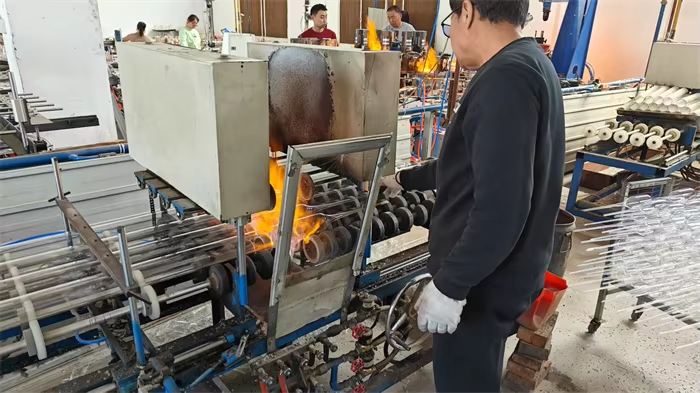
Hold two pipes that look identical — same shape, same length, same color work. One sits noticeably heavier in your hand. That difference is wall thickness, and it is the single spec that quietly drives weight, durability, feel, workability, and price on everything you order. Buyers argue about design and haggle on unit cost while the wall thickness line in the tech pack goes unread, then wonder why one batch feels premium and the next feels fragile.
This comparison puts 5mm and 7mm side by side across the properties that actually matter to a wholesale buyer. At Elfglass we produce both on borosilicate tubing and see the same pattern every time: thickness is not a quality dial you simply turn up. It is a trade-off, and the right setting depends on what the piece is for.
A 7mm glass pipe wall is heavier, more impact- and thermal-resistant, and more expensive; a 5mm wall is lighter, cheaper, and easier to shape into fine detail. Choose 5mm for everyday hand pipes, travel pieces, and value lines, and 7mm for premium, sculptural, or high-handling products where heft and durability justify the added glass and cost.
Key Takeaways
- Wall thickness is measured on the tube wall in mm, not on the finished piece — verify with a caliper.
- For the same diameter, glass mass scales close to linearly with thickness: 7mm uses roughly 40% more glass than 5mm.
- Thicker walls add impact and thermal resistance and a premium heft — but also material cost and working time.
- Thinner walls are lighter, cheaper, and easier to shape into fine color and sculptural detail.
- Thickness is a trade-off, not a quality dial: match it to the product, the price point, and the handling it will see.
Table of Contents
What Wall Thickness Actually Measures
Wall thickness is the thickness of the glass in the tube wall, measured in millimetres from the inside surface to the outside surface. It is not the diameter of the pipe and not the thickness of some finished section — it is the wall of the tubing the piece is built from. A digital caliper across a cut tube reads it directly, and a good spec states it with a tolerance, such as 5mm plus or minus 0.3mm, because tubing is drawn, not machined to a perfect constant.

Production glass pipes are built on borosilicate tubing, which is drawn in a range of standard wall thicknesses. Borosilicate is the material of choice because its low coefficient of thermal expansion resists the rapid heating and cooling a pipe lives through; the tubing properties and dimensions are standardized in ISO 3585 for borosilicate glass tubing, and the material itself is described in the reference entry on borosilicate glass. Around 5mm and 7mm are two of the most common walls for hand pipes and smaller water pipes, which is why the comparison matters so often.
One warning before the numbers: thickness interacts with diameter and length. A 7mm wall on a narrow tube behaves differently from a 7mm wall on a wide beaker. Everything below assumes the same outer diameter and general form, so you are comparing the wall and nothing else.
5mm vs 7mm Side by Side
Here is the whole comparison on one page. Each row is a trade-off, not a winner — read down and decide which column your product lives in.
| Property | 5mm wall | 7mm wall |
|---|---|---|
| Relative glass mass | Baseline | Roughly 40% more glass |
| Weight in hand | Light, everyday | Heavy, premium heft |
| Impact resistance | Good for normal use | Higher, more material to absorb a knock |
| Thermal mass | Heats and cools faster | Resists rapid swings better |
| Fine detail / color work | Easier to shape | Stiffer, harder to work fine |
| Material + working cost | Lower | Higher |
| Best fit | Value lines, travel, hand pipes | Premium, sculptural, high-handling |
The mass row is worth understanding rather than memorizing. For a thin-walled tube of a given diameter and length, the volume of glass in the wall is close to the circumference times the wall thickness times the length — so mass scales close to linearly with thickness. Move from a 5mm to a 7mm wall and you are using roughly 40 percent more glass for the same shape. That single geometric fact drives the weight, the cost, and most of the durability difference below.
Weight and Perceived Quality
Pick up the 7mm piece and it reads as more valuable before anyone checks a spec sheet. Heft is a genuine quality signal in glass retail: customers associate weight with durability and craftsmanship, and they will pay more for a piece that feels substantial. This is not snobbery, it is how the category sells — our breakdown of weight as a quality signal explains why heavy glass commands a premium on the shelf.
The caution: heft is a perception lever, not a substitute for good work. A thick wall on a poorly annealed, badly balanced piece still cracks, and a customer who pays a premium for weight and then watches it fail is worse off than one who bought a lighter, well-made pipe. Use the 7mm wall to reinforce a genuinely good product, not to disguise a mediocre one.
Durability, Impact, and Thermal Shock
More glass means more material to absorb an impact and more thermal mass to resist a sudden temperature change, so a 7mm wall generally survives drops and heat cycles better than a 5mm wall of the same design. That is the honest general direction. It is not the whole story, and buyers who treat thickness as an armor stat get burned.

Three things matter alongside thickness. First, material: borosilicate resists thermal shock far better than soda-lime glass at any wall, so a 5mm borosilicate pipe usually beats a 7mm soft-glass one — see our borosilicate vs soft glass guide. Second, annealing: glass cooled unevenly locks in internal stress, and a thick wall that is badly annealed can carry more stored stress than a thin one. Third, geometry: a rounded, well-supported shape survives impacts better than a thin-necked one at the same wall. Our drop and thermal testing methods article shows how these are actually tested rather than assumed.
The verdict: specify 7mm when the piece will see rough handling, travel, or a high return-cost if it breaks. Specify 5mm when weight and cost matter more and the product lives in gentler use — and in both cases insist on proper annealing, because it decides durability as much as the gauge does.
Specify the Exact Wall You Want
Tell us the wall thickness and tolerance in your tech pack and we build to it on properly annealed borosilicate — then you verify with a caliper on the sample before bulk. Send your design for a quote within 12 hours.
MOQ from 100 pieces | Borosilicate tubing | Caliper-verifiable samples
What Thickness Does to Cost
Roughly 40 percent more glass is roughly 40 percent more raw material per unit, and the cost does not stop at the tubing. A thicker wall takes more heat and more time to bring to working temperature, so fuel and labor per piece rise too. That stacks straight into the FOB price and then into your landed cost.
| Cost driver | 5mm wall | 7mm wall |
|---|---|---|
| Glass per unit | Baseline | About 40% more |
| Heat / fuel to work | Lower | Higher thermal mass to heat |
| Working time | Faster | Slower to shape and cool |
| Breakage in production | Fewer heavy-section stresses | More care in annealing |
| Net FOB price | Lower | Higher |
The commercial question is not whether 7mm costs more — it does — but whether the market for your product pays enough more to cover it. A premium retail piece that commands a higher multiple can absorb the extra glass easily; a value-line hand pipe sold on price cannot. Run the two FOB numbers through your landed cost and margin before you commit, using the markup calculator and the cost of importing guide. Heavier glass also adds shipping weight, which nudges freight up — a second-order cost most buyers forget until the invoice.
Workability and Design Detail
Thinner glass is more forgiving to the torch. A 5mm wall comes to temperature faster, bends and shapes with less effort, and takes fine color work, thin necks, and delicate sculptural detail more readily. A 7mm wall is stiffer, holds heat longer, and resists the fine manipulation a detailed piece needs — which is why a lot of intricate artistic work is built on thinner walls even when durability would argue for thicker.
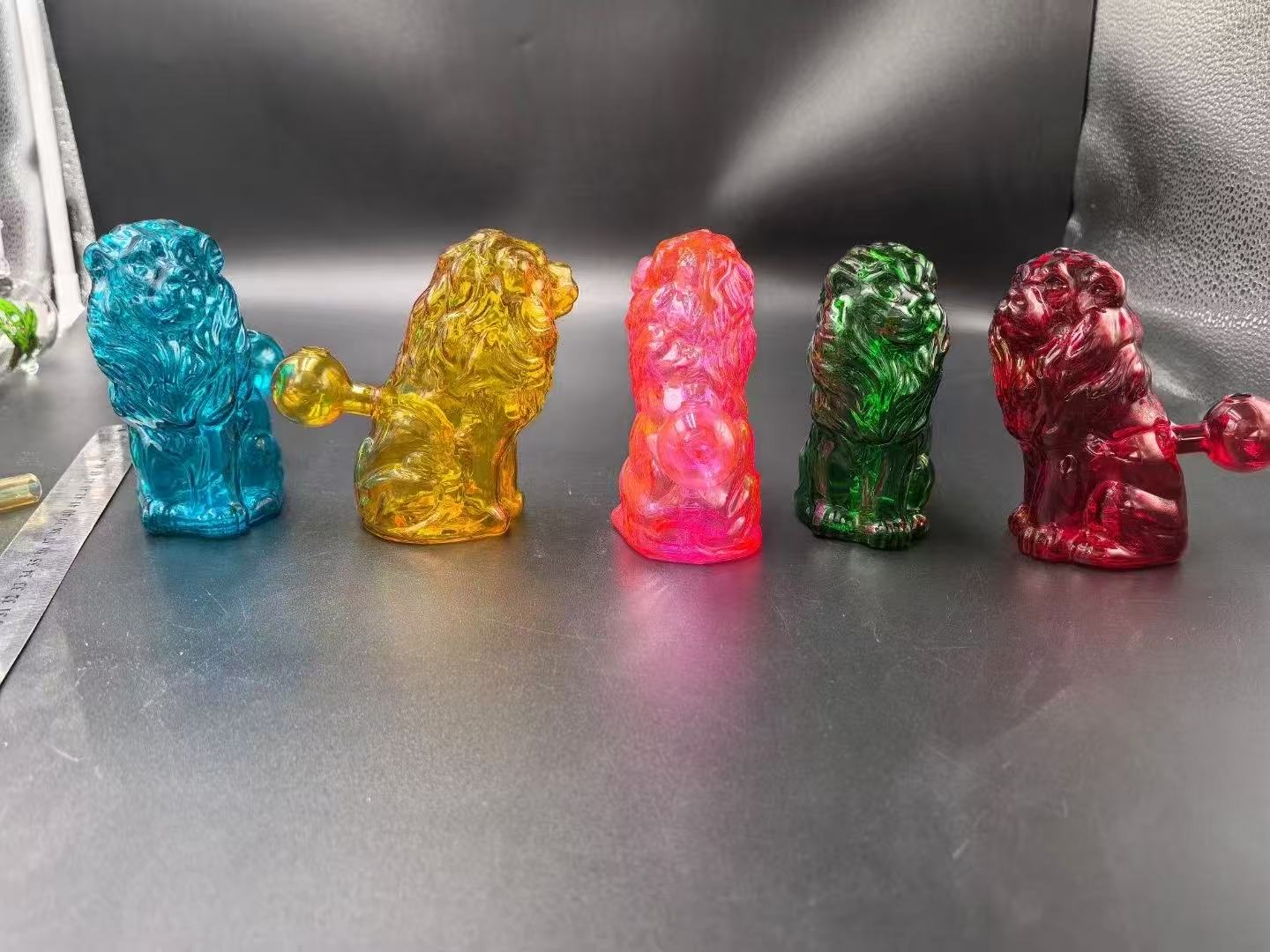
This ties directly into how the piece is made. Machine-made production favors consistent, straightforward walls where a standard gauge shines; hand-blown artistic work bends the rules and often prefers thinner, more responsive glass. Our hand-blown vs machine-made comparison explains how the manufacturing route and the wall choice pull in the same direction — match the thickness to the method, not just to the durability target.
Which Thickness for Which Product
Enough theory — here is the practical mapping we use when a buyer asks which wall to build. Match the product to the handling and the price point.
| Product type | Common wall | Why |
|---|---|---|
| One-hitters / chillums | 5mm or less | Tiny, light, low-cost, gentle use |
| Everyday hand pipes | 5mm | Balance of strength, weight, price |
| Travel / pocket pieces | 5mm | Lighter to carry, cheaper to replace |
| Premium hand pipes | 7mm | Heft and durability justify the price |
| Small water pipes / bongs | 5-7mm | Depends on tier and base stability |
| Sculptural / heady pieces | Varies | Detail drives the choice, not durability |
For sizing beyond the wall, our hand pipe size guide covers how overall dimensions and wall thickness work together to set the feel and the price tier of a finished piece.
How to Specify Thickness With Your Supplier
Wall thickness belongs in the tech pack as an explicit number with a tolerance, not as an adjective like “thick” or “heavy.” Write it as, for example, “wall 7mm plus or minus 0.3mm,” name the material (borosilicate), and state where you expect it measured. Vague language is how a buyer who asked for heavy glass receives a batch that feels light — the factory built to a different mental number than you did.
Then verify on the sample before bulk. Measure the tube wall with a digital caliper at several points and around the circumference, not just one spot, because uneven walls are a common defect and a caliper catches them instantly. Check the walls are concentric and consistent, confirm the annealing by looking for stress under polarized light if you can, and only then approve production. Our glass thickness spec guide covers the 3mm versus 5mm end of the same conversation, and the borosilicate deep dive explains the material properties you are specifying against.
Warning: never approve bulk on a single caliper reading from one spot on one sample. Wall thickness varies along a drawn tube, and one lucky measurement hides a batch that drifts thin. Sample a few points, then hold the bulk to the same tolerance you set.
Conclusion
5mm and 7mm are not good and bad; they are two settings on a trade-off. A 7mm wall gives you heft, impact and thermal resistance, and a premium feel at the cost of roughly 40 percent more glass, higher working cost, and less design freedom. A 5mm wall is lighter, cheaper, faster to work, and kinder to fine detail, at the cost of some durability and shelf presence. Material and annealing decide durability as much as the gauge does, so never buy thickness alone.
Your buy-by-use-case verdict:
- Value line, travel, everyday hand pipes: 5mm — light, cheap, strong enough.
- Premium retail, high-handling, gift pieces: 7mm — heft and durability justify the cost.
- Intricate color or sculptural work: thinner wall, chosen for detail over durability.
- Any thickness: insist on borosilicate and proper annealing — they matter as much as gauge.
- Always: write the wall and tolerance into the tech pack and verify with a caliper on samples.
Deciding on a build? Request a quote with your wall thickness and tolerance stated, and we will return an itemized price for the exact gauge — plus a sample you can measure before bulk.
Is a 7mm wall thickness better than 5mm for glass pipes?
Better for durability and perceived quality, heavier and more expensive. For everyday hand pipes and travel pieces, 5mm balances strength with weight and cost; 7mm suits premium, sculptural, or high-handling pieces.
How much heavier is a 7mm wall than a 5mm wall?
For the same outer diameter and length, glass mass scales close to linearly with wall thickness, so a 7mm wall uses roughly 40 percent more glass than a 5mm wall and feels correspondingly heavier.
Does thicker glass resist thermal shock better?
Thicker walls hold more heat and resist rapid temperature swings better in principle, but even annealing matters as much as thickness. Unevenly cooled thick glass can carry more internal stress.
How do I verify wall thickness on a sample?
Measure the tube wall with a digital caliper at several points, not the whole piece. Check against your spec tolerance and confirm the walls are even around the circumference before approving bulk.
Does wall thickness change the wholesale price?
Yes. More glass per unit plus more fuel and time to work a thicker wall raises material and labor cost, which shows up in the FOB price and your landed cost.
Ready to Start Your Custom Glass Pipe Project?
Get a free quote within 24 hours. MOQ from 100 pieces. NDA-protected design consultation.
