You have a brand name, a logo, and a vision for a glass pipe line. What you do not have is inventory, a factory relationship, or any experience ordering 100 units of something you have never seen in person. The private label starter kit is the bridge between “I want to sell branded glass” and “I have 100 units of my branded glass in a warehouse ready to ship.” It is not a product category—it is a process, and getting the process right on your first order determines whether your second order happens at all. Private label products are manufactured by one company but sold under another company’s brand—a standard retail sourcing model (private label reference).
This guide walks through the exact steps for launching a private label glass pipe brand with your first 100-unit order: choosing a product, submitting specs, approving samples, finalizing packaging, and receiving goods. Every step references the production workflow at a factory running MOQ 100, BSCI and ISO 9001 certified, with 1–3 day sampling and 7–12 day production.
Key Takeaways
- Your first private label order should be one design, one color, 100 units—resist the urge to launch with five SKUs.
- The sample approval stage is where first-time brand owners make or break their product. Do not skip it to save three days.
- Logo application (print, etch, or sandblast) is confirmed at the sample stage, not after bulk production begins.
- Custom packaging turns your 100 units from factory product into retail brand—budget for it in your first order.
- Total timeline from first inquiry to goods in hand: approximately 3–4 weeks including sampling, production, and shipping.
Step 1: Choose Your First Product
The single most common first-timer mistake: trying to launch with a complex product. A 16-inch triple-percolator recycler with custom color work and gold accents is not your first order. Your first order should be a format with proven wholesale demand, simple construction, and broad customer appeal.
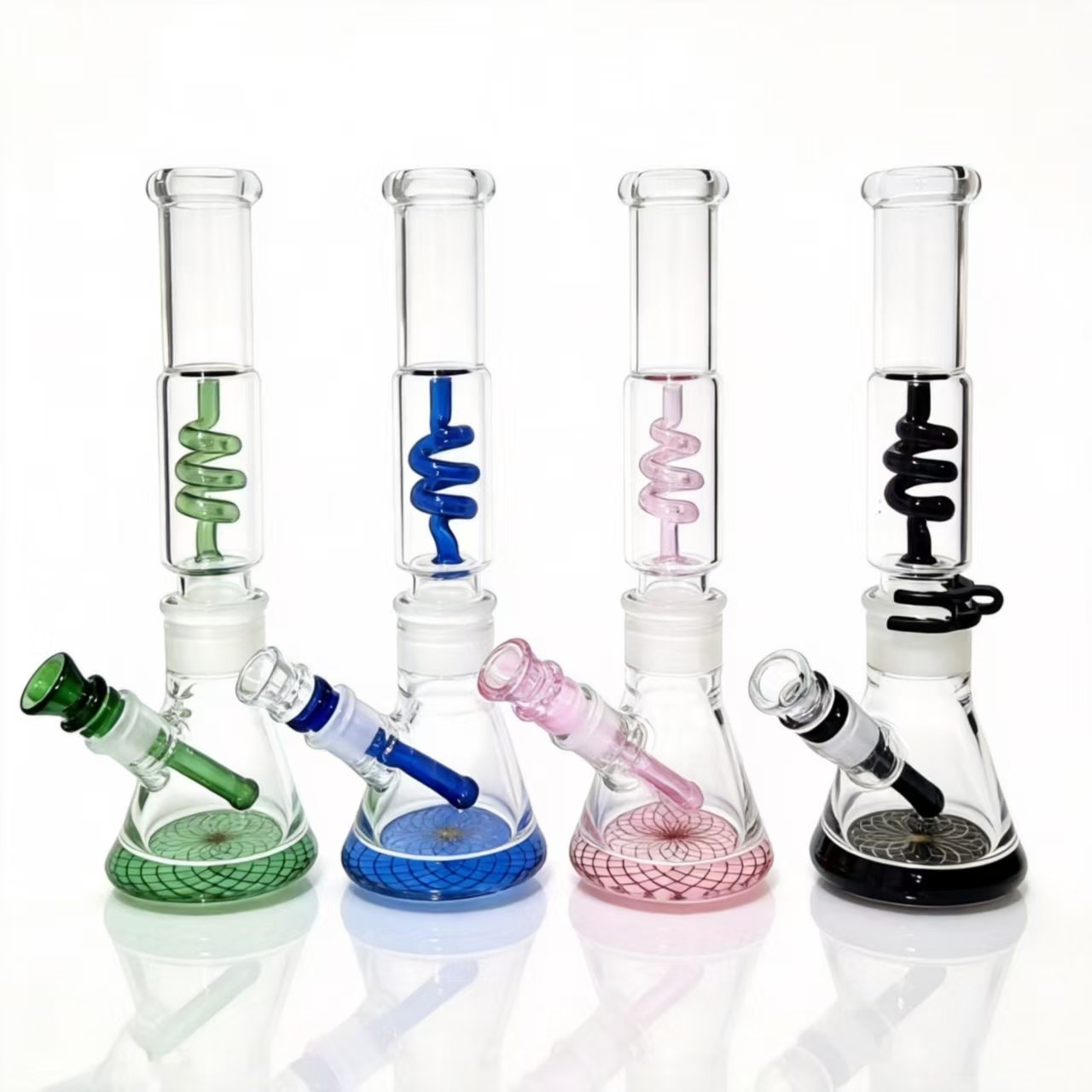
The best first private label product is a 10-to-12-inch beaker or straight tube in clear glass with a 14mm joint. Why: it serves the widest customer base, it photographs well for online listings, it ships safely, and it lets your brand identity (logo, packaging, marketing) do the differentiation rather than exotic product specs.
Choose from the factory’s existing catalog if available—this eliminates mold costs and reduces sampling time. If you need a custom shape, accept that your timeline extends by one sampling cycle. Elfglass offers both paths: catalog selection for fastest launch, or custom spec for brands with a specific design vision. Review the OEM vs ODM comparison to determine which model fits your situation.
Step 2: Submit Specifications
Your spec sheet is the contract between your brand vision and the factory’s production line. Vague instructions produce vague products. Write every dimension explicitly.
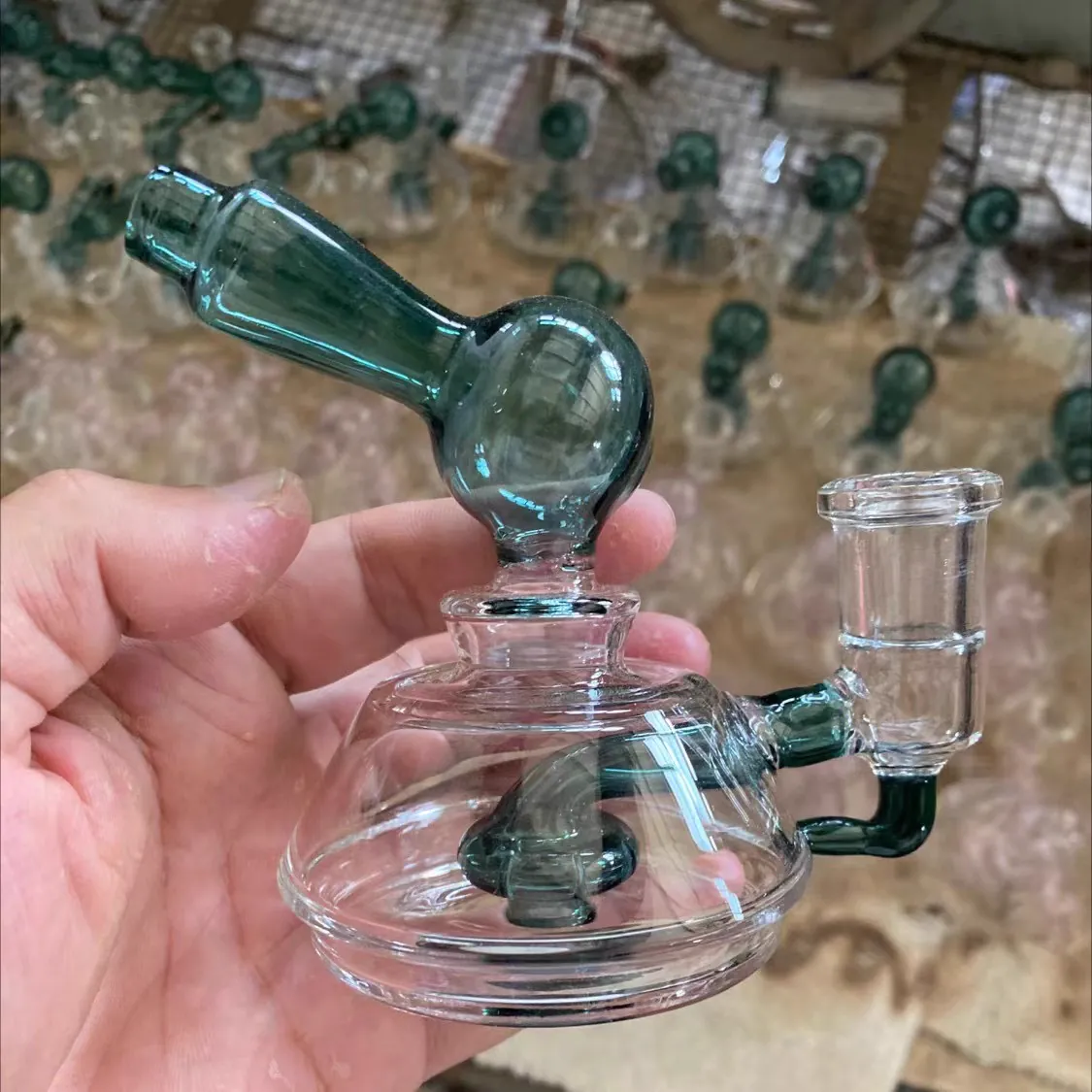
Include: total height, base diameter or tube diameter, joint size and gender, percolator type (if any), color (Pantone reference if custom), logo placement and method, and packaging requirements. Attach a reference photo or sketch. Elfglass responds to spec inquiries within 12 hours and flags manufacturability issues before you commit—impossible dimensions, logo methods that do not work on the chosen surface, or packaging specs that exceed the unit’s protection needs.
One discipline that saves weeks: finalize your logo file before submitting specs. Vector format (AI or EPS), Pantone colors identified, placement location specified. The factory cannot sample your logo application until they have the final file. Delays at this stage cascade through the entire timeline.
Step 3: Approve the Sample
Sampling completes in 1–3 days at Elfglass. This is the single most important stage in your first private label order. The sample is the physical proof that your spec sheet translated correctly into glass.
Check the sample against your spec sheet point by point: dimensions, joint fit, percolator function, color accuracy, and logo placement. Photograph the sample next to a ruler for your records. If anything deviates, request a revision before approving bulk production. The 1–3 day sampling window exists precisely so you can iterate without derailing the production timeline.
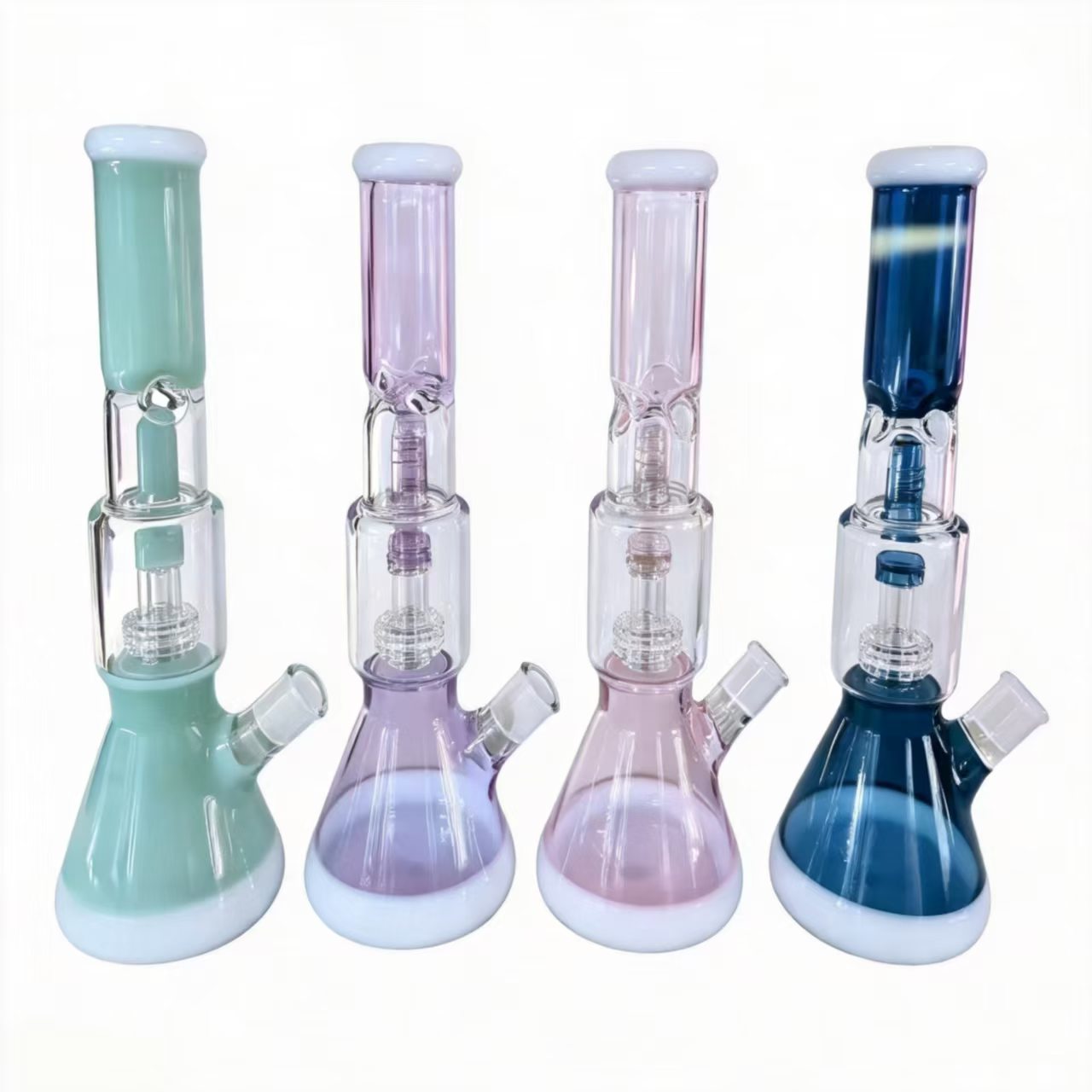
Risk warning: do not approve a sample based on photos alone. Request a physical sample shipped to your location, or at minimum a video call where the factory demonstrates the unit live. Photos hide joint wobble, surface defects, and color shifts that are obvious in person. Three days of shipping a sample is cheaper than 100 units of the wrong product.
Turn Your Concept Into Production-Ready Glass
Elfglass takes you from design brief and CAD/STEP files to prototyping, branding, and mold exclusivity, with your IP protected by NDA. Send us your concept and we will return a manufacturable plan and quote.
MOQ from 100 pieces | BSCI / WRAP / ISO 9001 | NDA before every project
Step 4: Logo Application
Your brand logo is applied during the sample stage so you can verify placement, size, and method before bulk production. The three standard methods for glass are print, etch, and sandblast—each with different durability, cost, and visual characteristics.
Print: Lowest cost, fastest application. Suitable for simple logos in 1–2 colors. Durability is good for retail use but can wear with aggressive cleaning. Best for entry-level and mid-range products.
Etch: Acid or laser etching removes glass surface to create a permanent mark. Higher cost than print, but the logo will never wear off. Suits premium positioning where the logo is part of the product’s perceived value.
Sandblast: Abrasive blasting creates a frosted logo area. Distinctive matte texture that contrasts with polished glass. Moderate cost, excellent durability, and a tactile quality customers notice when handling the product.
For your first order, choose one method and test it on the sample. If you are unsure, print is the lowest-risk entry point—you can upgrade to etch or sandblast in your second order based on customer feedback. The logo application methods guide covers the full technical comparison.
Step 5: Custom Packaging
Your 100 units arrive in whatever packaging you specify. Factory-standard brown cartons are functional but they do not build a brand. Custom packaging—your logo, your colors, your unboxing experience—transforms a factory product into a retail brand at the point of first customer contact.
For a first private label order at MOQ 100, digital printing on coated cardboard is the cost-effective entry point. No plate costs, full-color capability, and the factory integrates packaging production into the same 7–12 day window as the glass product. Your units leave the factory in branded boxes, ready for retail shelves or direct-to-customer shipping.
Include packaging in your initial spec submission so the factory can create a structural dieline from your product dimensions. The custom packaging design guide covers material selection, print methods, and regulatory text requirements in detail.
Launching your private label brand? Elfglass handles product, logo, and packaging in one coordinated order. First inquiry to finished goods in 3–4 weeks.
MOQ 100 | BSCI & ISO 9001 | See our OEM process
Step 6: Production and Payment
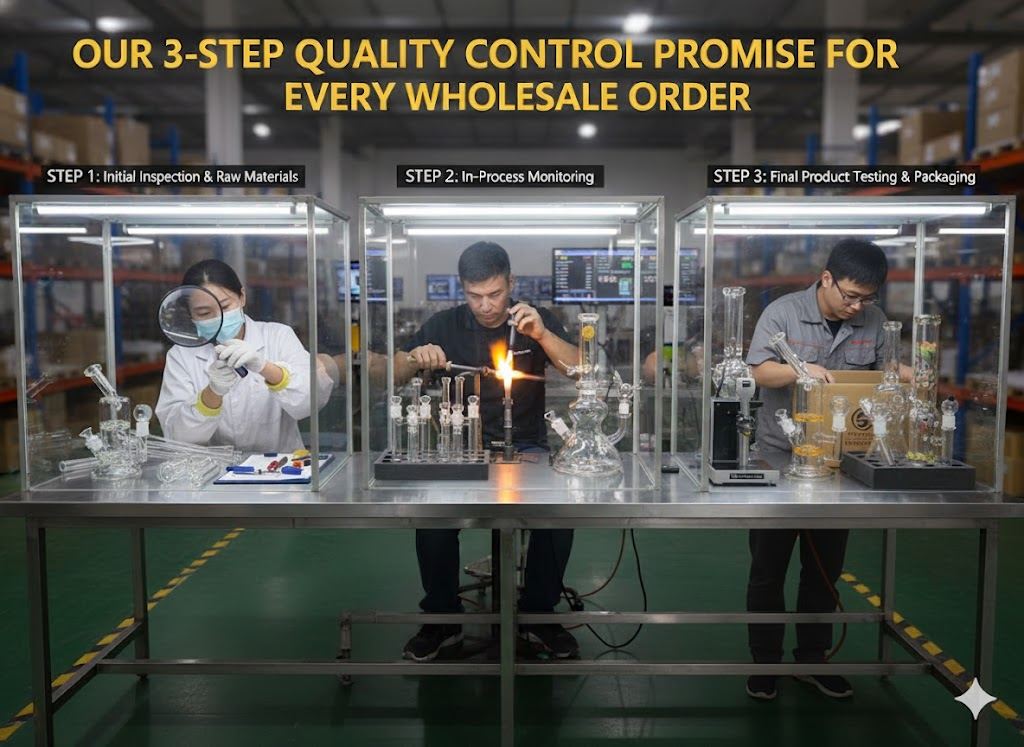
Once the sample is approved and packaging artwork is confirmed, bulk production begins. For 100 units, production completes in 7–12 days. This covers glassblowing, logo application, annealing, assembly, QC inspection, and packaging.
Payment terms: T/T 30% deposit upon order confirmation, 70% balance before shipment. This structure protects you as a first-time buyer—goods are inspected and photographed before you release final payment. If anything fails QC, the factory addresses it before your money is fully committed.
Request pre-shipment QC photos showing 5–10 random units from the batch. Check for consistency: logo placement uniformity, color matching, joint alignment, and packaging condition. Elfglass provides these photos as standard practice before requesting balance payment.
Step 7: Receiving and Inspecting Goods
Your 100 units arrive after shipping (timeline depends on your destination and freight method). Inspect within 48 hours of delivery while any shipping damage claim is still valid.
Check: carton condition (dents, punctures, water damage), unit count (verify 100 units plus any agreed spare parts), random sample inspection (5–10 units for joint fit, logo quality, packaging condition), and documentation (commercial invoice, packing list, any certificates requested).
If you find damaged units, photograph everything before unpacking further and contact the factory within the claim window. Factories running BSCI and ISO 9001 certifications maintain claim procedures—Elfglass includes damage replacement terms in the purchase agreement. The arrival inspection checklist covers the full verification process step by step.
Risk note: your first order is a learning experience. Expect one or two things to be slightly different from your expectation—a color shade that reads differently in person, a packaging dimension that is 2mm tighter than your mockup. These are normal manufacturing tolerances, not defects. Document them for your second order spec revision. The factory that receives specific, actionable feedback on order one delivers a better order two.
Conclusion
A private label glass pipe brand launches one order at a time. The first 100 units are your proof of concept: they validate your product choice, your factory relationship, your packaging, and your market positioning. Getting the process right matters more than getting the volume right.
- One design, one color, 100 units—launch simple, iterate based on sell-through data.
- Never skip the physical sample approval. Three days of sampling prevents 100 units of the wrong product.
- Include packaging in your first order spec so goods arrive retail-ready.
- Total timeline from inquiry to goods: 3–4 weeks. Plan your launch date backward from there.
Ready to start your private label brand? Send your product vision to Elfglass—spec feedback, pricing, and sampling timeline returned within 12 hours.
Ready to place your first order? Start with our wholesale glass pipes catalog and spec your first 100 units with our factory team.
Frequently Asked Questions
What is the minimum order for a private label glass pipe brand?
At Elfglass, MOQ is 100 units per design per SKU. This allows first-time brand owners to launch without committing to container-load volumes.
How long does it take to receive my first private label order?
Approximately 3 to 4 weeks total: 1 to 3 days for sampling, 7 to 12 days for production, plus shipping time based on your destination. For more context, see this tooling cost amortization for molds.
Can I put my logo on the glass pipes?
Yes. Three methods are available: print (lowest cost), etch (permanent), and sandblast (textured matte finish). Logo application is confirmed at the sample stage.
Should I order custom packaging with my first 100 units?
Yes. Custom packaging turns factory product into retail brand. At Elfglass, packaging production integrates into the same 7 to 12 day window as the glass product.
What should I choose for my first private label product?
A 10 to 12 inch beaker or straight tube in clear glass with a 14mm joint. Simple construction, broad appeal, and lets your brand identity do the differentiation.
About the Author
Ava Zeng is the founder of Elfglass, a Shenzhen-based borosilicate glass pipe manufacturer serving B2B brands worldwide. Every guide on this site is grounded in her production-floor experience— the annealing lines, QC checkpoints, and export orders behind each claim.
Before you commit to a supplier, read her founder’s story and trust promise, and the guide to vetting a reliable glass pipe manufacturer— the same red-flag checklist Elfglass applies to its own suppliers.
Starter economics mirror white-label conventions, where buyers rebrand standard catalog items before committing to custom tooling.
For the full budget picture — per-unit costs, one-time costs, and a worked example — see our glass pipe brand startup cost breakdown.
Ready to Source Custom Glass Pipes?
Get a free quote within 24 hours. MOQ from 100 pieces. NDA-protected design consultation.
