
When a glass hand pipe slips off a retail display and shatters on the showroom floor, nobody is thinking about borosilicate quality or annealing temperatures. They are thinking about protection. That single moment of breakage is exactly why the silicone sleeve glass combination has moved from niche aftermarket add-on to a core product-design decision for brands ordering from manufacturers. Silicone sleeves are no longer an afterthought wrapped around a finished piece. They are shaping how glass pipes are engineered, marketed, and sold at every price tier. The sleeves rely on the polymer family described in materials references as silicone, valued in protective accessories for heat stability and flexibility.
For B2B buyers sourcing borosilicate glass from Shenzhen factories, understanding this trend means understanding what retailers actually request, what end-users value, and where the margin opportunities sit. This guide covers the full picture: material science, design integration, OEM customization, and the sourcing logistics that determine whether a silicone sleeve adds real value or just extra cost.
Why Silicone Became the Default Protective Material for Glass Pipes
Glass and silicone share a chemical compatibility that most buyers overlook. Food-grade silicone is inert, non-toxic, and does not off-gas at the temperatures a glass pipe encounters during normal use. That makes it fundamentally safe to pair with a product designed for inhalation. Unlike rubber sleeves, which can degrade and leave residue, or hard plastic shells that crack under pressure, silicone flexes, absorbs impact, and returns to its original shape.
The material properties matter at a structural level. Silicone sleeves act as a shock absorber around borosilicate glass. When a pipe is dropped, the sleeve compresses and distributes kinetic energy across a wider surface area rather than concentrating it at a single impact point. This does not make the glass unbreakable, but it dramatically reduces the probability of catastrophic failure from the kind of minor bumps and fumbles that happen daily in retail environments, trade show booths, and consumer households. Sleeve durability relies on the elastomer properties of silicone rubber, which maintains flexibility across wide temperature ranges.
Heat insulation is the second functional benefit. Borosilicate glass handles thermal shock well, but the exterior surface still gets hot during extended sessions. A silicone sleeve creates a thermal barrier between the glass wall and the user’s hand. For brands targeting premium retail positioning, this comfort improvement is a tangible selling point that customers notice immediately.
Grip enhancement rounds out the trifecta. Glass pipes, especially those with sleek exterior finishes or matte coatings, can be slippery. Silicone adds friction without adding bulk. The result is a product that feels secure in the hand without altering the visual profile that attracted the buyer in the first place.
Design Integration: How Sleeves Are Engineered Into the Product
There is a meaningful difference between a silicone sleeve designed as an afterthought and one engineered alongside the glass piece from the concept stage. The best-performing products in this category treat the sleeve and the glass as a single system. Wall thickness, outer diameter tolerances, and the placement of any texture or branding on the sleeve are all coordinated before the first sample is pulled.
At Elfglass, this integrated approach is standard practice. When a brand brings a design concept to the team, the engineering conversation includes the sleeve from day one. The glass pipe’s outer diameter is finalized with the sleeve’s inner diameter in mind, ensuring a snug fit that stays in place during use but can still be removed for cleaning. This coordination is part of the OEM process that begins with an initial consultation and an NDA signed before any design files are exchanged.
Sleeve thickness typically ranges from 1.5mm to 3mm depending on the product’s intended use. A slim hand pipe designed for pocket carry benefits from a thinner sleeve that preserves the sleek profile. A larger water pipe destined for a retail shelf where it might be handled repeatedly benefits from a thicker gauge that prioritizes impact resistance. The choice is a design decision, not a one-size-fits-all specification.
Texture is another variable. Some sleeves feature a smooth exterior for a clean, minimalist look. Others incorporate ridges, dots, or geometric patterns that enhance grip and create visual interest. For brands building a recognizable product line, the sleeve texture becomes part of the design language, as important as the glass shape or color choice. This is where the relationship between matte finishes and surface aesthetics intersects with sleeve design, since the visual harmony between glass finish and silicone texture determines the final product’s shelf appeal.
Color Matching and Branding Opportunities
One of the most underutilized advantages of silicone sleeves is the color flexibility they offer. Silicone can be pigmented in virtually any Pantone shade, which means brands can match sleeves to their exact brand colors without the limitations that come with glass coloring chemistry. While achieving certain glass colors requires specific metal oxides and precise kiln temperatures, as explored in the glass color chemistry process, silicone color matching is comparatively straightforward and consistent across production runs.
This opens up several strategic options for B2B brands. A brand can release a seasonal color collection where the glass stays the same but the sleeve color rotates. Retailers can order exclusive color combinations for their stores. Limited-edition runs become financially viable because the glass tooling does not change, only the silicone mold.
Branding placement is another area where sleeves add value. Logos, patterns, and even short text can be embossed or debossed into the silicone surface during molding. Unlike printed graphics on glass, which can wear off with handling and cleaning, embossed silicone branding is permanent. It survives alcohol cleaning, UV exposure, and years of daily use without fading.
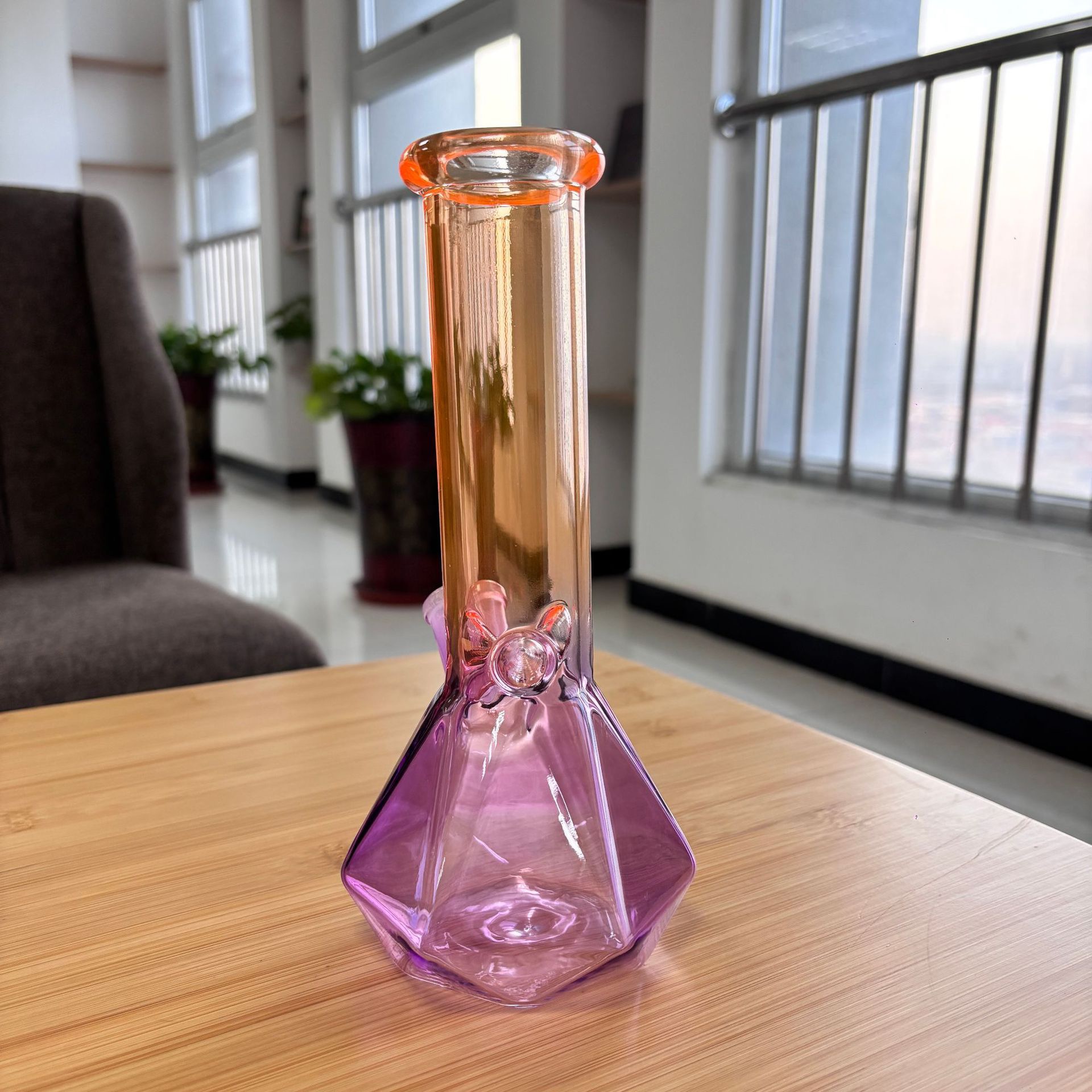
The interplay between sleeve color and glass appearance also matters for merchandising. A translucent glass piece with visible internal features like color changes or frit work pairs well with a contrasting or complementary sleeve color. Brands that understand this dynamic can create products that photograph better, stand out on shelves, and give retailers more visual variety without increasing SKU complexity on the glass side.
OEM Production: What Buyers Need to Know
Sourcing glass pipes with custom silicone sleeves involves coordinating two different manufacturing processes. The glass is hand-blown by skilled artisans using traditional borosilicate techniques, while the silicone sleeve is injection-molded or compression-molded using a custom mold. Both processes must converge on the same dimensional specifications, and the sequencing matters for production efficiency.
At Elfglass, the standard workflow begins with the glass design. Once the outer diameter and sleeve coverage area are locked, the silicone mold is fabricated. Sampling for the combined product typically takes one to three days. Once the sample is approved, bulk production runs seven to twelve days for orders above 100 pieces. The minimum order quantity is 100 pieces per design, which keeps the barrier to entry low for brands testing a new sleeve-integrated product line.
The factory operates 1,000 square metres of production space with 20 employees and a monthly capacity of 10,000 pieces. This scale is deliberate. It is large enough to handle substantial orders reliably while remaining small enough that every piece receives hands-on attention during production. The facility holds BSCI, WRAP, and ISO 9001 certifications, which matter for buyers who need to demonstrate supply chain compliance to their own retail partners or regulatory bodies.
Payment terms follow the industry-standard T/T structure: 30 percent deposit to begin production, 70 percent before shipment. Quote responses are provided within 12 hours, and an NDA is signed before every OEM project begins. These are not unique terms in the manufacturing world, but the consistency and transparency around them reduce the friction that often slows down new product development.
For brands evaluating whether to add silicone sleeves to their existing glass lineup, the practical question is often about cost impact. The sleeve itself adds material and mold costs, but it also reduces breakage rates during shipping and handling, which offsets a portion of that expense. Fewer returns, fewer replacements, and fewer damaged-goods write-downs translate to real margin protection, especially for brands shipping internationally where breakage risk compounds with transit distance.
The Retail Case: Why Stores Are Requesting Sleeved Products
Retail buyers have become vocal about wanting silicone sleeves on the glass pipes they stock. The reasons are commercial as much as they are functional. A sleeved pipe has a lower breakage rate on the shop floor. It feels more substantial in the customer’s hand, which increases perceived value. And it provides a natural upsell opportunity: brands can offer the same glass with different sleeve options at different price points.
The psychology of perceived value deserves attention here. When a customer picks up a glass hand pipe and feels the secure, cushioned grip of a silicone sleeve, the product registers as more considered, more premium. This is not a trivial factor in a retail environment where purchase decisions happen in seconds. The tactile experience of holding a product directly influences whether a customer reaches for their wallet or puts the piece back on the shelf.
Brands are also discovering that sleeves solve a packaging challenge. Glass pipes in sleeves are less vulnerable to scratching against each other during transit and storage. This means brands can sometimes simplify their packaging, reducing the amount of foam insert or individual boxing required. For high-volume orders, even small packaging savings per unit add up quickly.
The trend toward sleeved products also connects with broader shifts in how glass pipes are categorized at retail. As the market matures, products are increasingly positioned alongside lifestyle accessories rather than purely as functional items. A silicone sleeve transforms a glass pipe from a fragile art object into a durable everyday carry item, which broadens its appeal to customers who might otherwise avoid glass products out of concern for breakage.
Stock the Glass Pipes Your Customers Actually Buy
Elfglass produces the full wholesale catalog, from hand pipes and sherlocks to dab rigs, percolator bongs, and accessories, in proven best-selling specs. Tell us your market and we will recommend a catalog mix with pricing.
MOQ from 100 pieces | BSCI / WRAP / ISO 9001 | NDA before every project
Sleeve Design Variations Across Product Categories
Not all silicone sleeves serve the same purpose, and the design varies significantly depending on the type of glass product being protected. Understanding these variations helps buyers make informed decisions about which sleeve style fits their product line.
For hand pipes, the most common sleeve style is a full-wrap cylinder that covers the main body of the pipe while leaving the bowl and mouthpiece exposed. This provides maximum impact protection where the glass is thinnest and most vulnerable, while keeping the functional areas accessible. Some hand pipe sleeves extend partially over the bowl area with a heat-resistant cutout, offering finger protection from heat transfer.
Water pipes present a different challenge due to their size and complexity. Sleeves for water pipes often focus on high-risk areas: the base, the downstem joint, and any thin neck sections. These sleeves may be segmented rather than full-wrap, covering specific zones rather than the entire exterior. The stability differences between beaker and straight-tube designs also influence sleeve placement, since beaker-base pipes are more top-heavy and benefit from base protection, while straight tubes need mid-section impact absorption.
Miniature and micro pipes represent a growing category where sleeves play an outsized role. Small glass pieces are inherently more fragile relative to their mass, and the thick walls needed for structural integrity would change the proportions that make mini pipes appealing. A thin silicone sleeve allows the glass to stay delicate-looking while gaining meaningful protection. This is particularly relevant for brands exploring the mini versus full-size water pipe segment, where portability and durability are primary purchase drivers.
Quality Control and Material Standards
The silicone sleeve market includes products ranging from food-grade platinum-cure silicone to cheaper tin-cure variants that may contain trace contaminants. For B2B buyers, the distinction matters. Food-grade silicone is certified safe for contact with consumables and does not leach chemicals under normal use conditions. Tin-cure silicone, while less expensive, can degrade over time and may emit odors when exposed to heat.
Elfglass uses food-grade silicone for all sleeve production, consistent with the brand’s positioning as a manufacturer that treats product safety as non-negotiable. This choice aligns with the regulatory expectations of markets like the European Union, where materials contacting the mouth or used in proximity to inhalation face stricter scrutiny.
Quality control for silicone sleeves involves checking dimensional accuracy against the glass piece, verifying color consistency across the production run, and testing the sleeve’s elasticity retention after repeated removal and reinstallation. A well-made sleeve should maintain its grip strength and shape through hundreds of cycles without stretching out, tearing, or becoming loose on the glass.
The integration of sleeve QC with glass QC is another advantage of working with a single manufacturer rather than sourcing the two components separately. When one facility controls both processes, dimensional mismatches are caught during sampling rather than after bulk production is complete. This reduces the risk of receiving an order where the sleeves do not fit the glass, a scenario that becomes more likely when glass and silicone are produced by different vendors working from separate specifications.
Market Positioning: Where Sleeved Products Fit in the Catalog
Brands that have added silicone-sleeved products to their product catalog report that these items tend to occupy a specific market position. They are rarely the cheapest option, because the added material and production steps increase the unit cost. But they are also not positioned at the ultra-premium end, where hand-blown art pieces with complex color work command the highest prices. Instead, sleeved products tend to land in the mid-to-upper-mid range, which is often the highest-volume price tier for retail.
This positioning makes sleeved glass pipes an attractive option for brands looking to strengthen their core catalog rather than their flagship or entry-level offerings. The sleeve adds perceived value and functional benefit at a cost increase that the market readily accepts. It is a product improvement that customers understand immediately without needing education about why it matters.
The approach also supports brand differentiation in a crowded market. When dozens of manufacturers offer similar glass hand pipes, a custom silicone sleeve with brand-specific color and embossed logo creates a visual identity that competitors cannot easily replicate. The glass shape might be similar across the market, but the sleeve becomes a signature element that customers associate with a particular brand.
For brands exploring how different design elements influence marketability, the sleeve is one component in a broader product design strategy. The variety of percolator configurations affects internal function, while the sleeve affects external experience. Together, these elements allow brands to create products that perform well functionally and feel distinctive in the hand.
Sustainability and Lifecycle Considerations
Silicone is not biodegradable, but it is more durable and longer-lasting than many alternative materials. A high-quality silicone sleeve can outlive the glass pipe it protects, maintaining its shape and properties for years. This longevity partially offsets the environmental cost of producing the sleeve, especially when the sleeve’s protective function extends the usable life of the glass piece.
Some brands are exploring recyclable silicone programs, where customers can return worn sleeves for recycling into lower-grade silicone products. While this infrastructure is still developing, it represents a direction that environmentally conscious brands are moving toward. For B2B buyers sourcing from manufacturers, asking about the silicone grade and any end-of-life options available is becoming a more common part of the procurement conversation.
The reduction in glass breakage is itself a sustainability argument. Every pipe that does not shatter is one that does not need to be replaced, re-manufactured, and re-shipped. For brands with international distribution, where the carbon cost of replacement shipments is significant, the protective function of a silicone sleeve has an environmental dimension that goes beyond the material itself.
What This Means for Your Next Order
The silicone sleeve glass trend is not a temporary aesthetic fad. It is a response to genuine functional needs: breakage reduction, heat management, grip improvement, and brand differentiation. Brands that incorporate sleeves into their product development process early, treating them as engineered components rather than decorative afterthoughts, gain the most value from the trend.
If you are evaluating whether to add silicone sleeves to your next glass pipe order, the key considerations are straightforward. Define the sleeve’s functional priority, protection, comfort, or grip. Choose the thickness and texture that supports that priority. Select a color and branding approach that aligns with your brand identity. Then work with your manufacturer to ensure the glass and sleeve are designed as a unified product from the start.
Elfglass approaches every OEM project with this integrated mindset. The factory’s 10,000 pieces per month capacity, combined with the 100-piece minimum per design, means brands can test sleeved products without committing to large volumes. Sampling takes one to three days, and bulk production runs seven to twelve days, keeping development cycles tight and responsive to market feedback.
The brands that will benefit most from this trend are the ones that recognize the sleeve as a design element equal in importance to the glass itself. When the two are developed together, the result is a product that protects better, feels better, and sells better than bare glass alone. That is not a marketing claim. It is what retailers are requesting, what end-users are choosing, and what the order books are reflecting quarter after quarter.
For brands ready to explore silicone sleeve integration, the conversation starts with a design review and an NDA. From there, the path from concept to sleeved product in hand follows the same proven workflow that Elfglass has refined since 2010. The technology is mature. The market demand is established. The remaining variable is whether your product line includes a sleeved option or not.
Frequently Asked Questions
What does a silicone sleeve do on a glass pipe?
A silicone sleeve provides impact protection, heat insulation, and improved grip for glass smoking pipes.
Can silicone sleeves be customized for OEM orders?
Yes, Elfglass offers custom silicone sleeves with branding, color matching, and texture options as part of OEM orders with a 100-piece minimum per design.
Do silicone sleeves affect the smoking experience?
Silicone sleeves do not contact the smoke path, so they do not alter flavor or airflow while adding protection and comfort.
How long does it take to produce custom silicone sleeves?
Custom silicone sleeves are produced alongside the glass piece within the standard 7 to 12 day bulk production window.
Are silicone sleeves heat-resistant?
Yes, silicone sleeves used on glass pipes are made from food-grade silicone rated for temperatures well above normal use conditions.
About the Author
Ava Zeng is the founder of Elfglass, a Shenzhen-based borosilicate glass pipe manufacturer serving B2B brands worldwide. Every guide on this site is grounded in her production-floor experience— the annealing lines, QC checkpoints, and export orders behind each claim.
Before you commit to a supplier, read her founder’s story and trust promise, and the guide to vetting a reliable glass pipe manufacturer— the same red-flag checklist Elfglass applies to its own suppliers.
Ready to Source Custom Glass Pipes?
Get a free quote within 24 hours. MOQ from 100 pieces. NDA-protected design consultation.
