

Your main factory just missed its second shipment date this quarter, and the reorder you promised a retailer is now late. You are angry — and stuck, because switching feels riskier than staying: the new factory might be worse, your molds are somewhere in their tooling room, and a stockout costs you shelf space you fought to win. That trap is exactly why switches go wrong.
Switching suppliers is not a breakup; it is a project, and projects have steps. We sit on the receiving end of these transitions at Elfglass, the factory behind this site — buyers arrive from other suppliers carrying molds, files, and scars. The ones who land cleanly all followed the same sequence: audit, secure, qualify in parallel, ramp gradually, exit clean.
This guide walks that sequence with the decision points called out. Before any of it, read the quote red flags list so the decision to leave is based on evidence rather than one bad week.
Switch glass pipe suppliers in five steps: score the current factory on a supplier scorecard, secure molds and design IP, qualify the new factory in parallel with samples and a 100-piece pilot, ramp volume gradually to avoid stockouts, and exit with a professional handover that keeps the door open.
Key Takeaways
- Switch on patterns, not incidents — one failed order is a conversation, three is a decision.
- Secure molds, design files, and IP terms before the announcement, not after.
- Qualify the replacement in parallel — sampling plus a 100-piece pilot while the old line still runs.
- Ramp volume gradually: secondary SKU first, then a growing share, never a cold cutover.
- A clean exit keeps a working backup factory — an asset most buyers only value after losing one.
Table of Contents
When Switching Is Worth the Risk
Every factory has a bad week; the decision to switch is about patterns. Quality defects that survive a documented fix attempt, deadlines missed twice in a row, quotes that drift upward without a reason, or replies that slow from hours to days — those are trends. Price your frustration honestly: if the pattern costs you more than the switching risk, the decision is already made and the rest is method.
Two tools keep this decision honest. Our reorder checks list tells you what to monitor on every repeat order, and the quote red flags list catches the pricing games early. Log what you find — the record becomes your audit evidence in the next section.
Audit the Relationship Before You Leave
Before approaching any new factory, score the current one on the supplier scorecard — the same eight-criteria sheet you would use on a stranger. Two things come out of this. First, you learn whether the relationship is actually broken or just stretched; sometimes the audit reveals a communication gap a single call fixes. Second, you leave with a documented baseline: dimensions, tolerances, packaging specs, and the exact points the current factory fails.

That baseline matters more than buyers expect. The most common failed switch happens when the new factory receives a vague description of the product instead of a real specification, ships something close but not right, and the buyer concludes the new factory was worse — when the brief was simply incomplete.
Secure Your Assets First
Molds, design files, and exclusivity terms are the assets a factory can hold hostage — intentionally or not. Before the announcement, confirm in writing: who paid for the tooling, what the mold ownership terms say, and where your design files live. Our design IP protection guide covers the contractual layer; this section is about the practical one — get your assets documented and, where possible, physically scheduled for release before you say the word “leaving.”
If the molds were never formally yours, price the situation honestly: either negotiate their purchase now, or accept that the new factory will build new tooling and the old design stays behind. Deciding this while calm costs less than deciding it mid-conflict.
Switching to a Factory That Honors Ownership?
Mold ownership and NDA protection are standard terms at Elfglass, not upgrades. Send your design files and get a quote within 12 hours — with sampling in 1 to 3 days on most custom work.
MOQ from 100 pieces | NDA before every project | Your molds stay yours
Qualify the New Supplier in Parallel
The safe switch runs two factories at once. While the old line still produces, send your baseline spec to two or three candidate factories and score their responses: the questions to ask a potential supplier list covers the first round, and our factory audit checklist covers the deeper verification — including whether a claimed ISO 9001 quality management system comes with a verifiable certificate number. Order samples from the top scorers and run them against the same spec sheet — identical briefs are the only way the comparison means anything.
Then commit to a 100-piece pilot with the winner. A pilot order tells you what no document can: how the factory handles a real production run, a real revision request, and a real deadline. Treat the pilot as paid insurance — it costs a fraction of what a failed full cutover costs.
Transition Volume Without a Stockout
Cold cutovers create stockouts; ramps do not. Start the new factory on a secondary SKU or a minority share of your best-seller, verify the market sees no difference, then shift volume in stages as the new line proves out. The MOQ works in your favor here — a 100-piece trial order is designed for exactly this. Keep the payment terms disciplined during the ramp: our T/T risks guide explains why the 30/70 structure protects a buyer who is still building trust with a new partner.

One warning from the receiving end: buyers sometimes rush the ramp because the old factory relationship has soured emotionally. The schedule should follow the new factory’s proven milestones — sample approved, pilot inspected, first bulk passed — not the level of your frustration.
Keep the Old Door Open
Exit like a professional, because the exit is public inside the industry and the door is worth something. Settle open invoices cleanly, schedule the handover — documents, tooling status, outstanding orders — and tell the old factory the truth without heat: the decision was structural, the door stays open. Chaotic supplier operations and professional ones look very different from the receiving dock, as the comparison below shows.
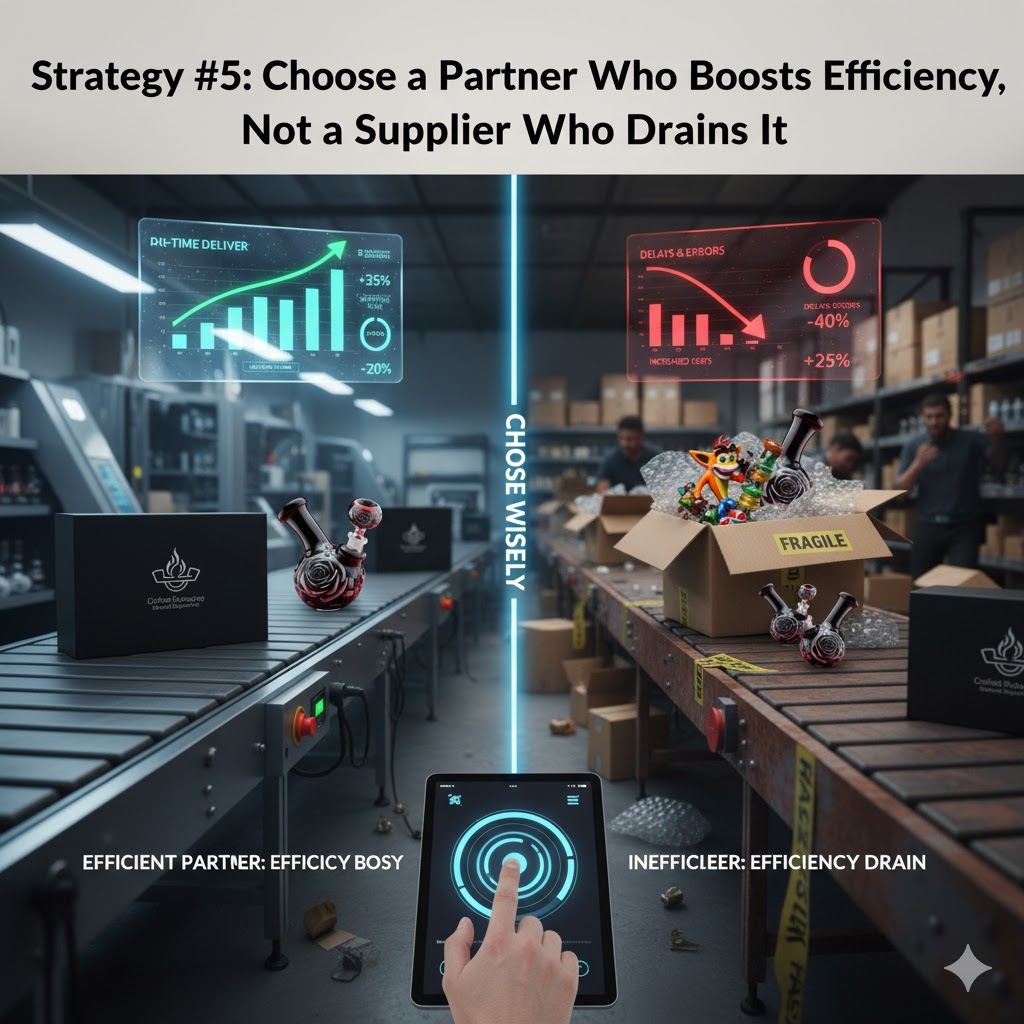
A factory you exited cleanly is a working backup when the new one hits trouble — and in procurement, a qualified alternate supplier is a strategic asset most buyers only recognize after they have lost one. The communication gap guide shows how to keep a dormant relationship healthy with occasional, low-effort contact.
Conclusion
Switching glass pipe suppliers without losing orders is a sequencing problem, not a luck problem. Audit the current relationship with a scorecard, secure your molds and files, qualify the replacement in parallel with samples and a 100-piece pilot, ramp volume in stages, and exit like a professional who may want the door open.
Your action roadmap:
- Log the pattern — reorder checks and quote red flags — until the evidence is undeniable.
- Score the current factory on the supplier scorecard and export the spec baseline.
- Document mold ownership, design files, and exclusivity terms before announcing anything.
- Qualify two or three candidates in parallel; pilot the winner at 100 pieces.
- Ramp by milestones — sample, pilot, first bulk — and keep the old door open behind you.
Making the move soon? Request a quote with your spec baseline attached — a factory that reads it carefully is showing you the exact skill the transition depends on.
When is switching suppliers actually worth it?
When the problems repeat after a documented fix attempt: ongoing quality failures, missed deadlines, or pricing games. One bad order is a conversation; a pattern is a decision.
Who owns the molds when I switch factories?
Whoever paid and contracted for them — which is why mold ownership terms matter before you leave. Get your molds released or documented before announcing the move.
Should I tell my current supplier I am leaving?
Not until the replacement is qualified and your assets are secured. Announce it in a professional handover once the transition plan is real.
How do I avoid a stockout during the switch?
Run both factories in parallel and ramp gradually — start the new supplier on a secondary SKU or a partial share of volume while the old one finishes open orders.
How long does a supplier transition take?
Realistically one full order cycle: sampling at the new factory, a 100-piece pilot, then a staged ramp — plan on several weeks from first quote to full volume.
Ready to Start Your Custom Glass Pipe Project?
Get a free quote within 24 hours. MOQ from 100 pieces. NDA-protected design consultation.
