
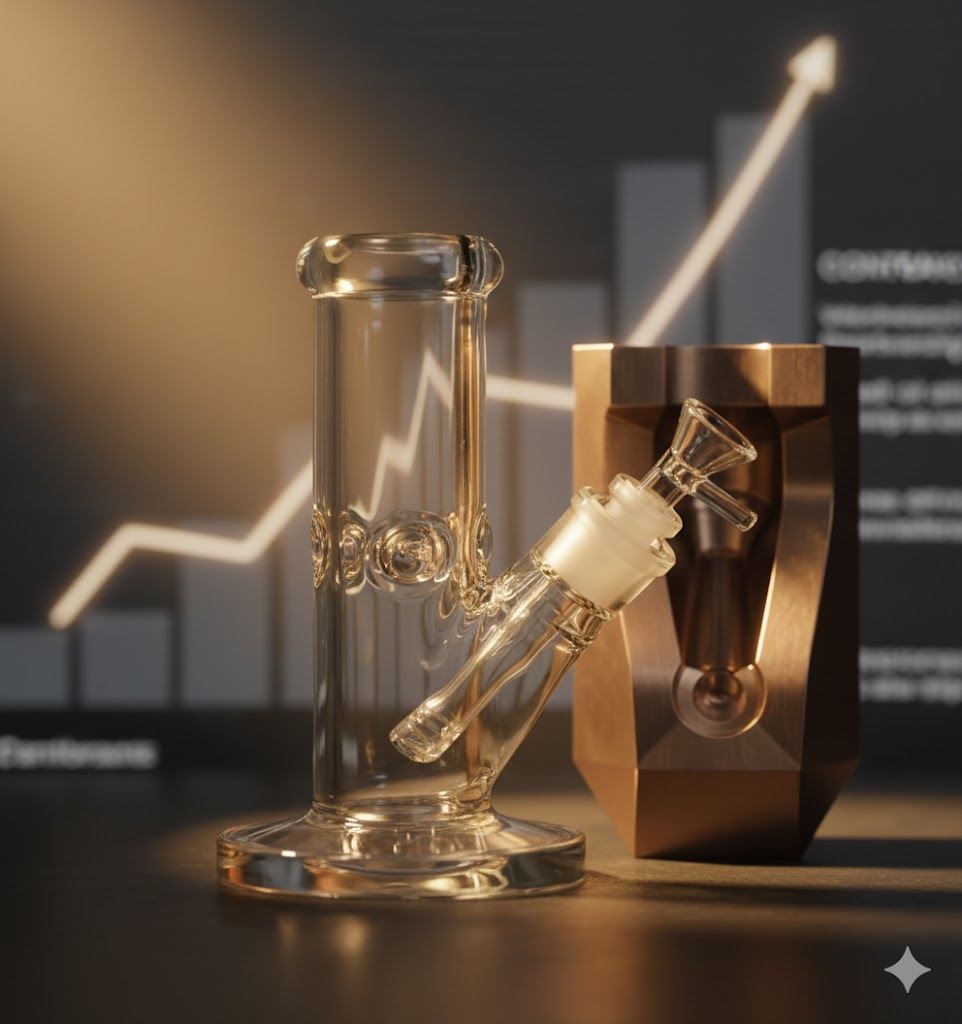
Every emerging brand wants custom glass pipes without committing to thousands of units upfront. The request is reasonable, but the economics of glassblowing do not bend to good intentions. At Elfglass, a Shenzhen borosilicate glass manufacturer, we have produced custom designs for brands ordering exactly 100 pieces and for those ordering 10,000. The cost difference between those two scenarios is not linear, and understanding why matters before you place your first order. This guide breaks down small batch manufacturing economics from a manufacturer’s perspective, the real cost drivers, the volume thresholds where unit pricing shifts, and the decisions that determine whether your first custom order becomes a launching pad or a costly lesson. These pieces trace their craft lineage to glassblowing, the furnace-based forming technique behind most hot-shop glasswork (glassblowing reference).
Why 100 Units Is the Practical Minimum for Custom Glass
The 100-unit minimum is not arbitrary. It reflects genuine constraints in mold preparation, material sourcing, production scheduling, and quality assurance. Here is what happens behind the scenes before a single sellable piece comes off the line.
Mold Setup Costs Do Not Scale Down
Every custom glass pipe requires a mold, and every mold must be fabricated before production begins. A simple joint adapter needs a basic mold. A complex multi-chamber piece with integrated percolator routing requires a significantly more involved tooling process. The mold cost is fixed regardless of whether you produce 50 or 500 units. At 100 units, that fixed cost gets distributed across enough pieces to keep the per-unit price manageable. At 50, you are essentially paying double the mold amortization per piece. For more context, see this tooling cost amortization for molds.
Consider a custom mold that costs $1,000 to fabricate. Spread across 50 units, that adds $20 per unit. Spread across 100, it adds $10. That single variable can determine whether your landed cost allows a viable retail margin.
Material Minimums in Borosilicate Glass
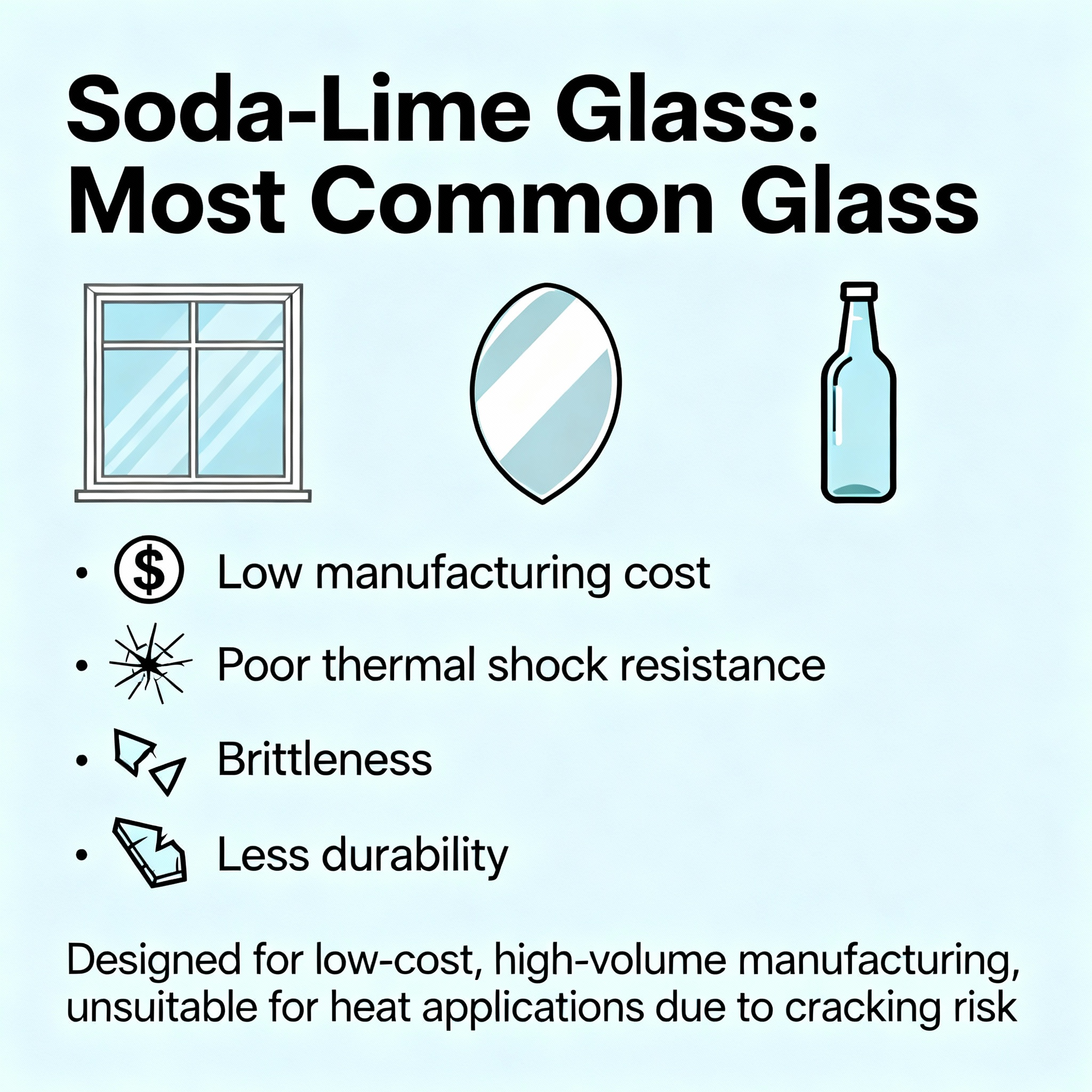
Borosilicate glass comes in standard rod and tube diameters. When a glassblower begins working a 50mm diameter rod for your design, they commit to a certain length of material regardless of final yield. Offcuts from a 100-unit run may be reusable for other projects. Below 100 units, the material waste ratio climbs sharply because the same setup consumption is spread across fewer sellable pieces. Raw material cost per unit rises even though the glass itself has not changed.
Production Line Efficiency
Setting up a glassblowing production line involves furnace configuration, lathe and tool setup, annealing lehr preparation, and test runs to confirm parameters. This takes two to four hours before any production glass is blown. Whether the run is 50 or 100 units, that setup time is consumed. At 100 units, the setup cost per unit drops to a level that keeps the order economically viable for both manufacturer and buyer.
Quality Control Requires Statistical Confidence
At 100 units, a manufacturer can pull 10 pieces for destructive testing, checking wall thickness consistency, joint fit tolerance, and heat resistance, and still deliver 90 sellable units. Below that threshold, you face a choice: skip meaningful quality validation or sacrifice too large a share of the batch to testing. Neither option serves a brand building its reputation on product quality.
The Real Economics: 100 vs 500 vs 1,000 Units
To make the comparison concrete, consider a custom water pipe design with a specific joint size, a single percolator, and logo etching. The indicative cost structure at three volume tiers looks like this:
100 units: Mold amortization runs $10 to $15 per unit. Combined with labor, material, and finishing, the per-unit cost typically lands between $18 and $22. Total investment for the production run ranges from $1,800 to $2,200.
500 units: The same mold now amortizes across five times the volume, dropping to $2 to $3 per unit. Per-unit cost falls to approximately $9 to $12. Total investment ranges from $4,500 to $6,000.
1,000 units: Mold cost per unit drops further to $1 to $1.50. Per-unit cost reaches $7 to $9. Total investment ranges from $7,000 to $9,000.

The pattern is clear: the most dramatic per-unit savings come from the first scale step, 100 to 500. The jump from 500 to 1,000 delivers meaningful but smaller marginal savings. For an emerging brand, the practical question is whether the market will absorb 500 units of a design that has never been sold. Starting at 100, proving demand, then scaling to 500 is a more capital-efficient path than betting on 1,000 units of unvalidated product.
Understanding your full production workflow, from design approval through delivery, helps you plan these volume transitions smoothly. The Elfglass production process outlines each stage in detail so you can anticipate timelines and costs at every step.
Fixed vs Variable Costs in Small-Batch Glass Production
Every custom glass order carries two categories of cost. Fixed costs remain constant regardless of batch size: mold fabrication, production line setup, design file preparation, and quality control baseline establishment. Variable costs scale with each additional unit: glass material consumption, glassblower labor time, packaging materials, and shipping weight.
At 100 units, fixed costs represent a larger share of the per-unit price. At 500 units, variable costs dominate because the fixed costs have been spread thin. This distinction matters for decision-making. If you want to reduce per-unit cost at the 100-unit tier, simplifying the design to lower mold cost and setup time has more impact than negotiating material prices.
One variable cost that does shift with volume is material pricing. At 1,000 units, a factory can source borosilicate glass in larger quantities, potentially securing volume discounts from material suppliers. At 100 units, you pay standard material rates. The difference is typically 5 to 10 percent per kilogram of raw glass, a modest but real factor in tight-margin product launches.
Turn Your Concept Into Production-Ready Glass
Elfglass takes you from design brief and CAD/STEP files to prototyping, branding, and mold exclusivity, with your IP protected by NDA. Send us your concept and we will return a manufacturable plan and quote.
MOQ from 100 pieces | BSCI / WRAP / ISO 9001 | NDA before every project
How Sampling Works for Small Batches
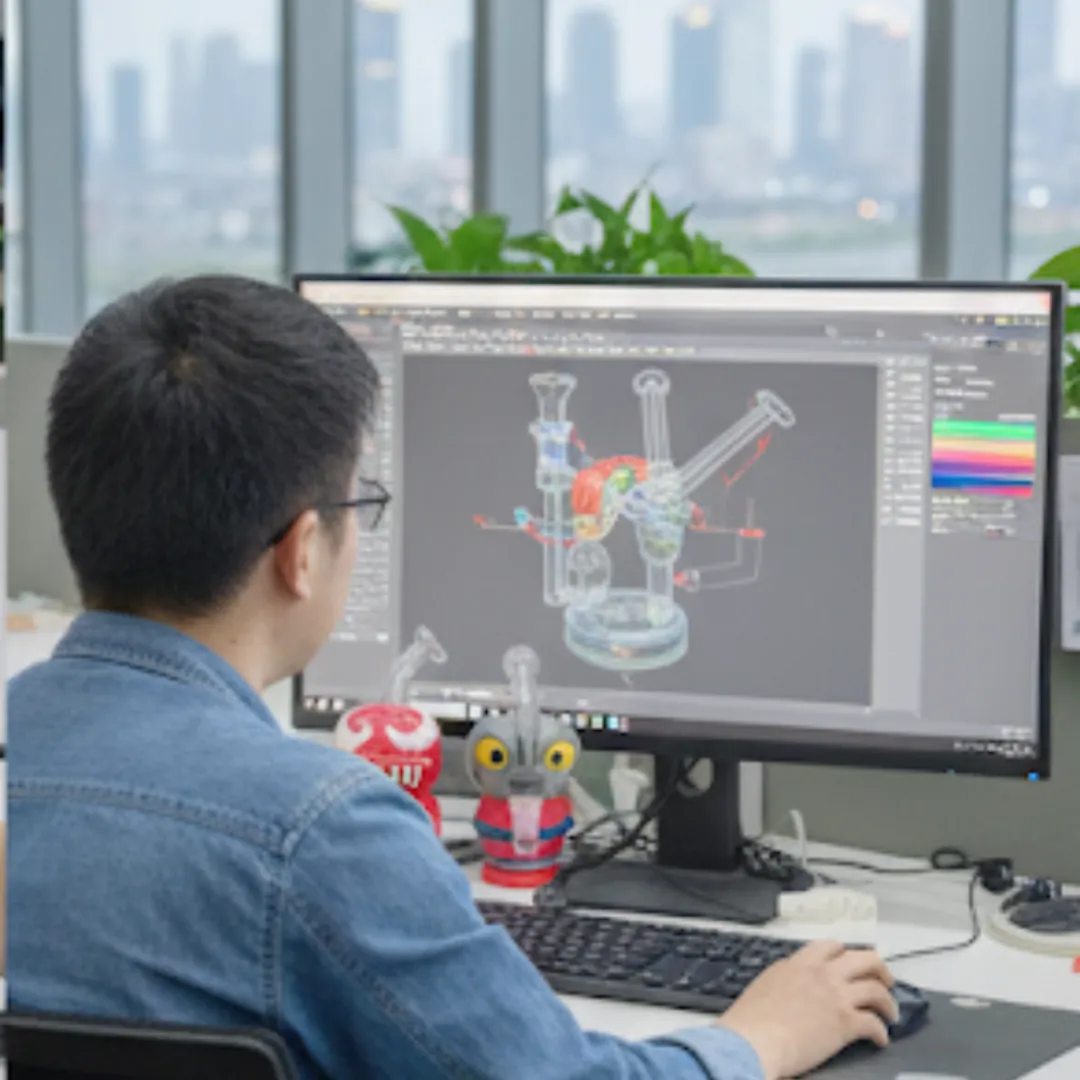
Sampling is where small batch manufacturing earns its value. Before committing to a full production run, you receive a physical sample to evaluate form, function, and finish. At Elfglass, the sampling workflow follows a compressed timeline: Day 1 covers the initial consultation to align on design specifications. Day 2 produces a 3D model for dimensional review. Physical sample production takes 1 to 3 days after model approval. The full cycle from brief to approved sample typically completes within one week.
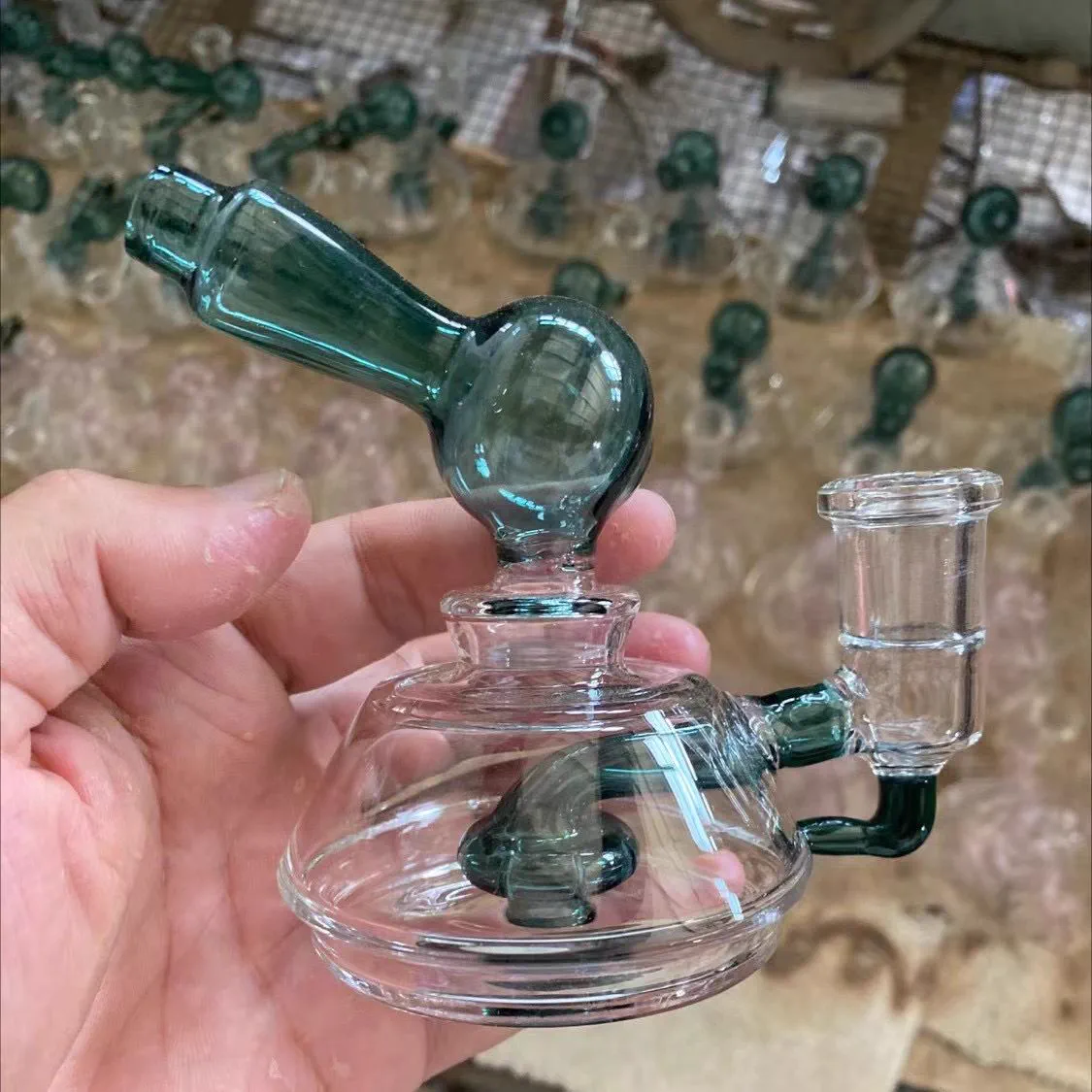
For small-batch orders, sampling serves a dual purpose. It validates the design before production begins, and it establishes the quality benchmark that the production run will be measured against. A thorough sampling process reduces the risk of costly mid-production corrections. For a deeper look at how fast sampling fits into the broader production workflow, the rapid sample turnaround guide covers the full process from brief to approved sample.
Design Considerations for Small-Batch Viability
Not every design is equally viable at 100 units. Certain choices directly affect whether a small batch makes economic sense. Designs with simpler geometries, fewer weld points, and standard joint sizes are faster to produce and generate less waste. If your design requires glass rod or tube diameters outside the factory’s standard inventory, material sourcing may add cost or lead time that undermines the small-batch advantage.
Custom molds are exclusive to the customer who commissioned them, and mold complexity directly affects both cost and timeline. A design requiring a complex multi-part mold will consume more of your 100-unit budget on tooling than a design achievable with a simpler mold. The practical approach is to keep mold complexity moderate for the first batch. If the design proves in market, you can invest in refined tooling for the next production run.
Writing a precise design brief before approaching any manufacturer eliminates costly back-and-forth and keeps the sampling phase efficient. The glass pipe design brief guide covers exactly what specifications to include, from dimensions and joint types to wall thickness and finishing details.
Another consideration: whether you are pursuing OEM or ODM affects the small-batch equation. In OEM production, you supply the complete design and the manufacturer executes it. In ODM, the manufacturer contributes to design development, which adds collaboration time but can yield a more production-optimized result. The OEM vs ODM comparison breaks down which model fits different stages of brand development.
When to Start Small vs Go Straight to Volume
Small batch manufacturing makes sense when you are testing a new design in market, launching a brand without established demand, working with limited initial capital, planning to release multiple SKUs simultaneously, or when the design itself needs real-world validation before refinement. In each scenario, the 100-unit order functions as a paid market test rather than a margin-maximizing production run.
Volume production makes more sense when you are replicating an existing design with proven demand, have pre-sold commitments from retail partners, have validated the design through a prior small batch and confirmed repeat orders, or when per-unit cost savings at higher volume directly determine your competitive positioning.
One strategy worth considering: many successful brands we have worked with started at 100 units across three to five designs simultaneously, testing the market with minimal risk per SKU while still placing a meaningful total order. If you are ready to test a design at this scale, our wholesale glass hand pipe catalog shows the shapes, sizes, and joint options that move fastest at retail.
Regardless of which path you choose, protect your design investment. If your custom glass pipe design represents original intellectual property, the guide on protecting product design IP when sourcing overseas covers the practical steps, from NDA execution to mold ownership documentation, that keep your designs secure throughout production.
The brands that build sustainable businesses treat their first production run as a learning investment. They gather data on customer preference, price sensitivity, and design feedback from real buyers, then let that data, not forecasts, drive their scaling decisions. Elfglass supports this approach directly: the 100-unit MOQ exists precisely because we understand that emerging brands need to validate before they commit.
Conclusion
Small batch manufacturing occupies the practical middle ground between expensive one-off prototyping and high-volume production commitment. The 100-unit threshold is not a manufacturer convenience, it reflects real constraints in mold amortization, setup time, material minimums, and quality control sampling. Understanding these cost drivers lets you budget realistically, design for production viability, and make scaling decisions based on actual market data rather than guesswork.
Every brand we have seen succeed in this space started with a first order. The ones that thrive are the ones that approach that first order as a step in a process, not the final destination. Design for the batch you can afford, validate with real customers, then scale with confidence.
Custom finishing options like logo printing, etching, and sandblasting can add brand identity to even a small-batch run without dramatically increasing unit cost, making your first 100 units work harder as a brand-building tool.
If you are evaluating whether small-batch manufacturing makes sense for your next glass product launch, the Elfglass team can walk through the economics specific to your design and target market. Reach out to start the conversation, quote responses come within 12 hours with your design specifications in hand.
Frequently Asked Questions
Is the per-unit cost significantly higher at 100 units compared to larger orders?
Yes. At 100 units, fixed costs like mold fabrication and production line setup are distributed across fewer pieces, typically resulting in per-unit costs of $18 to $22 for a custom water pipe. At 500 units, per-unit cost drops to approximately $9 to $12, a reduction of 40 to 50 percent. The most significant per-unit savings come from the first scale step, making 100-to-500 the most impactful volume transition for emerging brands.
Do I own the custom mold created for my small-batch order?
Yes. Custom molds created for your order are exclusive to you. You can use the same mold for future production runs, modify the design between batches, or transfer the mold to another production facility if needed. This ownership model means your initial mold investment carries value across your entire product lifecycle, not just the first batch.
Can I modify the design between small-batch production runs?
Yes. Since the mold belongs to you, design modifications between batches are entirely possible. Simple changes like adjusting dimensions or joint sizes can often be accomplished by modifying the existing mold. Complex changes may require a new mold, but the original mold investment still informs the revised tooling. This flexibility is one of the key advantages of starting with a small batch.
How long does sampling take before full production begins?
The sampling process at Elfglass follows a compressed timeline: initial consultation on Day 1, 3D modeling on Day 2, and physical sample production within 1 to 3 days after model approval. The full cycle from design brief to approved physical sample typically completes within one week. Once the sample is approved, full production of 100 units takes 7 to 12 days.
About the Author
Ava Zeng is the founder of Elfglass, a Shenzhen-based borosilicate glass pipe manufacturer serving B2B brands worldwide. Every guide on this site is grounded in her production-floor experience— the annealing lines, QC checkpoints, and export orders behind each claim.
Before you commit to a supplier, read her founder’s story and trust promise, and the guide to vetting a reliable glass pipe manufacturer— the same red-flag checklist Elfglass applies to its own suppliers.
The economics of small-batch production follow the models described in mass customization literature, where setup costs are amortized across a minimum viable run.
Ready to Source Custom Glass Pipes?
Get a free quote within 24 hours. MOQ from 100 pieces. NDA-protected design consultation.
