
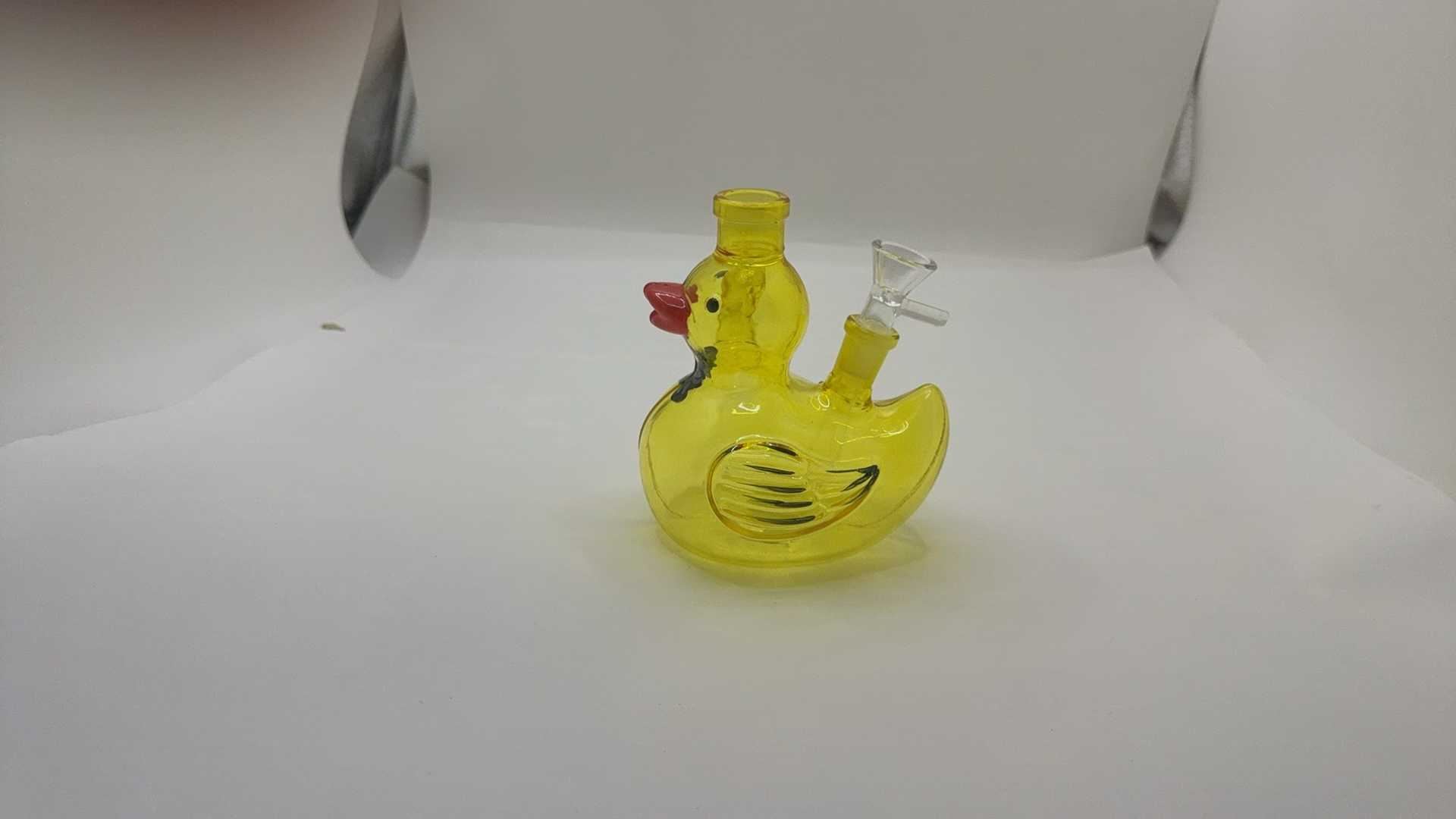
Importing glass water pipes to the UK is legal for retailers who hold an EORI number, classify goods correctly under HS commodity codes, and register for VAT. This checklist covers commodity codes, duty and VAT math, supplier documentation, and packing standards that survive sea freight to Felixstowe.
A container of glass water pipes lands at Felixstowe. The customs agent calls with a question about commodity codes, the VAT invoice is higher than expected, and three cartons show crush damage on the seal photos. This is the moment UK retailers wish they had read the paperwork before the goods shipped — not after. Importing glass pipes into the UK is entirely workable for independent shops, but the gap between a smooth clearance and a stuck shipment is mostly preparation.
This guide walks through what UK retailers must verify before placing an order with a Chinese glass factory: the legal position of water pipes in the UK market, EORI and importer setup, HS classification decisions, duty and VAT mechanics, required factory documents, and packing standards that survive sea freight. If you also sell in other markets, our guides on importing glass pipes to the USA and Australia’s compliance checklist cover those regimes side by side. For the Canadian market, our retailer compliance guide to Canada completes the set.
Key Takeaways
- Water pipes are sold openly in the UK as tobacco accessories — your marketing and labelling must reflect that positioning
- A GB-prefixed EORI number is mandatory before your first UK import declaration
- Glass water pipes can classify as glassware (Chapter 70) or smoking pipes (heading 9614) — a Binding Tariff Information ruling removes the guesswork
- Import VAT runs at the 20% standard rate; Postponed VAT Accounting lets VAT-registered businesses account for it on their return instead of paying at the border
- Factories holding BSCI, WRAP, and ISO 9001 certifications hand you audit-ready documentation for UK retail chains and marketplaces
The Legal Position of Water Pipes in the UK
Start with the question every new importer asks: can you legally sell glass water pipes in the UK? The short answer is yes — water pipes are sold openly across UK head shops and online retailers as tobacco accessories. The statute every retailer must understand before importing is the Misuse of Drugs Act 1971.
The boundary it draws is about presentation. The Act creates offences around supplying articles intended for administering controlled substances. In practice, this means your shop’s legal safety sits in positioning: water pipes marketed and labelled for tobacco use, with no marketing material referencing illegal drugs. UK retailers who keep product descriptions, packaging, and social content on the right side of that line operate without issue. One product page that winks at drug use can turn a routine retail operation into a legal problem — positioning is compliance.
Ask your factory about labelling options early. A supplier offering OEM service can print tobacco-use wording into packaging design at the production stage, which is far cheaper than re-labelling an entire order after it lands in a UK warehouse.
EORI Number and Importer Setup
Before any goods clear UK customs, your business needs an EORI number that starts with GB. HMRC issues these. Without one, your shipment cannot be declared — the goods will sit at the port while storage charges accrue daily.
Two setup decisions affect your cash flow from day one. First, VAT registration. If your taxable turnover crosses the registration threshold you must register; many glass retailers register voluntarily earlier because it opens up input VAT recovery and Postponed VAT Accounting.
Second, Postponed VAT Accounting (PVA). Under PVA, VAT-registered importers account for import VAT on their VAT return rather than paying it at the border. The difference is timing, not total tax — but for a retailer importing several thousand pounds of glass per order, not fronting the VAT at the port is a meaningful cash-flow advantage. Ask your customs agent to use PVA on your declarations from the first shipment.
The mechanics are simple once you see them. HMRC issues a monthly import VAT statement recording the postponed amounts from your declarations. When your accountant prepares the VAT return, the postponed import VAT goes in box 1 as output tax and comes straight back in box 4 as input tax reclaimed, with the goods value recorded in box 7. The two entries cancel, so no cash is tied up at the border at all. Keep each monthly statement with the matching purchase invoices — that file is your evidence trail if HMRC ever queries a return.
Finally, choose a customs agent or freight forwarder who handles CDS declarations. The Customs Declaration Service is the UK’s system for import declarations, and an experienced agent will spot classification problems before they become queries from HMRC.
HS Classification for Glass Water Pipes
Here is the technical decision that decides your duty rate: how do glass water pipes classify under the UK Trade Tariff? Two headings compete, and the answer changes what you pay.
- Chapter 70 covers glass and glassware — household or decorative glass articles can fall in this chapter, with rates that vary by subheading
- Heading 9614 covers smoking pipes, including pipe bowls and parts — articles presented specifically as smoking apparatus can fall here
Glass water pipes sit in the grey zone between these headings. A piece marketed as a decorative vase imports cleanly as glassware; the same piece marketed as a water pipe for tobacco invites the smoking-pipe classification. HMRC looks at the product’s objective characteristics and its presentation.
The tool that removes this ambiguity is a Binding Tariff Information (BTI) ruling. You apply to HMRC with a full product description and images, and the ruling binds HMRC to a specific commodity code for your goods. Once granted, the ruling converts a judgment call into a documented position. For a retailer planning repeat orders of the same product lines, a BTI ruling on your top five SKUs is one afternoon of paperwork that pays for itself on every future declaration.

One warning from experience: do not let a freight forwarder pick your commodity code by guessing from a generic invoice description. A wrong code discovered later means back-dated duty demands and possible penalties. Your commercial invoice should describe the goods precisely enough for classification — “glass water pipe for tobacco use, with downstem and bowl” beats “glass products, mixed lot” every time.
Import Duty and VAT Numbers
UK import costs stack in a fixed order: customs duty applies to the customs value of the goods (product cost plus freight and insurance to the UK border), then import VAT applies to that duty-inclusive value at the 20% standard rate.
The exact duty rate depends entirely on the classification outcome described above, so pull your specific commodity code on the UK Trade Tariff before you calculate landed cost. Do not budget from another importer’s rate for a different product line — two similar glass articles can sit in different subheadings.
What you can control is the customs value itself. The invoice from your factory must show unit prices, quantities, currency, and Incoterms clearly, because HMRC uses the declared transaction value. If you negotiate free spare pieces to cover transit damage, make sure the invoice treatment of those spares is consistent and explainable.
Before you lock the order, compare the styles and price bands in our wholesale water pipes catalogue — the product mix you choose decides the customs value and the duty math that follows. Then work a landed-cost model before you order, not after. Product cost plus sea freight plus duty plus VAT plus port handling and delivery to your shop: only when all six numbers sit in one spreadsheet can you see your real margin. Our guide to MOQ 100 trial orders shows how to keep the first order small enough that the landed-cost lesson is cheap to learn, and the first order blueprint for new smoke shops walks through the full stocking sequence.
Ship-Ready Compliance Documentation
Elfglass supplies the material declarations, certifications, and export paperwork your customs broker needs for the US, UK, EU, Canada, and Australia. Ask us which documents accompany your order before you buy.
MOQ from 100 pieces | BSCI / WRAP / ISO 9001 | NDA before every project
Documents Your Factory Must Provide
Smooth UK clearance starts with the documents your supplier hands over at shipment. Treat this list as a condition of the order, not a favour:
- Commercial invoice with precise product descriptions, HS-relevant detail, unit prices, and Incoterms
- Packing list matching the invoice, with carton counts and weights that align with the bill of lading
- Bill of lading (sea freight) or air waybill, showing your business as consignee or notify party per your agent’s instructions
- Any applicable test reports or conformity documentation for materials
- Certification copies — BSCI, WRAP, ISO 9001 — which matter less at customs and more when UK retail chains or online marketplaces audit your supply chain
Request certificate copies before you place the order, then verify them. BSCI audit reports and ISO 9001 certificates should both trace back to their issuing bodies: ask for the audit report and certificate references you can verify independently. A factory established in 2010 with 16 years of export history should produce these documents without hesitation — hesitation itself is a finding.
One more document people forget: a sample approval record. Keep photos and written confirmation of the approved sample with the order file. If the delivered goods diverge from the approved sample, that record is the foundation of any claim discussion with the factory.
Packing Standards That Survive Sea Freight
Glass breaks, and a sea voyage gives it four or five weeks of reasons to. Container ships roll, cranes drop, and warehouses stack. The difference between a delivery where a single corner piece chips and one where whole cartons arrive crushed is almost entirely the packing specification you agree before production starts.
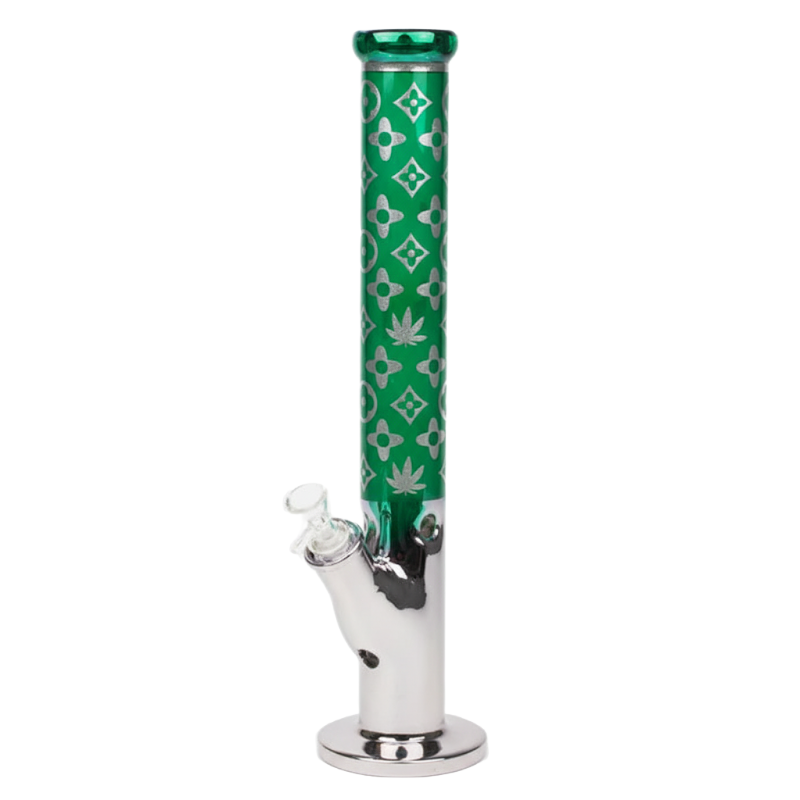
The specification that works for glass water pipes: each piece individually wrapped and boxed, fragile parts such as downstems and bowls packed separately, interior void fill so nothing shifts inside the retail box, and master cartons that hold the pieces in fixed dividers rather than loose bulk. Cartons go on pallets with edge protection and stretch wrap — loose cartons in a container arrive as a glass jigsaw.
Put the packing standard in writing on the purchase order, and ask for packing photos before the container is sealed. Factories experienced in UK and EU exports will show you the packed cartons without being asked twice. If a supplier cannot tell you how each piece is protected inside its box, that is your answer about their export experience.
When the container finally reaches you, inspect before you sign anything away. Photograph the seal number and the cartons as they come off the pallet, then open the most damaged-looking carton first and film what you find. A claim supported by time-stamped photos taken at delivery is a commercial conversation; a claim raised days later from memory is an argument you will usually lose. Your packing spec, packing photos from the factory, and arrival footage together form the evidence chain — and suppliers who know you keep that chain tend to pack with extra care. If the chain does reveal broken pieces, our guide to the damaged shipment claim process walks through every step, from the first delivery photos to a settled claim.
Shipping Route and Lead Time Planning
Sea freight from Chinese ports to the UK’s main container ports — Felixstowe and Southampton — is the default for wholesale glass orders. Confirm current sailing schedules with your forwarder, and build the total lead time honestly: production time at the factory, plus inland transport to the Chinese port, plus ocean transit, plus UK clearance and final delivery.
At an export factory running MOQ 100 pieces per SKU, sampling takes 1–3 days and standard production runs 7–12 days depending on design complexity. Set those alongside the ocean leg of roughly four to five weeks, plus the UK clearance and final delivery leg, and the arithmetic lands near two months from order confirmation to shelf-ready stock. Treat that as planning math built from each quoted component, not a guarantee — and work backwards from the date you need stock on shelves.

That timeline is why seasonal restocking decisions for Christmas need to be made in early autumn — the glass that sells in December ships in October. Booking sea freight space during peak season is its own discipline: sailing schedules tighten, containers get short, and forwarders prioritise customers who booked weeks ahead. A retailer who confirms the order before the autumn rush keeps both the price and the departure date; a retailer who waits may pay the same factory price but lose the sailing slot.
Air freight is the emergency lever: faster, costlier per kilo, and sensible only for small urgent top-ups or samples. For a first order, consider a split strategy — air a small batch of best-seller candidates to test the market while the main sea order is still in production. Which SKUs count as best-seller candidates shifts with demand: our UK headshop trends report for 2026 maps what British shops are actually buying.
Choosing a Supplier That Makes UK Compliance Easy
Every requirement in this guide becomes easier when your factory has done it before. The supplier evaluation that matters for UK-bound glass orders:
- Export history — a manufacturer established in 2010 with 16 years of export experience serving 50+ countries has seen the documentation questions before
- Certification stack — BSCI, WRAP, and ISO 9001 cover social compliance, responsible workplace practices, and quality management in one file set
- Production transparency — monthly capacity above 10,000 pieces across 300+ SKUs means your 100-piece trial order sits in a real production system, not a workshop corner
- Commercial terms — MOQ 100 per SKU keeps first-order risk contained, and T/T with 30% deposit and 70% balance before shipment is the standard structure
- Responsiveness — 1–3 day sampling turnaround lets you verify quality before commitment
Test those claims with specific asks before you transfer a deposit. Ask which UK ports the factory ships to most often, and request a redacted bill of lading from a previous UK delivery. Ask for the BSCI audit report and ID so you can verify the record independently. Ask how the factory handles a piece that arrives broken, and listen for a process — replacement terms, photo evidence, which side pays freight — rather than a promise. A supplier with real UK export mileage answers these questions from habit; a trading company improvising its first UK shipment will stall on at least one of them.
For the product side of the equation, browse our wholesale water pipes catalogue to compare the full range of styles. Start with classic silhouettes such as beaker bases and straight tubes, and use your trial order to test one or two statement pieces.
Build Your UK Stock With a Compliant Factory
MOQ 100 per SKU, 1–3 day sampling, BSCI/WRAP/ISO 9001 documentation ready for UK retail audits.
Conclusion
Compare the two versions of this import. The unprepared one: a shipment declared on a guessed commodity code, VAT paid at the border in full, no BTI ruling, packing left to chance, and a customs query that stalls stock for weeks. The prepared one: GB EORI in place, classification settled by BTI, Postponed VAT Accounting on the return, packing spec in the purchase order, and documents verified before the container ships. Same product, same duty, radically different experience.
- Register your GB EORI number and set up Postponed VAT Accounting before your first order
- Resolve HS classification with a Binding Tariff Information ruling — never let an invoice guess decide your duty rate
- Budget the full landed cost: product, freight, duty, 20% VAT, port handling, and final delivery
- Hold the factory to written packing standards and pre-shipment packing photos
The UK market rewards retailers who treat compliance as part of sourcing, not an afterthought. Request samples from a certified factory this week — with 1–3 day turnaround you can hold product quality in your hands before the compliance checklist is even finished.
Frequently Asked Questions
Do I need an EORI number to import glass pipes into the UK?
Yes. Any business importing goods into the UK needs an EORI number starting with GB. HMRC issues them, and your shipment cannot be declared without one. Apply before your first order ships, not after.
What HS code do glass water pipes use for UK import?
Glass water pipes can classify under Chapter 70 (glassware) or heading 9614 (smoking pipes), depending on product characteristics and presentation. The reliable route is a Binding Tariff Information ruling from HMRC, which legally fixes your commodity code.
How much import VAT will I pay on glass pipes from China?
Import VAT applies at the UK standard rate of 20%, calculated on the customs value plus duty. VAT-registered businesses can use Postponed VAT Accounting to account for it on their VAT return rather than paying at the border.
Are water pipes legal to sell in UK shops?
Yes — water pipes are sold openly across the UK as tobacco accessories. Keep marketing, packaging, and product descriptions positioned for tobacco use; the Misuse of Drugs Act 1971 makes supplying articles intended for administering controlled substances unlawful, so presentation is your compliance line.
How long does it take to get a glass order from China to a UK shop?
Plan roughly two months end to end: 1–3 days sampling, 7–12 days production, about four to five weeks of ocean transit to Felixstowe or Southampton, then UK clearance and delivery. Air freight compresses the transit leg for urgent top-ups but costs significantly more per kilo.
Get a Quote for Your Next Order
Importing glass pipes to the UK? Send us your product spec and target quantity — contact our factory team or message us on WhatsApp, and we will reply with pricing and lead times within 24 hours.
For a closer look at serving British retailers — from EORI setup to shelf-ready stock — explore our UK solutions.
About the Author
Ava Zeng is the founder of Elfglass, a Shenzhen-based borosilicate glass pipe manufacturer serving B2B brands worldwide. Every guide on this site is grounded in her production-floor experience— the annealing lines, QC checkpoints, and export orders behind each claim.
Before you commit to a supplier, read her founder’s story and trust promise, and the guide to vetting a reliable glass pipe manufacturer— the same red-flag checklist Elfglass applies to its own suppliers. UK import rules are administered by HMRC, which requires commodity codes, origin declarations, and VAT registration for commercial shipments.
Ready to Source Custom Glass Pipes?
Get a free quote within 24 hours. MOQ from 100 pieces. NDA-protected design consultation.
