
Canada is one of the few major Western markets where a smoke shop retailer can import glass pipes without operating in a legal gray zone — and that fact alone makes it attractive. But “legal” and “nothing to check” are two very different statements. Since the Cannabis Act passed See also our EU REACH compliance guide. in June 2018, with retail sales beginning in October 2018, the country has run a federal framework layered on top of thirteen different provincial and territorial rulebooks. Age limits differ See also our Japan market entry guide.. Retail structures differ. What a shop can display and how it can talk about products differs too.
For an importer, the risk is not a dramatic seizure. It is the slow kind: a shipment cleared under the wrong classification, a display practice that brushes against youth-appeal rules in one province while being fine in another, or a landed cost built on assumptions instead of a broker’s actual numbers. This guide walks the Canada route the way we walk it with our own export customers — legal baseline first, then provinces, customs, cost, and the checklist to run before your first order ships.
- Empty glass pipes are a general-goods import; the permit regime applies to cannabis itself, not the glassware — but how you describe and display the products still matters
- Minimum purchase age is 18 in Alberta, 21 in Quebec since January 2020, and 19 across the remaining provinces
- Retail structure splits by province: government-only in four, strictly private in five jurisdictions, mixed elsewhere — this shapes which customers you can supply
- Classify the shipment under HS heading 9614, and get duty rates from your CBSA customs broker rather than from a blog post — including this one
The Legal Baseline: What Canada Actually Says
Start with the definitions, because most confusion in this market comes from mixing up three different things: cannabis the substance, licensed cannabis retail, and the accessories used to consume it. Health Canada defines a cannabis accessory plainly as “a thing or device that’s used in the consumption of cannabis,” and the definition explicitly includes pipes and water pipes — bongs. An empty glass pipe on its own contains no controlled substance. It is a consumer good.
That distinction drives everything downstream. The permit regime in the Cannabis Act governs cannabis itself: importing or exporting cannabis requires a licence, and each shipment needs its own permit; there is no provision for a traveller to carry cannabis across the border except narrow exemptions. None of that applies to a box of empty water pipes. The glass moves through customs as general merchandise, declared, assessed, and cleared like other consumer goods.
Two caveats keep that simple picture honest. First, representation matters: a product represented as being for consuming cannabis for medical purposes falls fully under the Cannabis Act, including its restrictions on sale and display to young persons and on attributes that appeal to youth. Second, marketing language that ties ordinary glassware to cannabis consumption can pull your business toward regulated territory depending on the province. Sell the glass as glass, keep claims modest, and verify anything unusual with a Canadian customs or retail lawyer.
Age Rules Differ by Province — Build Them Into Your Store
Canada’s federal floor is 18, but provinces were free to raise it, and most did. The map you need to know looks like this:
| Jurisdiction group | Minimum age | Notes for retailers |
|---|---|---|
| Alberta | 18 | Matches the federal floor; aligns with tobacco-age rules |
| Quebec | 21 | Raised from 18 in January 2020; signage and ID checks must reflect 21 |
| Remaining provinces | 19 | Ontario, British Columbia, and the others sit at 19 |
For a retailer importing stock, the practical implication is not the number itself — it is that your point-of-sale discipline, ID-check training, and any online age gate must be set to the province you actually sell in, not to the lowest number you have heard. If you sell online to customers in multiple provinces, your age verification needs to respect the strictest market you serve. Quebec retailers should treat the 21 threshold as a hard operational rule: it changed recently enough that older advice on the internet is simply wrong.
How Retail Is Organized Changes Who You Can Supply
The second provincial split matters if you plan to sell beyond your own storefront. Cannabis retail in Canada is organized three different ways depending on where you stand. Four provinces — New Brunswick, Nova Scotia, Prince Edward Island, and Quebec — allow only government-owned stores to sell cannabis. Five jurisdictions — Alberta, Manitoba, Nunavut, Saskatchewan, and Yukon — run strictly private retail licensing. The remaining provinces operate a mix of government-run and private outlets.
Why does a glass importer care? Because these structures shape the retail market you are selling into. In government-dominated provinces, the licensed cannabis channel is closed to independent operators, which historically strengthens the role of general smoke-shop retail for accessories. In private-retail provinces, licensed stores proliferate and become a potential wholesale channel for accessories, each with its own buyer. Your customer mix — and therefore the product mix you import — looks different on each side of that line.
The glass itself can be sold by general retailers; the structure question is about where demand concentrates and which buyers you can serve at volume. Map your target provinces before deciding how broad your first order should be.
Importing the Glass Itself: Customs and Classification
With the legal baseline settled, the import itself is standard merchandise work. Glass smoking pipes classify under HS heading 9614, which covers smoking pipes including pipe bowls. Your customs broker will confirm the full tariff line for the specific goods and pull the applicable duty rate from Canada’s Customs Tariff — and that is exactly where the rate should come from. Duty rates change with trade agreements and tariff schedules, so treat any fixed percentage you read online, including anything we might publish, as a prompt to verify, not a number to plan margins around.
The paperwork set is the usual export-to-Canada kit: a commercial invoice describing the goods accurately (water pipes, hand pipes, parts — not vague “glassware”), a packing list, and the broker’s entry filed with the Canada Border Services Agency. Two habits save money at this stage. Describe the goods precisely, because a vague description invites questions, reclassification, and delay. And ask your broker to walk you through the entry before the first large shipment, not after a problem appears.
One point deserves emphasis because it surprises first-time importers: no cannabis licence is required to import empty glass pipes. The permit system applies to cannabis itself. If a freight forwarder tells you otherwise, they are either confusing the rules or have not handled this category before — ask them to cite the requirement.
Why Material Matters in Canada
Canada’s public health guidance gives glass importers an unusual tailwind. Health Canada’s harm-reduction guidance on inhalation accessories recommends choosing glass or ceramic devices, noting that plastic can release harmful chemicals under heat. It also observes that water-based devices can lower the temperature of smoke and help filter some harmful substances, while being clear that water does not make smoking safe.
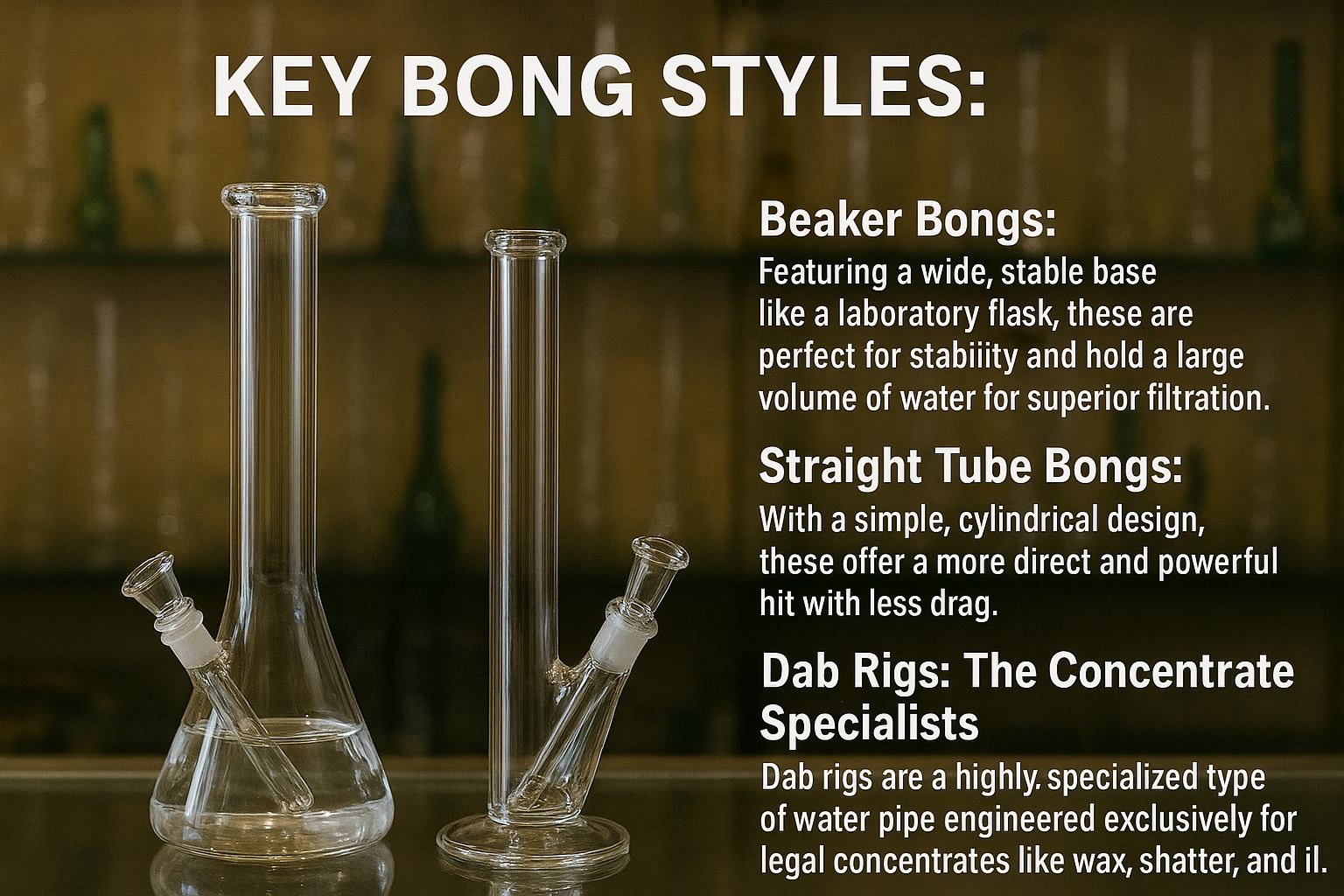
For a retailer, that guidance is shelf logic as much as compliance logic: glass is the material the country’s own health authority points customers toward. Stocking glass pieces is therefore aligned with the market’s official direction rather than against it — a point worth making to landlords, platforms, and cautious buyers. If you are deciding what to bring in first, start with the categories Canadian customers already understand: beakers, straight tubes, and percolated pieces from our wholesale water pipes range are the natural entry point, with hand pipes as the volume companion.
Cleaning belongs in the same conversation. Health Canada advises keeping devices clean and changing water regularly, which makes cleaning-friendly designs a genuine selling point. Accessories such as ash catchers also reduce the residue that reaches the water chamber, and our ash catcher benefits guide covers how they simplify maintenance for retail customers. Straight paths a brush can reach are easier to demonstrate at the counter than ornate interiors — a consideration we covered in depth in our comparison of percolator types.
Ship-Ready Compliance Documentation
Elfglass supplies the material declarations, certifications, and export paperwork your customs broker needs for the US, UK, EU, Canada, and Australia. Ask us which documents accompany your order before you buy.
MOQ from 100 pieces | BSCI / WRAP / ISO 9001 | NDA before every project
Landed Cost: The Charges Retailers Forget
The invoice price from your manufacturer is the smallest part of what a shipment actually costs, and the retailers who get burned on Canada are almost always burned by the parts they forgot. Landed cost is the invoice plus everything it takes to put goods on your shelf: ocean or air freight, insurance, the duty your broker calculates under heading 9614, brokerage fees, port or terminal handling, and domestic delivery to your store.
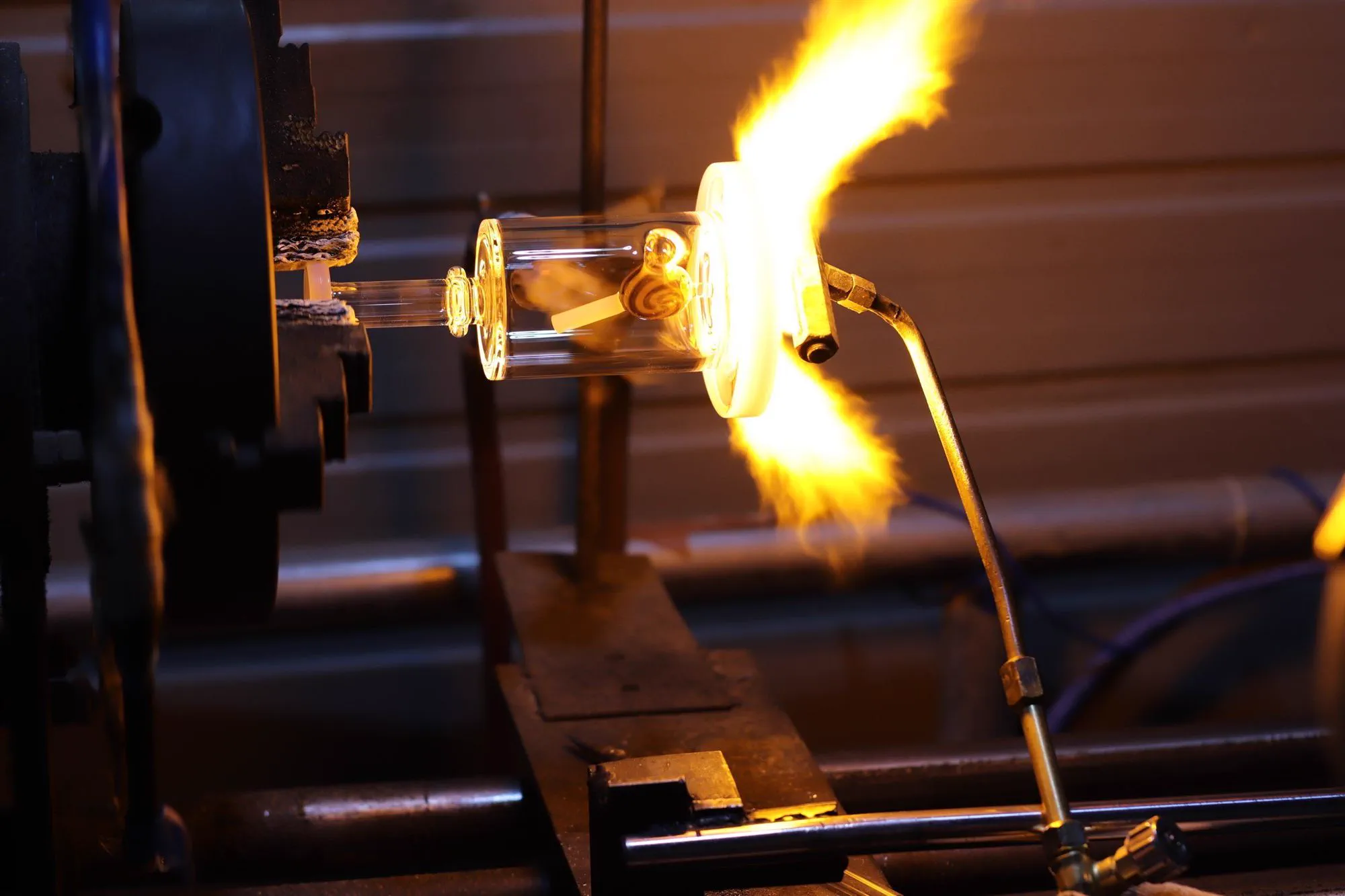
Glass adds two charges of its own. Fragile goods need proper packing — individual wrapping, dividers, and outer cartons engineered for drop impact — and fragile goods raise the value of insurance from optional to mandatory. Ask your manufacturer how the order will be packed before you ask when it will ship, because packing quality is the difference between a landed cost and a landed cost plus a breakage claim. If breakage does slip through despite good packing, our damaged shipment claim guide sets out the evidence, timelines, and escalation steps that recover money.
Build the full landed cost per unit before you set retail prices, and rebuild it when freight markets move. The retailers who treat landed cost as a one-time calculation are the ones quietly discounting stock six months later to recover cash.
Display, Promotion, and Youth-Appeal Constraints
Canada’s rules on how cannabis-related products can be presented are strict at the federal level, and they influence the culture of enforcement even for accessories. The principle to internalize: nothing in your presentation should be designed to appeal to young persons. That rules out cartoonish branding, playful packaging that mimics candy or toys, and display strategies built around youth culture — regardless of whether your product technically requires a licence.
For a smoke shop, the safe posture is boring in the best way: adult-oriented presentation, factual product information, age-gated entry where your province requires it, and no promotional claims about health benefits of smoking. Provinces add their own display rules on top, so the display plan that passes in Alberta may need changes for Quebec. Confirm display and promotion specifics for your province before you build fixtures, not after an inspector comments on them.
Working With an Export-Ready Manufacturer
Everything in this guide gets easier when your manufacturer has actually done export work. See how Elfglass structures Canadian solutions for smoke shop retailers before you build your checklist. Documentation discipline, packing standards, and honest lead times are the three traits that separate a supplier who ships to Canada regularly from one who is learning on your order.
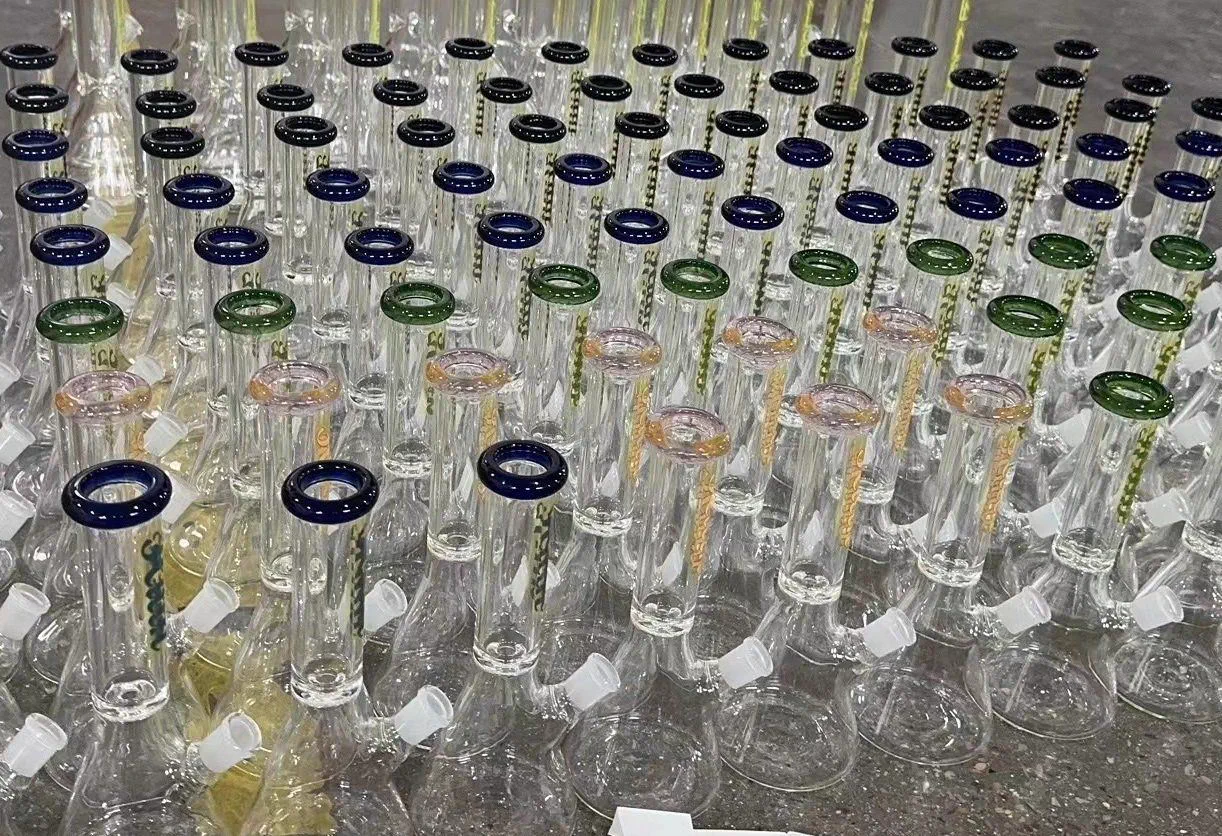
At Elfglass we have run OEM and ODM exports since 2010 — roughly 16 years — from a 1,000-square-meter facility with a 20-person team and a monthly capacity of 10,000 pieces, under BSCI, WRAP, and ISO 9001 systems. For Canadian buyers the working terms are the same as everywhere else: MOQ of 100 pieces per design, sampling in 1-3 days, bulk production of about 7-12 days for orders of 100 pieces and up, T/T with a 30% deposit and 70% balance before shipment, and a quote back within 12 hours. If the product you want does not exist yet, custom molds stay exclusive to your brand, and an NDA is signed before the project starts.
That exclusivity matters more in a market this size than most buyers expect. Canada’s smoke-shop scene is tight-knit; a design that appears under three store brands in one city helps nobody. If you are weighing exclusive designs against stock models and reading Canadian accessory demand trends, our breakdown of low-risk trial orders at MOQ 100 is the place to start, and our guides to importing into the USA, the UK, and Australia cover the same ground for those markets.
Your Canada Import Checklist
Run this route map in order before your first Canadian shipment. Each step has a reason, and the order matters — later steps assume earlier ones are settled.
- Confirm your target provinces and write down each one’s minimum age and retail structure; set your age-gate and ID policy to the strictest market you will serve
- Engage a Canadian customs broker before ordering; confirm classification under HS heading 9614 and get the current duty rate in writing
- Build the landed cost per unit from invoice, freight, insurance, duty, brokerage, and delivery — then set retail prices from that number
- Verify packing standards with your manufacturer: individual wrapping, dividers, drop-tested cartons; confirm insurance coverage for fragile goods
- Keep product descriptions precise on the commercial invoice — water pipes, hand pipes, parts — and keep marketing claims modest and adult-oriented
- Check display and promotion rules in your province before building fixtures; avoid anything that could read as appealing to young persons
- Start with a trial order rather than a container: at an MOQ of 100 pieces per design you can validate sell-through on beakers and straight tubes before scaling what actually moves
Canada rewards the importer who treats it as thirteen small markets wearing one flag. Do the provincial homework, get broker-verified numbers instead of internet percentages, and let your first order be a test you can afford to learn from. That sequence is how a single trial order at MOQ 100 becomes a repeatable import program — which is exactly the trajectory we like watching our Canadian buyers follow.
Frequently Asked Questions
Are glass pipes legal to import into Canada?
Empty glass pipes are general merchandise, not controlled goods — the Cannabis Act permit regime applies to cannabis itself, not to glassware. You still need correct customs classification under HS heading 9614, accurate invoice descriptions, and display practices that respect youth-appeal rules.
What is the minimum age to buy smoking accessories in Canada?
It depends on the province: 18 in Alberta, 21 in Quebec since January 2020, and 19 across the remaining provinces. Set your age checks to the province you sell in — or to the strictest one if you sell online across several.
Do I need a cannabis licence to import glass water pipes?
No. Licences and per-shipment permits under the Cannabis Act govern cannabis itself. Empty glass pipes import as consumer goods through a customs broker, the same way other glassware does.
What duty will I pay on glass pipes entering Canada?
Duty depends on the exact tariff line under HS heading 9614 and current schedules, so get the rate from your CBSA customs broker in writing rather than from any website. Rates change with trade agreements, and your broker’s number is the one customs will actually apply.
How small can my first order be?
Our MOQ is 100 pieces per design, which is deliberately sized for a retail trial order. You can test a few core styles — beakers, straight tubes, hand pipes — confirm sell-through in your market, and scale the designs that move, with sampling in 1-3 days before you commit to bulk.
Get a Quote for Your Next Order
Importing water pipes to Canada? Send us your product spec and target quantity — contact our factory team or message us on WhatsApp, and we will reply with pricing and lead times within 24 hours.
About the Author
Ava Zeng is the founder of Elfglass, a Shenzhen-based borosilicate glass pipe manufacturer serving B2B brands worldwide. Every guide on this site is grounded in her production-floor experience— the annealing lines, QC checkpoints, and export orders behind each claim.
Before you commit to a supplier, read her founder’s story and trust promise, and the guide to vetting a reliable glass pipe manufacturer— the same red-flag checklist Elfglass applies to its own suppliers.
Import compliance is enforced by CBSA, which classifies glass smoking accessories under specific HS codes and requires proper documentation.
Ready to Source Custom Glass Pipes?
Get a free quote within 24 hours. MOQ from 100 pieces. NDA-protected design consultation.
