
What to Ask for Before You Approve a Shipment
When B2B buyers place their first wholesale glass pipe order, the conversation tends to focus on design, pricing, and delivery timelines. But there is a parallel set of documents that matters just as much—the quality paperwork that proves what the glass is made of, how it was tested, and whether it meets the regulatory standards of your target market. Without these documents, you are trusting the supplier’s word. With them, you have traceable evidence.
This guide covers the three core quality documents every glass pipe buyer should request, what each one actually proves, and how to use them in your compliance and quality workflows. If you are importing into regulated markets like the USA, UK, EU, or Australia, these documents are not optional—they are part of your import compliance toolkit.
The Three Core Documents
1. Certificate of Conformity (COC) / Certificate of Compliance
A COC is a document issued by the manufacturer stating that the products in a specific batch meet agreed-upon specifications. For glass pipes, this typically covers material type (e.g., borosilicate glass COE 3.3), dimensions, and any applicable standards. The COC references the specific purchase order or production batch, making it traceable.
What it proves: The manufacturer asserts that the batch was produced to your specifications. It is a contractual document—if the product does not match the COC claims, you have grounds for a claim.
What it does not prove: A COC is a self-certification by the manufacturer. It is not a third-party test result. Its value depends on the manufacturer’s credibility and quality system.
2. Material Safety Data Sheet (MSDS) / Safety Data Sheet (SDS)
An MSDS (now called SDS under GHS standards) describes the chemical composition of a material and any safety handling requirements. For glass pipes, the SDS covers the glass composition (silica, boron trioxide, sodium oxide, etc.) and confirms the absence of restricted substances like lead or cadmium.
What it proves: The material composition is documented and can be checked against restricted substance lists. For markets with Prop 65 (California) or REACH (EU/UK) requirements, an SDS showing no lead or cadmium is part of your compliance evidence.
What it does not prove: The SDS describes the material type, not the specific batch. It confirms the glass recipe, not whether every piece in your order matches that recipe.
3. Third-Party Test Report
A test report from an accredited laboratory (SGS, Intertek, Bureau Veritas, TÜV) provides independent verification of specific claims. Common tests for glass pipes include lead and cadmium extraction (FDA 7117.4 or EN 1388), thermal shock resistance, and mechanical strength.
What it proves: An independent lab has tested samples and confirmed they meet the specified standard. This is the strongest form of evidence because the lab’s accreditation is at stake.
What it does not prove: The test covers the samples tested, not necessarily every piece in the batch. For high-volume orders, statistical sampling plans (like AQL inspection levels) bridge this gap.
When to Request Each Document
| Document | When to Request | Who Issues It | Cost to Buyer |
|---|---|---|---|
| COC | With every order (standard practice) | Manufacturer | Included in order cost |
| SDS/MSDS | First order, then annually or when material changes | Manufacturer or raw material supplier | Usually free |
| Third-party test report | First order or when entering a new regulated market | Accredited lab (buyer or manufacturer pays) | $200–$800 per test |
For ongoing orders, the COC should accompany every shipment. The SDS is a one-time document unless the material recipe changes. Third-party test reports are typically needed once per product line per market—after that, annual renewal or re-testing on a rotational basis is sufficient.
How These Documents Connect to Your Sample Evaluation Process
When you evaluate samples from a new supplier, the quality documents should arrive with the samples—or at least be available for review before you approve the sample. A supplier who sends samples without documentation is treating quality as an afterthought. A supplier who provides COC, SDS, and (for new product lines) a third-party test report alongside samples is demonstrating process maturity.
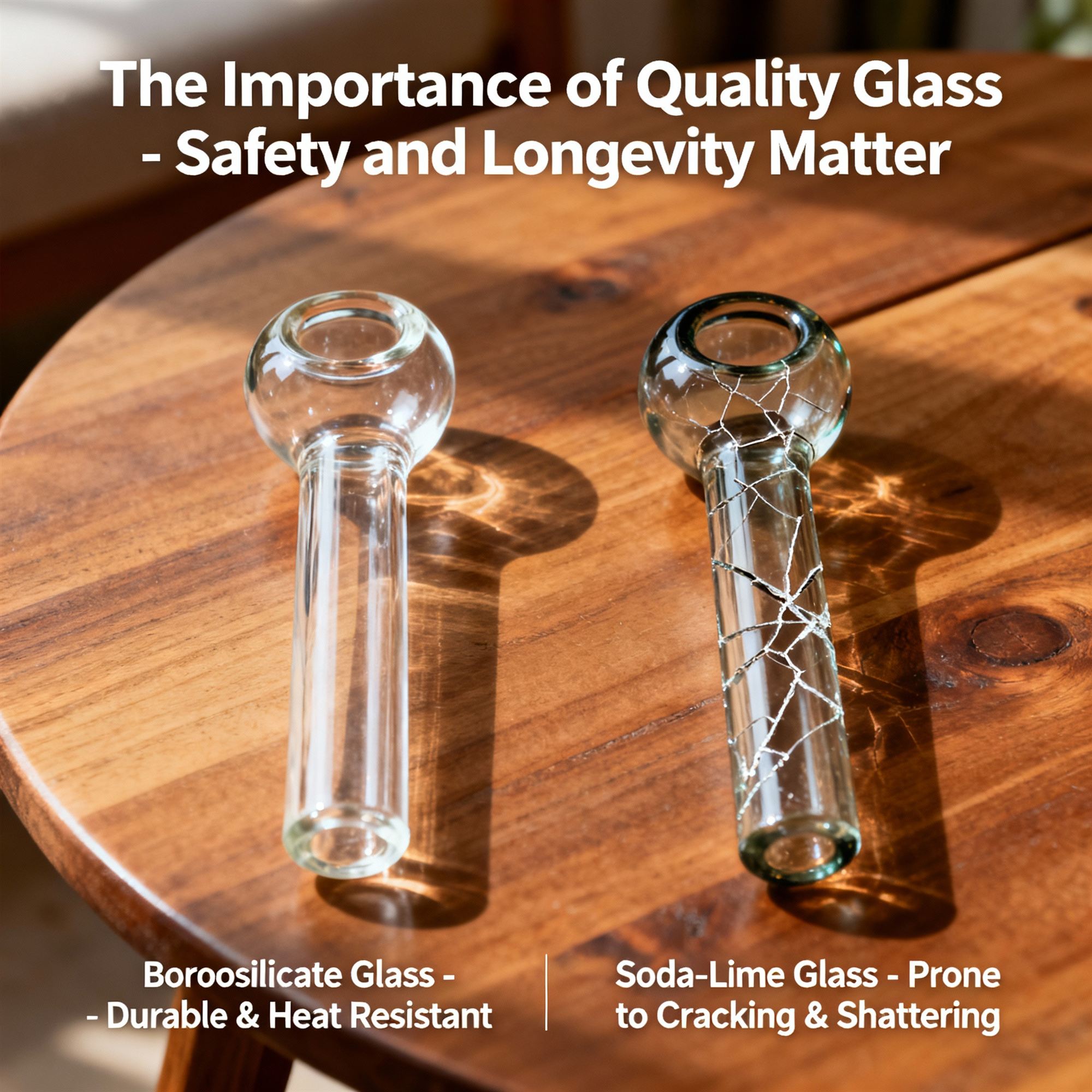
During sample evaluation, cross-reference the documents against your physical findings. If the COC says “borosilicate COE 3.3” but the sample fails a thermal shock test (see our borosilicate vs soda-lime guide), the documentation is unreliable. The documents and the physical evidence must agree. The same documentation standard ships with every wholesale parts and accessories order.
Need Documentation That Proves Your Glass Quality?
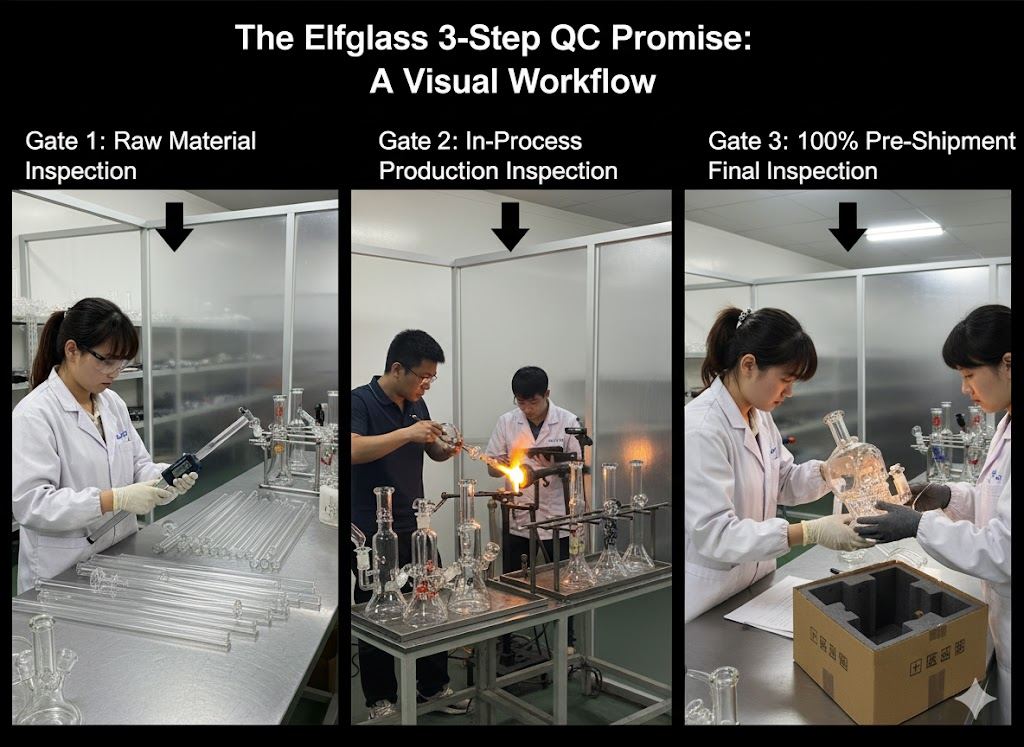
Elfglass ships a Certificate of Conformity, Safety Data Sheet and photo-backed QC report with every order, so you approve each batch against written specs before it leaves the factory. Send your documentation checklist and get a quote within 12 hours.
MOQ from 100 pieces | BSCI / WRAP / ISO 9001 | NDA before every project
Using Quality Documents for Market Compliance
Different markets have different documentation requirements:
- USA (California Prop 65): Lead and cadmium test reports demonstrating compliance with safe harbor levels.
- EU/UK (REACH): SDS showing absence of SVHCs (Substances of Very High Concern) above 0.1 percent threshold.
- Australia: Compliance with the Consumer Goods (Safety Standard for Products Containing Lead) regulations—test reports for lead content.
- Canada: Canada Consumer Product Safety Act (CCPSA) compliance—lead and mercury limits.
Your manufacturer should be able to provide the underlying test data for any of these markets. At Elfglass, our certifications include BSCI, WRAP, and ISO 9001, and we provide COCs and SDS documentation with every order. Third-party test reports are available for specific market compliance needs.
Red Flags in Quality Documentation
Watch for these warning signs when reviewing supplier documents:
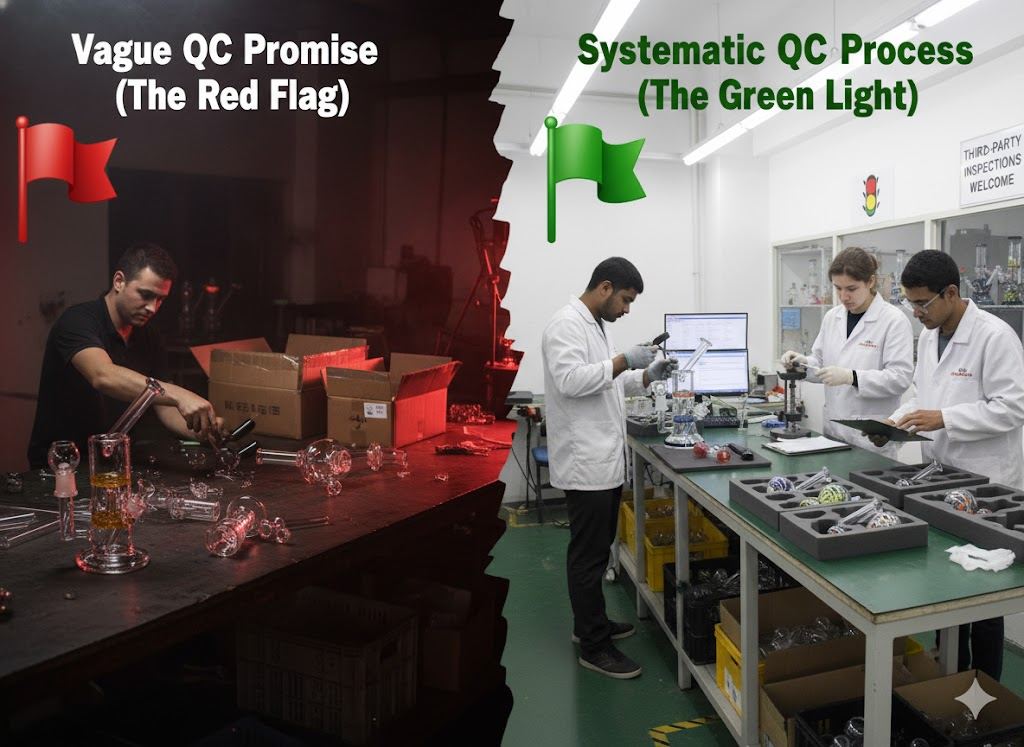
- Generic COCs not referencing your order. A COC should cite your PO number and the specific batch. A generic “our products are high quality” certificate proves nothing.
- SDS that lists only “glass” without composition detail. A proper SDS identifies the specific oxides and their percentages.
- Test reports older than 2 years. Standards update, and manufacturing processes change. A 2019 test report does not confirm 2026 production.
- Test reports from unaccredited labs. Check that the lab has ISO 17025 accreditation for the specific test method cited.
- Refusal to provide documentation. A manufacturer who says “we don’t do paperwork” is a manufacturer who cannot trace their production. This is a fundamental quality system gap.
Requesting Documentation: A Template Approach
When placing your first order with a new glass pipe supplier, include a documentation requirements line in your RFQ:
“Please include the following with your quotation: (1) Sample COC format for our review. (2) Current SDS for all glass materials used. (3) Most recent third-party test report for lead/cadmium extraction. (4) ISO 9001 or equivalent quality system certificate. All documents to be provided before sample approval.”
This signals to the supplier that you take quality documentation seriously—and suppliers who cannot meet this request will self-select out before you waste time on sample rounds. For more on evaluating suppliers, see our factory audit checklist.
For questions about quality documentation or to request compliance paperwork for an existing order, contact our team directly.
For the commercial side of sourcing, see our warranty and claims handling guide.
Records Retention: How Long to Keep Each Document
Requesting documents is half the job; keeping them retrievable is the other half. Customs authorities, marketplace compliance teams, and insurers can ask for proof years after the goods land, and a document you cannot find is the same as one you never had. Use this retention schedule so the paper outlives the product.
| Document | Retain For | Kept By | Audit Trigger |
|---|---|---|---|
| Certificate of Conformity (COC) | Life of the batch plus the statutory window in your market (commonly 3–5 years from import) | Importer, filed against the PO | Customs post-clearance audit; a product-safety complaint |
| SDS / MSDS | Current version plus every superseded version you relied on | Importer and supplier | Restricted-substance review; a material-recipe change |
| Third-party test report | Until the next re-test for that product line and market | Importer, tagged to product + market | Entering a new regulated market; a standards update |
| Quality-system certificate (ISO 9001 etc.) | Current certificate plus the expiry date on file | Importer’s supplier record | Annual supplier re-qualification |
| Commercial invoice, packing list, certificate of origin | The customs retention period of the destination country | Importer and broker | Duty/VAT reconciliation; origin verification |
How to Verify a Third-Party Test Report Is Genuine
A test report is only as strong as the lab behind it, and a fabricated or recycled report is one of the harder frauds for a first-time importer to spot. Before you rely on one at customs or in a marketplace listing, run these checks — they take minutes and protect you from a document that looks official but proves nothing.
- Confirm the lab’s accreditation covers the method cited. ISO 17025 accreditation is scope-specific: a lab accredited for lead extraction is not automatically accredited for thermal shock. Match the scope to the test named on the report.
- Verify the report number at the source. Most accredited labs (SGS, Intertek, Bureau Veritas, TÜV) run an online report-verification portal. Enter the report number and compare the returned result to the PDF you were sent.
- Check the sample description matches your product. The report should name the material, product type, and batch or model it tested. A report describing a different item than yours is not your evidence.
- Look for edit artifacts. Inconsistent fonts, misaligned tables, a logo that does not match the lab’s current branding, or PDF metadata showing recent edits can all signal tampering.
- Call or email the lab directly for high-value orders. Use contact details from the lab’s own website, not the ones on the report, and ask them to confirm the report is authentic and unaltered.
- Check the date against your production. A valid report for last year’s recipe does not confirm this year’s batch — if the material or process changed, the report must be refreshed.
Key Takeaways
- Three core quality documents: COC (batch-level conformity), SDS (material composition), and third-party test reports (independent verification).
- Request COCs with every order, SDS on first order, and test reports when entering new regulated markets.
- Cross-reference documentation against physical sample testing—documents and evidence must agree.
- Watch for generic certificates, outdated reports, and unaccredited labs as red flags.
- Include documentation requirements in your initial RFQ to filter out suppliers without traceable quality systems.
Every guide on this site is grounded in production-floor experience. Before you commit to a supplier, read the founder’s story and trust promise to understand how Elfglass approaches quality transparency.
Frequently Asked Questions
What quality documents should I request from a glass pipe supplier?
Request a Certificate of Conformity (COC) with every order, a Material Safety Data Sheet (SDS) on first order, and third-party test reports when entering new regulated markets.
What does a Certificate of Conformity prove for glass pipes?
A COC is the manufacturer’s assertion that a specific batch meets agreed specifications including material type, dimensions, and applicable standards. It references the specific PO and batch for traceability.
How much do third-party glass test reports cost?
Third-party test reports from accredited labs like SGS or Intertek typically cost $200-$800 per test depending on the method and standard.
What are red flags in supplier quality documentation?
Generic COCs not referencing your order, SDS listing only ‘glass’ without composition detail, test reports older than 2 years, reports from unaccredited labs, and refusal to provide any documentation.
About the Author
Ava Zeng is the founder of Elfglass, a Shenzhen-based borosilicate glass pipe manufacturer serving B2B brands worldwide. Every guide on this site is grounded in her production-floor experience— the annealing lines, QC checkpoints, and export orders behind each claim.
Before you commit to a supplier, read her founder’s story and trust promise, and the guide to vetting a reliable glass pipe manufacturer— the same red-flag checklist Elfglass applies to its own suppliers.
Ready to Source Custom Glass Pipes?
Get a free quote within 24 hours. MOQ from 100 pieces. NDA-protected design consultation.
