
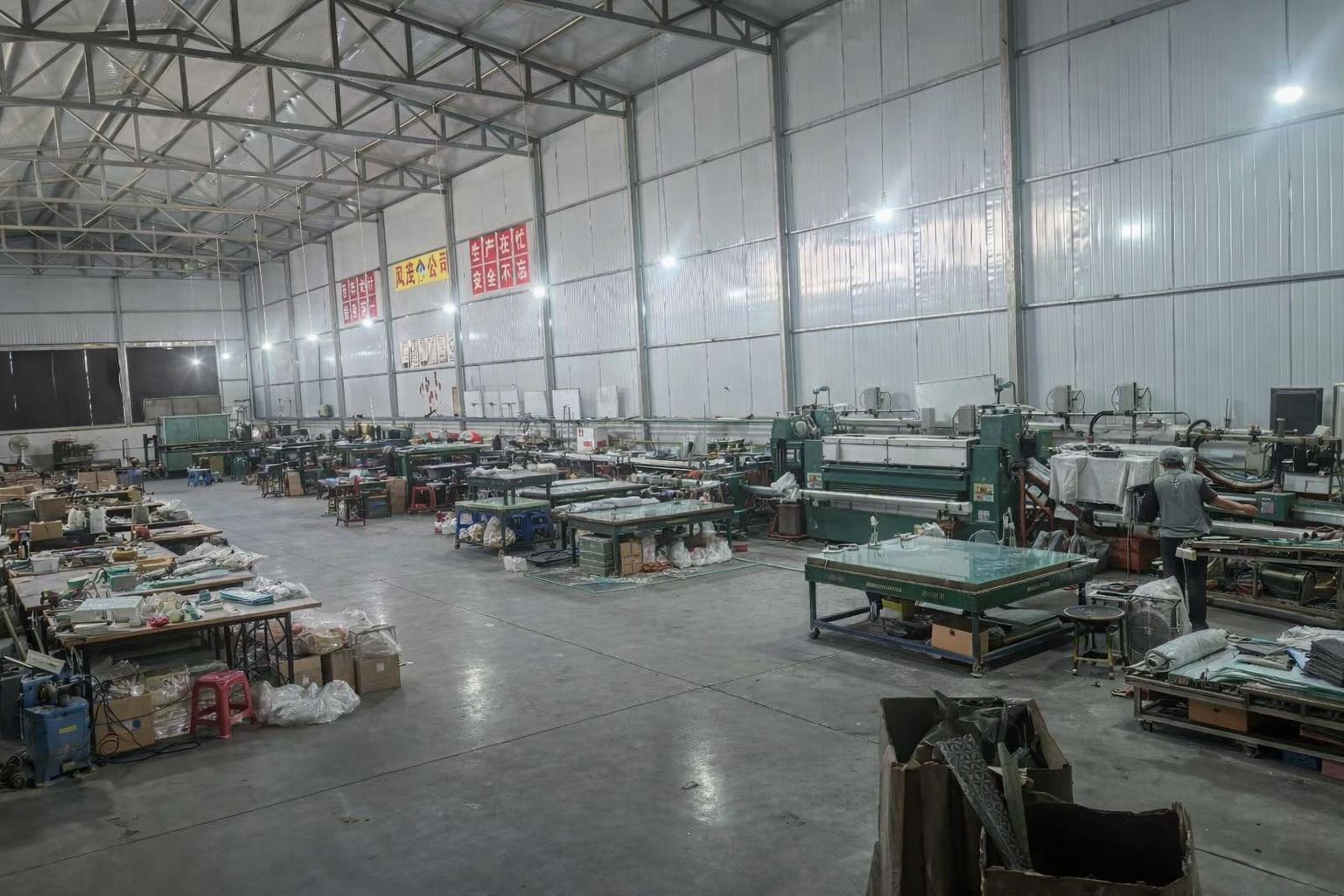
Read more about the sixteen years of glass pipe manufacturing evolution at Elfglass.
A wholesale buyer messages four glass factories on Monday morning. By Friday, two have not replied. A third sends a one-line quote with no breakdown. The fourth responds within 12 hours with a detailed proposal, a 3D render by Tuesday, and a physical sample in hand by Thursday. The buyer places the order before the weekend. The other three never get a second message. In B2B glass pipe manufacturing, speed is not a marketing slogan. It is the entire first impression.
Elfglass has operated since 2010 from a 1,000-square-meter facility with a 20-person team, shipping glass water pipes, hand pipes, and dab rigs to buyers across four continents. The factory’s sampling turnaround runs 1-3 days. Mass production takes 7-12 days for orders above 100 units per SKU. The monthly capacity sits at 10,000 pieces. Those numbers are not accidental. They come from a deliberate philosophy that the factory calls “Speed is Sacred Respect” — the idea that treating a buyer’s time seriously is the most fundamental form of professional respect.
The perspective here comes from the factory floor, not a marketing deck. Ava Zeng, the founder, puts it this way: “What kills a great idea is never the technology, but the communication gap and a lack of empathy.” Every workflow decision at Elfglass — from the 12-hour quote response to the NDA-before-every-project rule — flows from that conviction. This article explains what fast turnaround actually looks like from the manufacturing side, why a 20-person factory can ship faster than operations three times its size, and what buyers should demand from any supplier before placing an order.
Key Takeaways
- Elfglass responds to every inquiry within 12 hours, ships physical samples in 1-3 days, and completes mass production of 100+ units in 7-12 days.
- The factory’s “Speed is Sacred Respect” philosophy treats delivery speed as a form of professional respect for the buyer’s launch timeline.
- A 20-person team with flat decision-making eliminates the internal handoff delays that slow larger operations.
- Monthly capacity of 10,000 units with BSCI, WRAP, and ISO 9001 certifications means speed does not come at the expense of compliance.
- Every project starts with a signed NDA, and custom molds are exclusive to each client — speed and IP protection run in parallel.
Contents
The 12-Hour Quote
Why Response Time Is the First Real Test
A manufacturer’s quote response time tells you more about their production discipline than any brochure ever will. If a factory takes five business days to return a price, the same organizational gaps will show up in sampling dates, shipping schedules, and revision turnaround. Elfglass commits to a 12-hour response window on every inquiry. That is not a marketing target — it is an operational habit baked into how the team structures its day.
The comparison is stark. A supplier that responds within 24 hours has its workflow organized and can prioritize new opportunities. One that takes 48 hours probably has a system but lacks urgency. One that takes a week or more is telling you, without words, that your launch timeline is not a priority. In 2026, retail buyers do not wait. They message the next factory on the list.
| Quote Response Window | What It Signals |
|---|---|
| 12-24 hours | Organized workflow; treats new inquiries as priority |
| 24-48 hours | Functional but may lack urgency on new business |
| 3-5 business days | Overloaded or disorganized; your launch is not first in line |
| No response within a week | Move on — this pattern repeats at every stage |
What a Detailed Quote Should Include
Speed without substance is just a fast way to waste everyone’s time. A quote that arrives in 12 hours but lacks unit pricing breakdowns, mold cost estimates, and sampling timelines is not useful. Elfglass’s quotes include per-unit pricing at the stated MOQ, mold cost if the design is custom, estimated sampling and production dates, and payment terms — T/T with 30% deposit and 70% balance before shipment. If a supplier’s quote cannot itemize those elements quickly, the delay is not about speed. It is about capability. For a deeper look at what should raise concern in a glass pipe quote, the glass pipe quote red flags guide breaks down the warning signs.
Sampling in 1-3 Days
The Difference Between Promising and Delivering
Any factory can promise fast sampling in a sales conversation. The proof sits in the dates. Elfglass commits to 1-3 days for physical samples after the specification is locked, and the commitment is public on the factory’s process page. The math matters because sampling time is the single biggest variable in a launch timeline. If sampling takes two weeks, a buyer is looking at 6-8 weeks before stock arrives on shelves. At 1-3 days, the same buyer is looking at under four weeks.
The workflow runs on a tight sequence. Day 1 captures the requirement in full — dimensions, material notes, color references, percolator type, joint size. Day 2 produces a 3D design output that the buyer can review before any glass is blown. Days 3 through 7 deliver physical samples, with the faster end of that range reserved for straightforward designs. The sample revision process guide on this site explains how many revision rounds to expect and how to keep each one productive.
Where Delays Actually Come From
Most sampling delays do not start on the factory floor. They start in the spec sheet. A buyer who sends a sketch without dimensions, a reference photo without color codes, or a concept without a clear joint size creates a back-and-forth that eats days before the factory touches a piece of glass. Elfglass’s 12-hour quote response and day-one requirement capture exist to compress that gap. When the spec is clean, the glass moves fast. When it is not, even the fastest factory is stuck waiting for information.
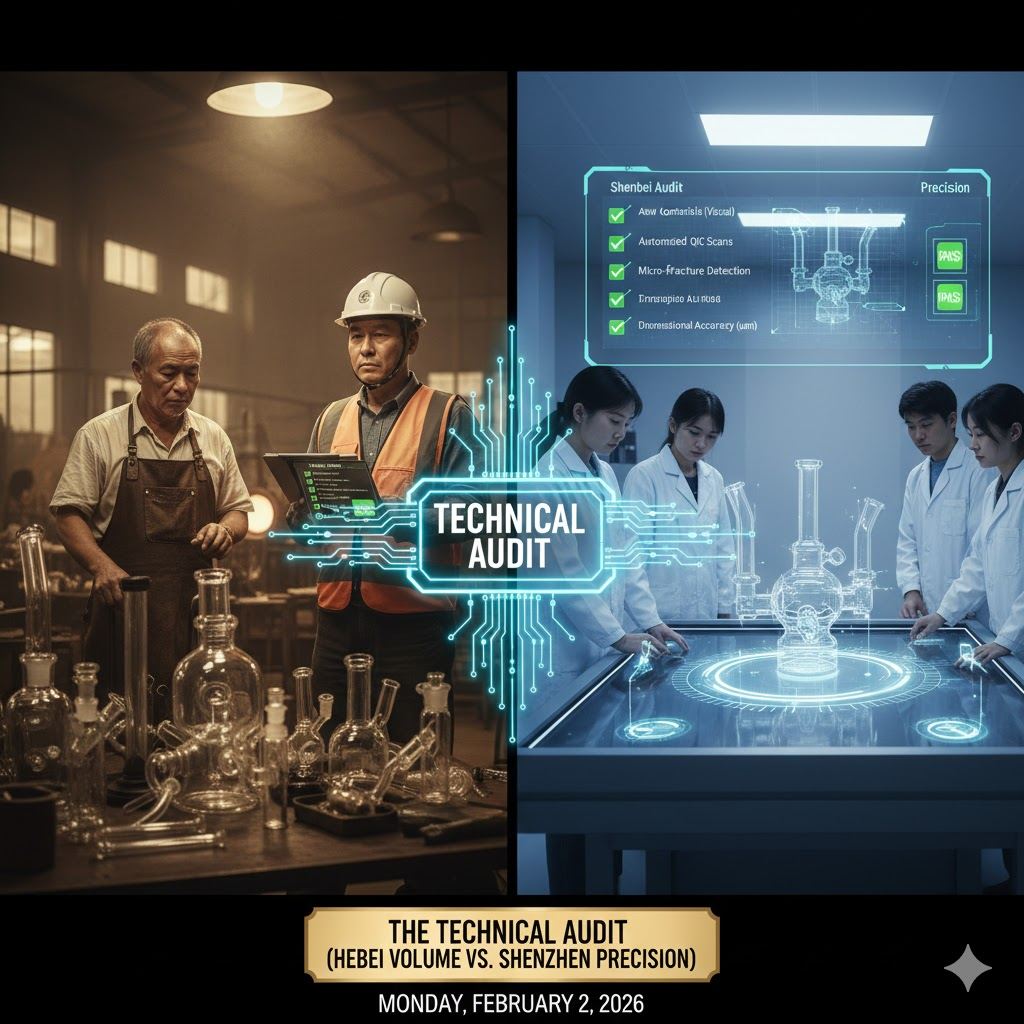
3D design output on day 2 of the sampling workflow lets buyers approve the form before glass is blown.
Production in 7-12 Days
What the Timeline Actually Covers
Once a sample is approved and the deposit clears, production begins. For orders above 100 units per SKU, Elfglass completes mass production in 7-12 days. That window covers the full run — glass blowing or pressing, annealing, quality inspection, and packing. It does not include shipping time, which depends on the method and destination the buyer chooses.
The 7-12 day range is not arbitrary. Glass blowing at this scale involves coordinating raw material readiness, color matching, per-piece quality checks, and packaging logistics. A factory that quotes 30 days for 100 pieces is either running a much larger operation with more complex scheduling, or it has workflow problems it has not bothered to fix. Elfglass keeps raw glass materials in stock, maintains pre-mixed standard colors, and runs a team small enough to shift between projects without the overhead that bogs down larger plants. The ISO 9001 in glass factories guide explains how quality management systems support this kind of consistent turnaround. Delivery discipline follows the coordination principles in supply chain management, where every handoff is scheduled, tracked, and confirmed.
Payment Terms That Keep the Clock Running
Elfglass works on T/T terms: 30% deposit before production starts, 70% balance cleared before shipment. This structure keeps both sides committed. The buyer’s deposit triggers the production queue immediately. The balance-before-ship rule gives the factory confidence to prioritize the order. Neither side is carrying disproportionate risk, and neither side has a reason to slow down. For a fuller breakdown of how different payment structures affect order timelines and buyer risk, the T/T payment terms guide walks through the trade-offs in detail.
Factory footage showing glass pipe production at the Elfglass manufacturing facility.
Start a Conversation With a Real Factory Partner
You get a named contact, honest lead times, and an NDA before any OEM project. Tell us what you are building and we will reply within 12 hours with straight answers, not a sales script.
MOQ from 100 pieces | BSCI / WRAP / ISO 9001 | NDA before every project
How a 20-Person Factory Ships Faster
The Small-Team Advantage
A 20-person factory should not be faster than a 200-person factory on paper. Larger operations have more hands, more kilns, and more capacity. In practice, they also have more management layers, more inter-department handoffs, and more queue time between each step. When the person approving your spec sheet sits ten meters from the glassblower, decisions happen in minutes instead of days.
Elfglass’s team of 20 covers design, production, quality control, and logistics under one roof. The founder, Ava Zeng, is directly involved in client communication. There is no account manager layer translating your requirements into internal tickets before the production team sees them. That flat structure is not a limitation the factory has outgrown. It is the reason the factory works the way it does. The OEM vs ODM comparison on this site explains how different manufacturing models handle the communication chain between buyer and production floor.
IP Protection at Speed
Speed without security is a liability. Elfglass signs an NDA before every project starts — not as a formality, but as the first step in the workflow. Custom molds are exclusive to each client. The factory does not produce a client’s design for anyone else, and the mold stays off the production floor until the NDA is signed. For a deeper look at why this sequence matters and what can go wrong when it does not, the NDA-first manufacturing article on this site walks through the reasoning in full.

A 20-person team means the person approving your spec sits meters from the glassblower — decisions happen in minutes, not days.
The Cost of Slow for Buyers
What a Delayed Launch Actually Costs
A two-week delay in product launch is not two weeks of waiting. It is two weeks of zero revenue from the product, two weeks of capital tied up in inventory that is not selling, and two weeks of a market trend moving past the buyer’s shelf. For a retail smoke shop planning a spring collection, a supplier that misses its sampling date by ten days compresses the entire selling window. The shop either launches late or launches with a product it has not had time to evaluate properly.
The math is straightforward. A wholesale glass hand pipe that costs $15 and retails at $30 generates $450 in first-month revenue if 30 units sell. If the launch is delayed by a month, that first month’s revenue does not shift — it disappears. The buyer still pays the same wholesale price, still faces the same rent, and still has the same payroll. The only variable is whether the product was on the shelf when customers walked in. Speed from the manufacturer is not a luxury. It is a direct input into the buyer’s return on investment.
When Speed Matters Most
The cost of delay scales with how time-sensitive the buyer’s situation is. A brand founder launching a new line for the first time is working with a fixed marketing calendar and a limited cash runway. A dispensary stocking a new category faces regulatory timelines that do not bend. A smoke shop owner preparing for a seasonal rush — 4/20, holiday gifting, summer tourist traffic — has a shelf window that closes on a specific date regardless of whether the product has arrived. In every one of these cases, the manufacturer’s turnaround time is not a supply chain detail. It is the buyer’s competitive position.
A Buyer’s Speed Checklist
What to Ask Before Committing
A supplier’s claimed turnaround means nothing until it is tested against real dates. Before placing an order, buyers should ask four questions and get written answers. First, what is your quote response time, and can you commit to it in writing? Second, what is your sampling window for a design at my complexity level, with specific date commitments? Third, what is your production schedule for my exact order size, and what triggers the start date? Fourth, can you provide references from the last 90 days that I can actually call?
The reference question is the one most factories hope buyers will skip. A fast turnaround manufacturer will answer it without hesitation because the dates are real and the clients are willing to confirm. A factory that pads its timeline claims will deflect, offer outdated contacts, or go silent. The sample evaluation guide on this site covers what to check when the physical sample arrives — speed means nothing if the quality does not match the spec.
| Question | What to Listen For |
|---|---|
| Quote response commitment | Specific hour window in writing, not “we’ll get back to you soon” |
| Sampling date commitment | Calendar dates tied to spec approval, not vague ranges |
| Production trigger point | Clear event (deposit received, sample approved) that starts the clock |
| Recent references | Contactable buyers from the last 90 days who confirm the dates |
Conclusion
Speed in glass manufacturing is not about rushing. It is about removing the dead time that most factories accept as normal — the days spent waiting for a quote, the weeks lost to sampling loops that could have been resolved in days, the production delays that come from organizational bloat rather than genuine capacity constraints. A fast turnaround manufacturer treats the buyer’s timeline as a commitment, not a suggestion, and builds every workflow decision around honoring it.
Elfglass has been building that approach since 2010. The 12-hour quote response, the 1-3 day sampling window, the 7-12 day production cycle, and the 10,000-unit monthly capacity are not marketing numbers. They are the output of a 20-person team that operates on a philosophy of accountability and empathy. Every project starts with an NDA. Every custom mold stays exclusive. Every timeline commitment has a real date behind it.
If you are evaluating whether a manufacturer can meet your launch timeline, the process page breaks down the full workflow from first contact to delivery.
Ready to test a real timeline? Send us your specification sheet and you will have a written quote within 12 hours — with a firm sample date attached, not a vague estimate.
Frequently Asked Questions
What is a typical lead time for custom glass pipe manufacturing?
Sampling takes 1-3 days after spec approval; mass production of 100+ units runs 7-12 days, depending on design complexity and order volume.
Does fast manufacturing mean lower quality?
No. Fast turnaround comes from workflow discipline and pre-stocked materials, not from skipping quality steps. ISO 9001-certified factories maintain full QC at any speed.
How can a buyer verify a manufacturer’s actual speed?
Request written date commitments for quotes, samples, and production, then ask for contactable references from the last 90 days to confirm the factory hit those dates.
What is the fastest sampling time for glass pipes?
Physical glass samples can be ready in 1-3 days once the specification sheet is approved, with 3D design output on day 2.
For buyers looking to grow beyond initial samples, this why fast sampling turnaround matters for your launch guide provides detailed operational frameworks for the next stage of sourcing. The commitment to fast turnaround is a competitive advantage in lead time.
About the Author
Ava Zeng is the founder of Elfglass, a Shenzhen-based borosilicate glass pipe manufacturer serving B2B brands worldwide. Every guide on this site is grounded in her production-floor experience— the annealing lines, QC checkpoints, and export orders behind each claim.
Before you commit to a supplier, read her founder’s story and trust promise, and the guide to vetting a reliable glass pipe manufacturer— the same red-flag checklist Elfglass applies to its own suppliers.
Ready to Source Custom Glass Pipes?
Get a free quote within 24 hours. MOQ from 100 pieces. NDA-protected design consultation.
