
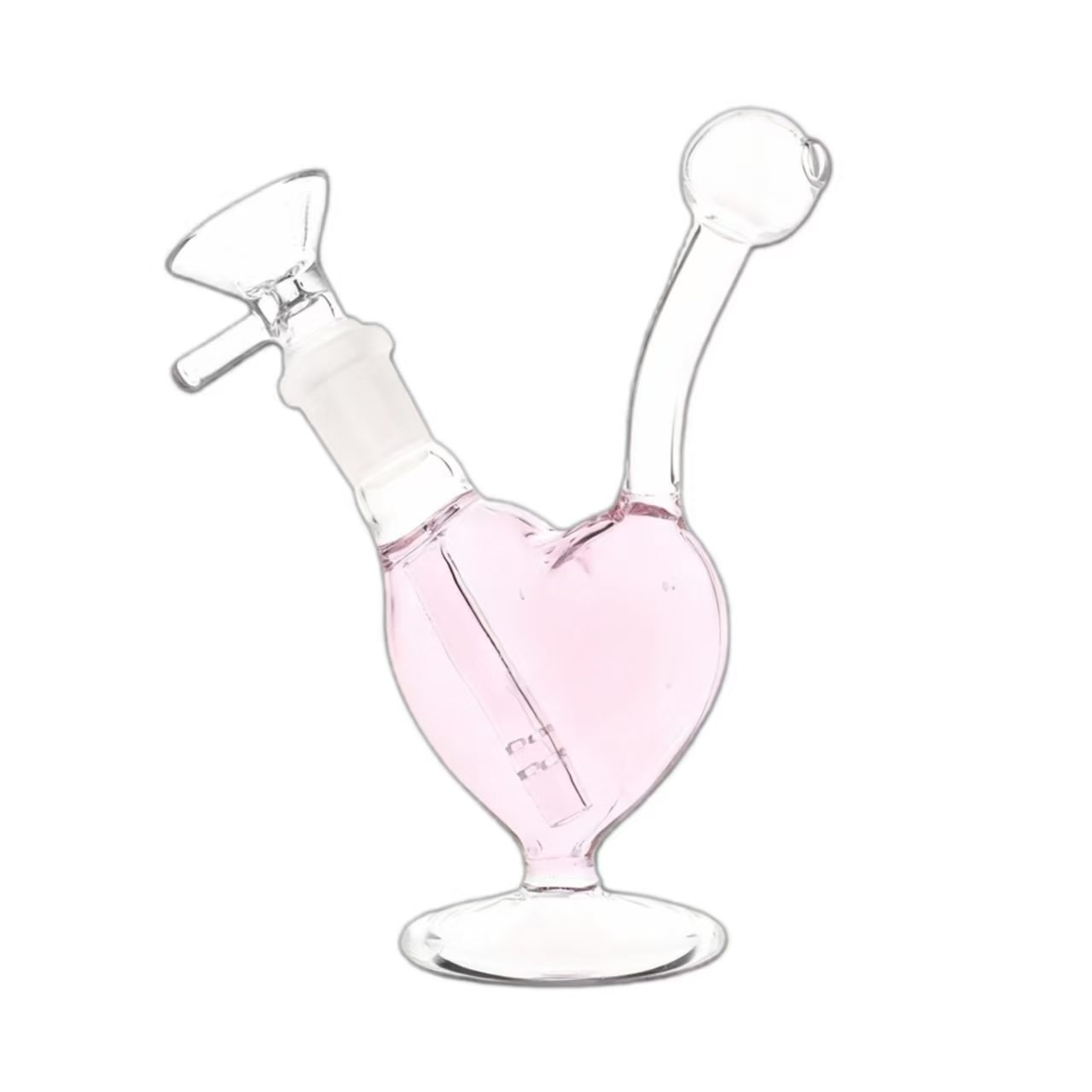
Wholesale borosilicate glass pipes typically carry retail markups of 2x to 4x. Factories sell hand pipes at $3–8 and smoke shops retail them at $15–35, producing gross margins of 60–75%. Branded and heady pieces push margins higher, while commodity spoon pipes sit at the lower end.
Every retailer who stocks borosilicate glass pipes wants to know the same thing before placing an order: what kind of glass pipe profit margin can I realistically expect? The answer is not a single number pulled from thin air. It depends on where you source, how you position your brand, and whether you sell commodity pieces or exclusive designs that customers cannot find on the next shelf. This guide breaks down the actual margin structure that head shops, smoke shops, and online retailers work with, using real wholesale pricing data from a Shenzhen borosilicate factory that has been manufacturing since 2010. Both sides of the wholesale transaction typically define these figures the way standard accounting references define profit margin, so factory and retailer read the same numbers.
Whether you are a dispensary adding glass accessories to your back wall or an e-commerce brand building a private-label line, understanding the gap between wholesale cost and retail price is the single most important calculation you will make. Get it right, and you build a sustainable business. Get it wrong, and you either price yourself out of the market or work yourself into razor-thin margins that vanish the moment shipping costs tick upward.
How Wholesale Glass Pipe Pricing Works
Before discussing margins, we need to establish what wholesale pricing actually looks like in this industry. Glass pipe wholesale pricing is not published on a price list the way consumer goods are. Manufacturers quote based on order volume, design complexity, material specifications, and the relationship between buyer and factory. A retailer ordering 100 pieces of a single design will pay a different per-unit price than a distributor ordering 5,000 pieces across ten designs.
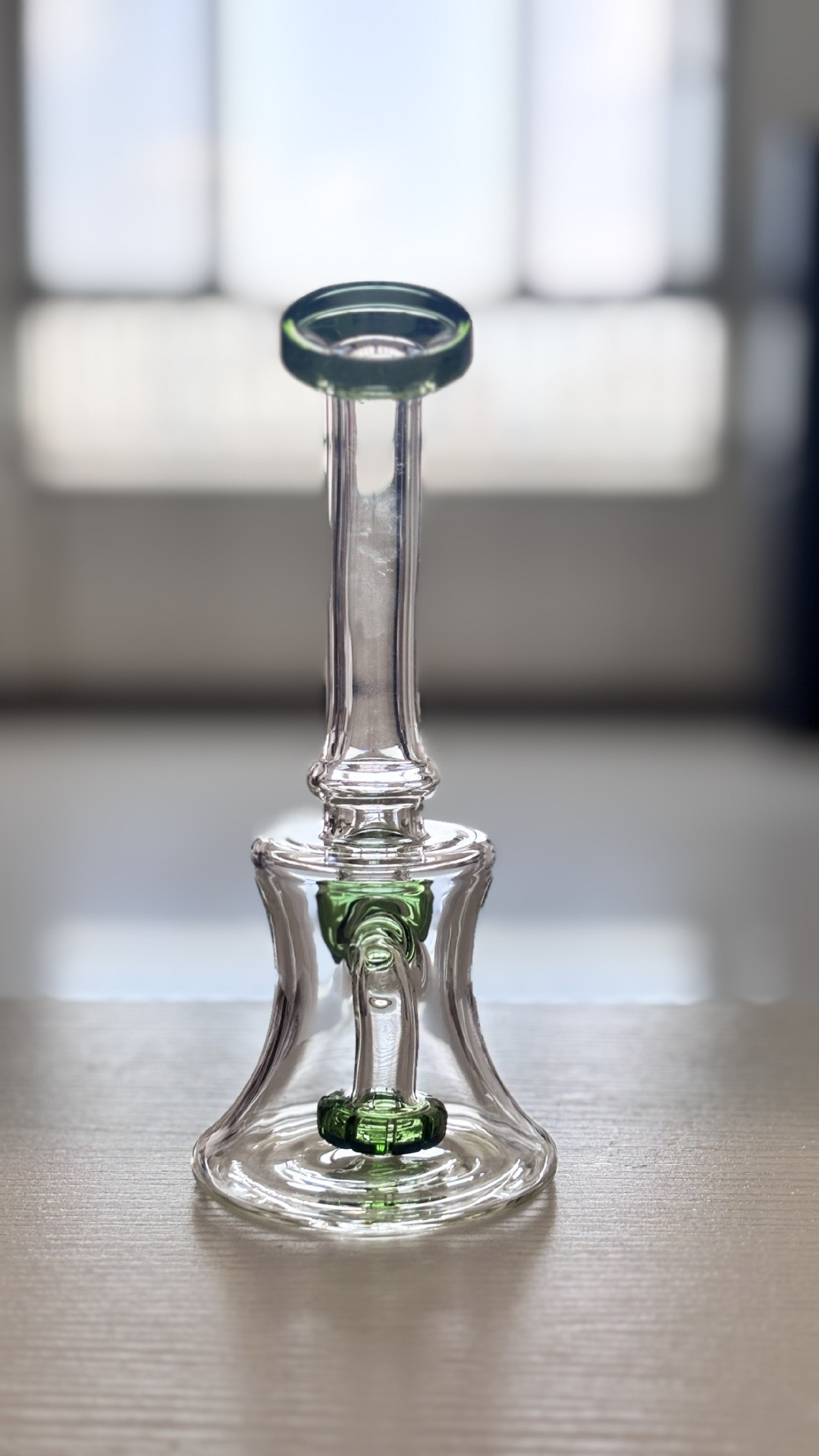
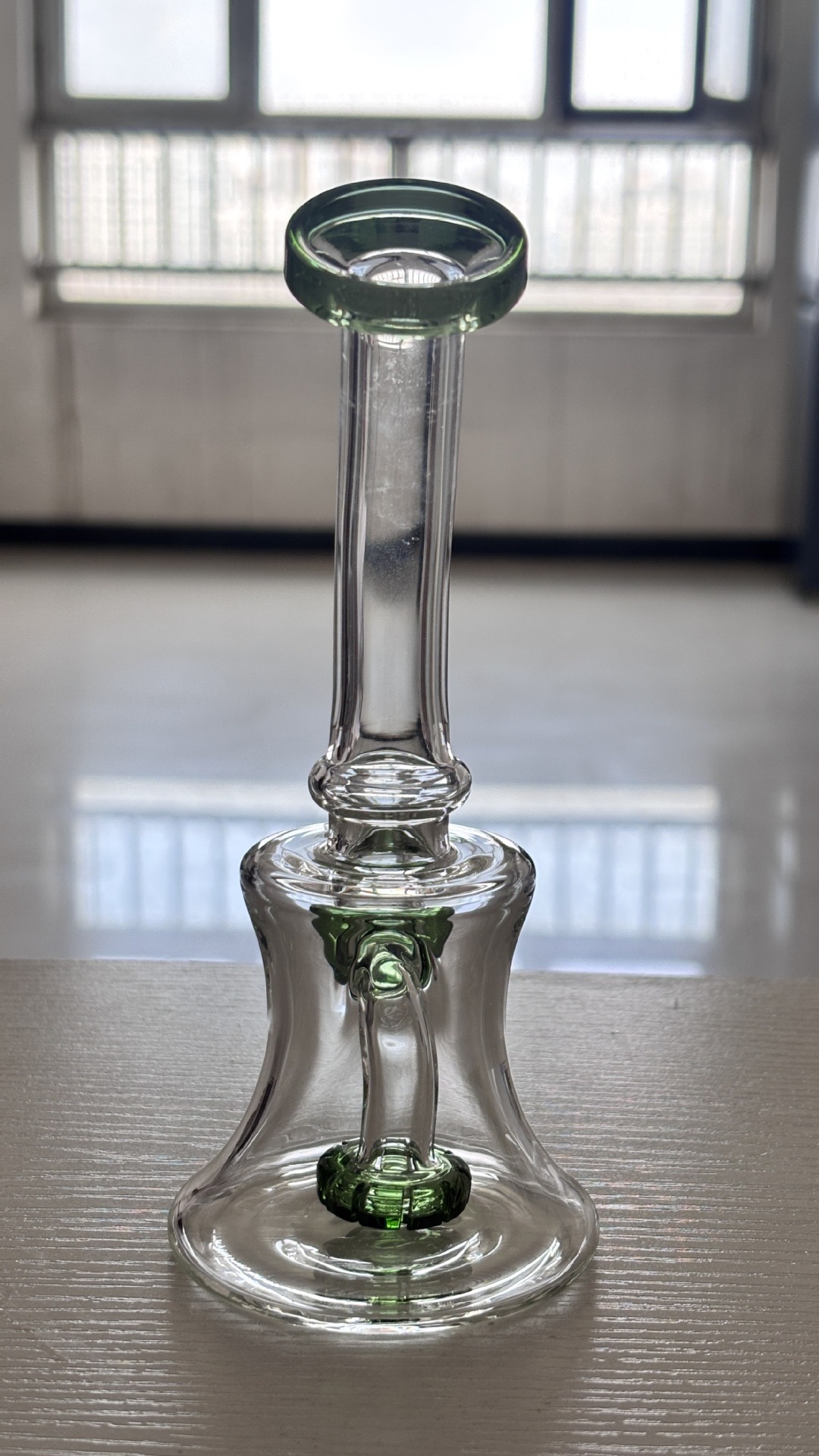
At Elfglass, the minimum order quantity sits at 100 pieces per design. That threshold is deliberately set to give emerging brands a realistic entry point. You do not need to commit thousands of dollars to test a product line. Sampling takes one to three days, and once you approve the sample, bulk production runs seven to twelve days for orders above 100 pieces. This turnaround matters for margin planning because it determines how quickly you can move from concept to shelf.
Wholesale pricing tiers shift as volume increases. A detailed breakdown of how factories structure these tiers is covered in the wholesale pricing tiers and dealer discounts guide on this site. The short version: the more you commit per order, the lower your per-unit cost, and the wider your margin becomes at retail.
Typical Retail Markup Ranges for Glass Pipes
The glass pipe industry operates on a markup model that varies by product category and retail channel. Here are the ranges that most retailers work within:
Basic hand pipes and one-hitters: These are the highest-volume, lowest-complexity items in any catalog. Wholesale costs are low, and retailers typically mark them up between 100 and 150 percent. A hand pipe that costs $3 to $5 wholesale might retail for $9 to $14. The margin per unit is modest, but the turnover rate is fast. These pieces serve as traffic drivers and impulse purchases at the counter.
Mid-range water pipes and bubblers: This is where the healthiest balance of volume and margin exists. Wholesale prices for borosilicate water pipes typically fall between $8 and $25 depending on size, percolator complexity, and wall thickness. Retail markups generally sit between 80 and 130 percent. A water pipe that lands at $15 wholesale will commonly retail between $27 and $40. This category is the backbone of most smoke shop glass departments.
Premium and artistic pieces: Thick-wall borosilicate pipes, multi-chamber percolators, and artist-signed pieces command markups of 150 to 300 percent or more. The wholesale cost might be $30 to $80, but retail prices of $75 to $250 are standard. The key dynamic here is scarcity. Customers who want a statement piece are less price-sensitive, and the exclusivity of the design supports aggressive pricing.
Custom OEM and private-label designs: When you commission exclusive designs from a manufacturer, you eliminate direct price comparison. No competitor can stock the same piece. This is where margins reach their ceiling. Retail pricing is set entirely by your brand positioning, not by what the shop across town charges for an identical item. We explore this in more depth in the section on OEM margins below.
The Real Cost Behind the Wholesale Price
Retailers who fixate solely on the per-unit wholesale number are missing the full picture. The actual cost of getting a glass pipe from a Shenzhen factory to your retail shelf includes several line items that compress or expand your effective margin.
Shipping and logistics: International freight from China to the United States, Europe, or Australia adds $0.50 to $3 per piece depending on volume, shipping method, and current freight rates. Air freight is faster but significantly more expensive per unit. Ocean freight is economical for larger orders but ties up capital in transit for four to six weeks. Both options need to be factored into your landed cost before you calculate margin.
Import duties and compliance: Tariff rates vary by destination country. Importing glass pipes into the United States, for instance, involves specific HTS codes and potential tariff exposure that changes with trade policy. Australia and the United Kingdom have their own compliance frameworks. The guide to importing glass pipes into the USA covers PACT Act and customs considerations, while the Australian compliance checklist addresses what retailers downstream of the border need to know.
Breakage and quality losses: Borosilicate glass is durable, but it is not unbreakable. A realistic breakage rate of one to three percent during transit should be built into your cost model. Factories that pack properly and use reinforced cartons keep this number low. Elfglass holds BSCI, WRAP, and ISO 9001 certifications, which include quality management protocols that reduce defect and damage rates. When you receive a quote, ask what packaging is included and whether the factory carries breakage insurance on the production side.
Payment terms and cash flow: Standard payment terms in the industry are T/T with a 30 percent deposit and 70 percent before shipment. This means your capital is committed before the product reaches your warehouse. The T/T payment terms and risks for buyers article on this site explains how to structure deposits safely and what alternatives exist, including trade assurance versus T/T comparisons that help you decide which payment method protects your cash flow best.
Factors That Directly Influence Your Glass Pipe Profit Margin
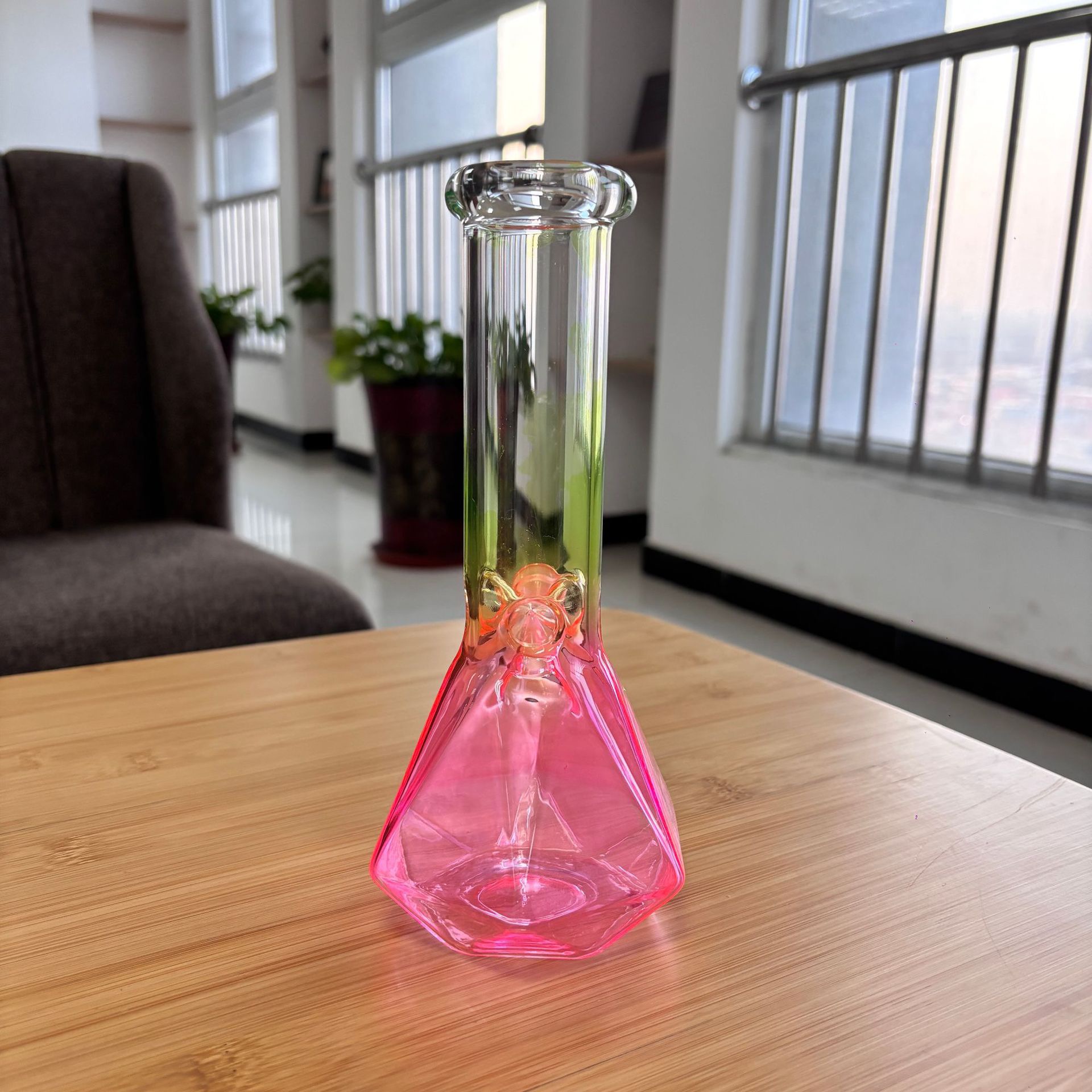
Not all glass pipes generate the same margin. Several variables determine whether you are earning 50 percent or 200 percent on a given piece. Understanding these variables helps you build a product mix that maximizes overall profitability rather than chasing the cheapest wholesale price.
Design complexity and production time: A simple straight tube requires less labor and less skill than a multi-percolator water pipe with fumed glass accents. Complex pieces cost more to produce, but they also command higher retail prices. The margin percentage on complex pieces is often similar to simple ones, but the absolute dollar profit per unit is substantially higher.
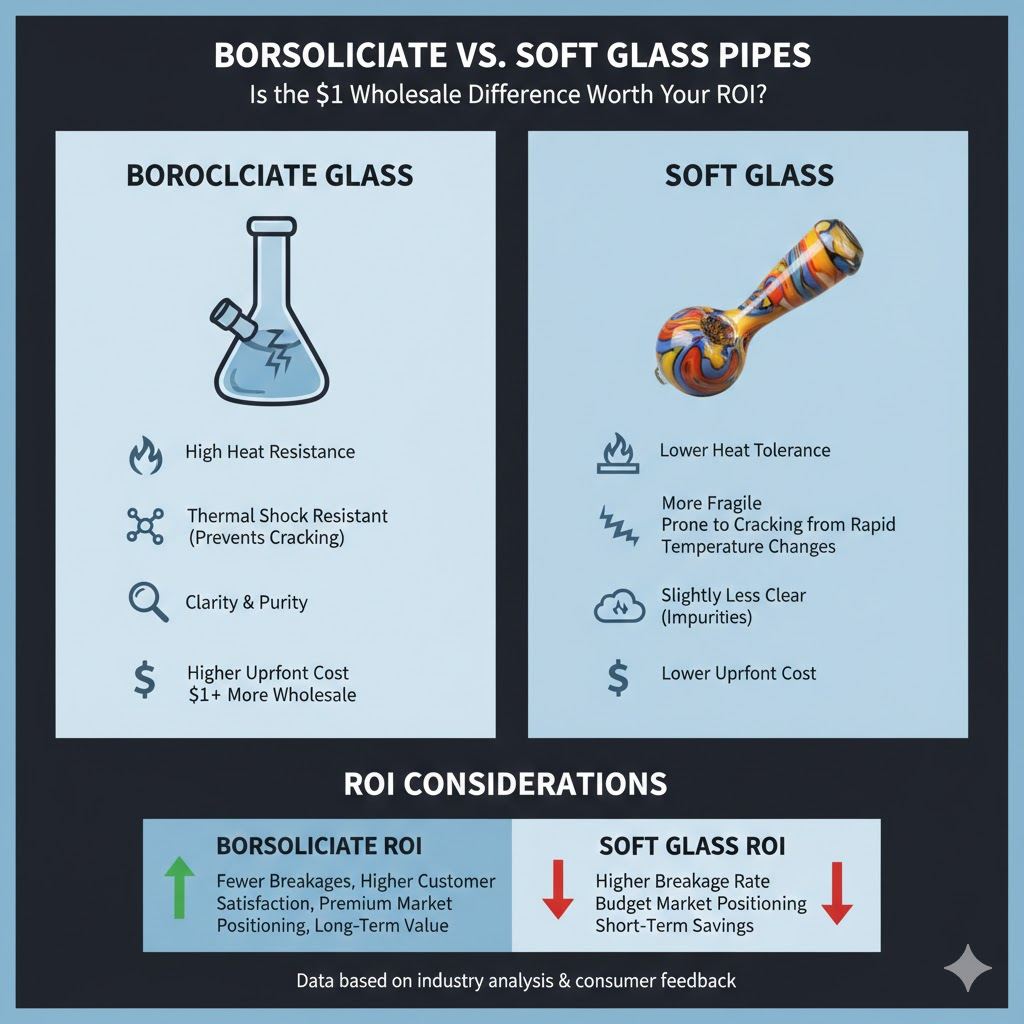
Material quality: Borosilicate glass comes in different grades. High-quality borosilicate with consistent wall thickness and proper annealing costs more than thin-wall, poorly annealed alternatives. The premium is worth paying because it reduces breakage, improves customer satisfaction, and supports higher retail pricing. Customers can feel the difference in weight and durability.
Branding and packaging: A glass pipe shipped in a plain poly bag retails for less than the same pipe in a branded box with a foam insert and a product card. Custom packaging costs $0.30 to $1.50 per unit depending on materials and order quantity, but it can support a 20 to 40 percent increase in retail price. For brands building a premium identity, packaging is not an expense. It is a margin multiplier.
Market positioning and geography: A water pipe that retails for $25 in a rural smoke shop might sell for $45 in an urban dispensary. Local competition, customer demographics, and overhead costs all influence what the market will bear. Your margin should be calculated against your specific retail environment, not against an average that does not account for where you sell.
Order volume and relationship with your factory: Repeat orders build trust, and trust unlocks better pricing. Factories reward consistent buyers with preferential pricing, priority production slots, and flexibility on design changes. If you are negotiating your first order, the guide to negotiating MOQ at 100 units provides practical strategies for getting favorable terms even at entry-level volumes. Understanding the MOQ and trial order structure also helps you plan your initial investment without overcommitting.
Transparent Tiered Pricing and Flexible MOQ
Elfglass publishes volume tiers, explains every cost driver, and works with first-time buyers on realistic minimums and safe payment terms. Tell us your target quantity and we will quote a tier that protects your margin.
MOQ from 100 pieces | BSCI / WRAP / ISO 9001 | NDA before every project
How OEM and Custom Designs Change the Margin Equation
The single most effective way to protect and expand your glass pipe profit margin is to sell designs that no one else can. When you work with a manufacturer to create exclusive OEM pieces, you remove the most destructive force in retail pricing: direct comparison. If a customer can walk into three different shops and find the same pipe, the only differentiator becomes price. If they can only find your pipe at your shop, pricing power stays with you.
Elfglass operates under a principle that founder Ava Zeng has stated clearly: “What kills a great idea is never the technology, but the communication gap and a lack of empathy.” That philosophy shows up in how the factory handles OEM projects. Every custom order begins with an NDA signed before any design work starts. Sampling takes one to three days, so you can evaluate the physical product before committing to a full production run. The factory’s monthly capacity of 10,000 pieces across 1,000 square metres of production space with 20 employees means there is room for custom runs alongside standard catalog items.
Custom designs also let you control the narrative. When a piece is designed for your brand, you can tell a story about it. You can explain the percolator geometry, the glass thickness, the design inspiration. Storytelling justifies premium pricing in a way that commodity products simply cannot support. Retailers who invest in exclusive designs consistently report higher average transaction values and stronger customer loyalty.
The trade-off is that OEM orders require more upfront communication and a longer development timeline. You need to articulate what you want, review samples, request adjustments, and then commit to production. Factories that respond to quotes within 12 hours and maintain structured communication channels make this process manageable. If a supplier cannot provide a timely quote or is vague about capabilities, that is a warning sign. The glass pipe quote red flags guide breaks down exactly what to watch for when evaluating manufacturer responses.
Building a Margin-Smart Product Mix
Smart retailers do not stock a single category. They build a product mix that balances traffic-driving basics with high-margin premium pieces. A typical margin-optimized glass department might look like this:
Forty percent of inventory in basic hand pipes, one-hitters, and simple straight tubes. These turn quickly, attract first-time buyers, and keep your shelves looking full. Margins are moderate but consistent.
Thirty-five percent in mid-range water pipes, bubblers, and themed pieces. This is your profit engine. The wholesale cost is higher, but so is the retail price, and the dollar margin per unit is where the bulk of your gross profit comes from.
Fifteen percent in premium and artistic pieces. These may sell slowly, but each transaction contributes significant profit. They also elevate the perceived quality of your entire glass department. Customers who come in for a premium piece often leave with accessories or additional items.
Ten percent in exclusive OEM designs that exist only in your store. These are your margin protectors. They cannot be price-compared, they build brand identity, and they give your staff something distinctive to recommend when a customer asks for something different.
This mix is not rigid. It shifts based on your market, your customer base, and your capital availability. The principle remains constant: diversify across margin tiers so that no single product category carries your entire profitability.
Sourcing Direct from the Factory versus Working with a Distributor
The margin conversation changes dramatically depending on whether you buy direct from a manufacturer or through a domestic distributor. Distributors add their own markup, typically 30 to 60 percent above factory price, to cover warehousing, domestic shipping, sales staff, and their own margin. That means a pipe that costs $5 at the factory might cost $7 to $8 from a distributor before it reaches your shelf.
Buying direct eliminates that middle layer. The trade-off is that you take on responsibility for import logistics, customs clearance, and longer lead times. For orders of 100 pieces or more, the per-unit savings of buying direct usually outweigh the added complexity, especially when you factor in the consistency of working with a single production source.
For retailers exploring their wholesale water pipe sourcing options, the decision often comes down to volume and consistency. If you order regularly and can plan ahead for production and shipping timelines, direct sourcing from a factory like Elfglass gives you the widest possible margin. If you need small quantities with immediate delivery, a distributor may make sense as a short-term solution, but you will sacrifice margin to get that convenience.
Common Margin Mistakes Retailers Make
Even experienced retailers fall into pricing traps that erode profitability. The most common mistake is underpricing basic items out of a fear that customers will comparison shop. Glass pipes are not a commodity where the lowest price wins. Customers value selection, knowledge, and service. Pricing your basic hand pipes at $7 when the market supports $10 to $12 leaves money on the table every single day.
Another frequent error is failing to account for landed cost. The wholesale price on the invoice is not your true cost. Once you add freight, duties, breakage, and payment processing, your actual per-unit cost may be 15 to 25 percent higher than the factory quote. Retailers who calculate margin on the invoice price rather than the landed price are consistently surprised when their gross profit does not match their spreadsheet projections.
A third mistake is over-investing in a single design or category. A retailer who fills their shelves with $50 water pipes in a market that primarily buys $15 hand pipes will struggle with slow turnover and tied-up capital. The product mix approach described above exists precisely to avoid this imbalance.
Finally, many retailers neglect the margin impact of payment processing. Credit card fees of 2.5 to 3.5 percent reduce your effective margin on every transaction. For high-ticket items, this is a manageable cost of doing business. For low-ticket impulse purchases, it can eat into an already thin margin. Some retailers offset this by setting minimum purchase amounts for card transactions or by offering a small cash discount.
Practical Steps to Improve Your Glass Pipe Margins
Improving margins is not about raising prices blindly. It is about making smarter sourcing and merchandising decisions that increase the gap between what you pay and what you charge, while simultaneously increasing the perceived value of what you sell.
First, consolidate your orders. Instead of placing six small orders throughout the year, place two or three larger orders. This reduces your per-unit shipping cost, gives you more leverage in price negotiations, and ensures you are getting the best production pricing your factory offers.
Second, invest in at least a few exclusive designs. Even two or three OEM pieces in your catalog give you something that competitors cannot match. The sampling process is fast, the NDA protects your designs, and the margin premium on exclusive items is substantial.
Third, train your staff on product knowledge. A salesperson who can explain the difference between a diffused downstem percolator and a showerhead percolator adds value that justifies premium pricing. Customers pay more when they understand what they are buying.
Fourth, review your pricing quarterly. Freight rates change. Tariff policies shift. Customer expectations evolve. A margin structure that worked twelve months ago may need adjustment today. Pull your landed cost data, compare it to current retail prices, and make sure every SKU in your catalog is contributing the margin you need.
Fifth, build a relationship with your factory. Communication quality matters as much as product quality. A factory that responds within 12 hours, signs an NDA before every project, and treats your brand with genuine care will help you develop products that sell at higher margins. Elfglass describes itself as “A Manufacturer With the Soul of a Designer,” and that design empathy translates directly into products that retailers can position at premium price points. If you want to discuss your specific margin targets and see how direct factory sourcing might work for your business, reach out through the contact page to start the conversation.
For a detailed comparison, see our guide on glass pipe wholesale pricing factors.
For a detailed comparison, see our guide on why identical glass pipes get different prices.
Frequently Asked Questions
What is the typical profit margin on wholesale glass pipes?
Retail markup on wholesale glass pipes typically ranges from 50 to 150 percent above the wholesale price, depending on branding, design complexity, and market positioning. Basic hand pipes tend toward the higher end of the markup range, while premium water pipes may carry a lower percentage markup but generate more absolute profit per unit.
How do wholesale prices affect retail glass pipe margins?
Lower wholesale costs from direct manufacturers allow retailers to maintain healthy margins while staying competitive on shelf price. Every dollar saved at the wholesale level flows directly to gross profit, assuming retail pricing remains constant.
What factors influence glass pipe profit margins?
Key factors include wholesale cost, shipping and import duties, branding, design exclusivity, material quality, packaging, and local market demand. Retailers who control more of these variables, particularly through OEM designs and direct factory sourcing, consistently achieve higher margins.
Can custom OEM designs improve retail margins?
Yes. Exclusive OEM designs prevent price comparison with commodity products and support premium pricing. When a customer cannot find the same piece at another retailer, pricing power stays with your brand.
What is the minimum order to start selling glass pipes wholesale?
Elfglass requires a minimum of 100 pieces per design, which is accessible for emerging brands testing a new product line. Sampling takes one to three days, and bulk production runs seven to twelve days for orders above 100 pieces.
About the Author
Ava Zeng is the founder of Elfglass, a Shenzhen-based borosilicate glass pipe manufacturer serving B2B brands worldwide. Every guide on this site is grounded in her production-floor experience— the annealing lines, QC checkpoints, and export orders behind each claim.
Before you commit to a supplier, read her founder’s story and trust promise, and the guide to vetting a reliable glass pipe manufacturer— the same red-flag checklist Elfglass applies to its own suppliers.
Retail pricing follows the markup formula standard in wholesale trade, where the retail multiple covers rent, labor, and shrinkage.
Differentiation defends margin — our silicone sleeve glass pipe OEM guide shows how a drop-protection line separates your product from commodity glass.
To turn those margins into an actual selling price, run the numbers through our glass pipe markup calculator — landed cost in, wholesale and retail price out.
Ready to Source Custom Glass Pipes?
Get a free quote within 24 hours. MOQ from 100 pieces. NDA-protected design consultation.
